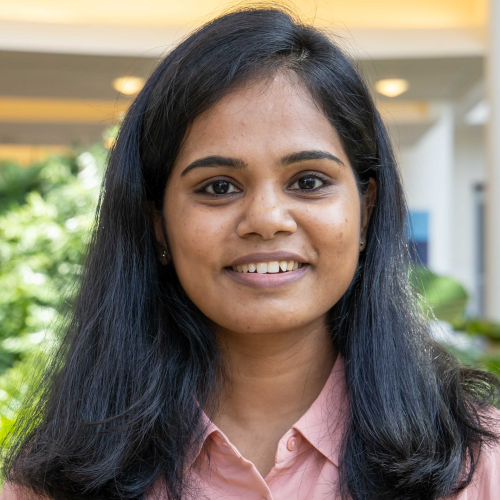
 Dr. Aishwarya Gurumurthy’s scientific journey is a vivid blend of curiosity, resilience, and international adventure. Rather than following a conventional path, she has pursued complex biological questions across India, Japan, and the United States. From trekking to remote villages to collect genetic samples with thumbprint consent signatures to advancing innovative cancer research at Michigan Medicine, she has remained anchored in the curiosity that first drew her to molecular biology.
“I was born in India,” she reflects. “I lost my father at a very early age to diabetes. This sparked my curiosity about the relationship between disease and individual health. As I grew up, I always wanted to be a doctor.” Over time, her interests shifted toward the hidden world of molecular mechanisms and genetic predispositions.
Her first major exposure to research occurred during her undergraduate internship in India, where she collected blood samples from tribal villages and explained her work to people unfamiliar with scientific concepts. Analyzing Y-chromosomal and mitochondrial DNA from these samples ignited her fascination with population genetics and set the stage for advanced training.
After earning a bachelor's degree in molecular biology and a master’s degree in medical biotechnology, she moved to Japan with her husband. She soon found a position in the lab of her mentor’s collaborator in Japan. However, shortly after she started the position, her husband was transferred back to India. “I was alone in Japan for two years without knowing the language,” she says. Despite the challenge, she thrived. Working with one of the earliest next-generation sequencers, she helped pioneer RNA sequencing techniques and investigated ovarian and endometrial cancers. “I’m always fascinated by new instruments, new developments, and technology, and how they can be used in biology,” she says.
Her next chapter took her to the laboratory of Dr. Jorg Bungert at the University of Florida, where she earned her PhD studying enhancers that regulate a disease-relevant gene in hemoglobinopathies, particularly the beta-globulin gene. She notes, “We often think only about genes and promoters. Ninety-nine percent of DNA is non-coding DNA. How does that regulate disease? That’s what fascinated me.”
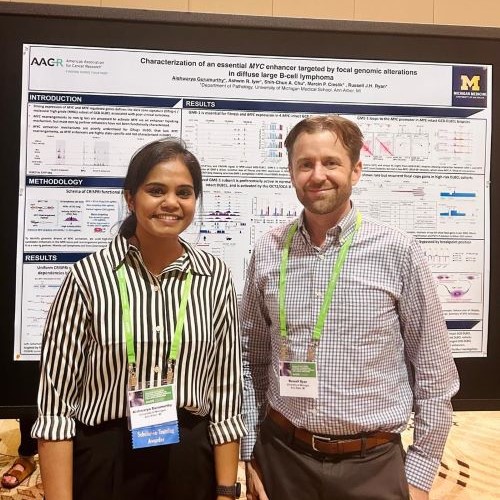 After completing her PhD in 2020, Gurumurthy joined the laboratory of Russell Ryan, MD, Assistant Professor of Pathology at Michigan Medicine, as a postdoctoral fellow. In October 2025, she was promoted to the rank of Research Investigator. In the Ryan lab, she uses CRISPR gene editing to study lymphoma and leukemia. “All the high-throughput screening techniques really excite me. You're not looking at one site. You're looking at a global landscape of the genome to see what happens.”
A defining moment in her research occurred while she was studying diffuse large B-cell lymphoma (DLBCL). “Most of the DLBCLs that do poorly have chromosomal translocations. However, a very small percentage have no fusion chromosome and remain highly aggressive. I found this was frequently due to the expression of one gene known as MYC.” Her work led to the discovery of a regulatory element, GME1, that activates MYC in these aggressive cancers. “It was a breakthrough. I presented it in poster sessions and talks.” The study was published in Blood Cancer Discovery, featured on the cover, and accompanied by a special commentary. Her team is now generating mouse models to delete GME1 and examine its effects.
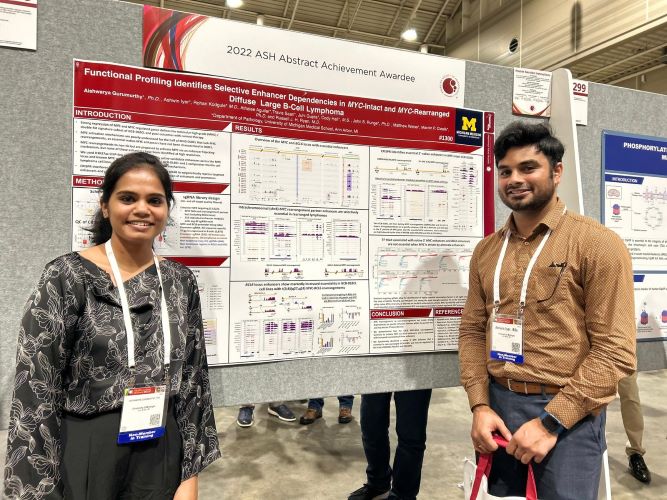 Gurumurthy is candid about the challenges of her scientific path. “The biggest challenge is the uncertainty. You need to stay open to alternative approaches rather than fixating on one idea.” Her philosophy is simple and powerful. “Let curiosity guide the science, but rigor drive the conclusions.” She emphasizes the value of stepping back when experiments do not yield the expected results. “Sometimes we believe our process should work, but it does not. We should reframe the questions instead of forcing the answers.”
She mentors undergraduate students and hopes to guide PhD trainees soon. She credits her mentors, especially her mother, with teaching her creativity, rigor, and collaboration. “Those are the same principles I bring to my work.
Her life outside the lab is rooted in family. She and her husband, Sashi, are parents of two sons: Advaith, age 6, and Vedanth, 10 months old. “Evenings are busy with taking care of the boys. They are very active. By the time they go to sleep, the day is nearly gone.” Once the household settles, she often returns her focus to her professional life, carving out late-night hours to read, think, and write grant proposals.
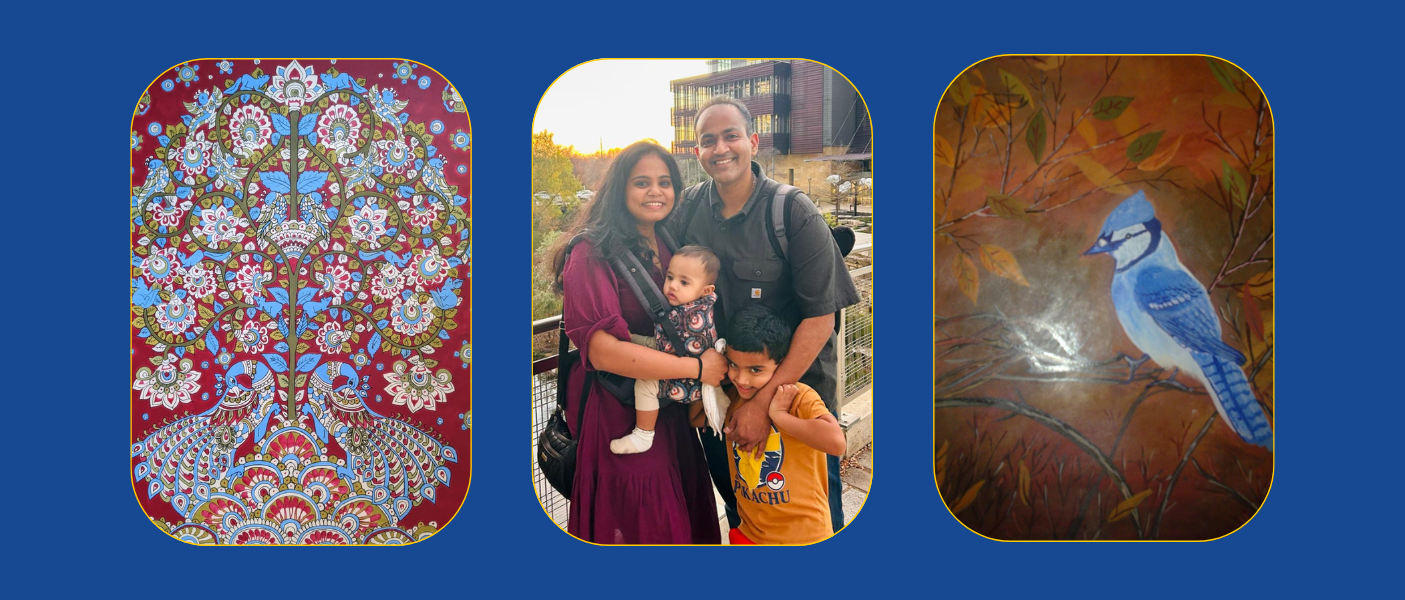
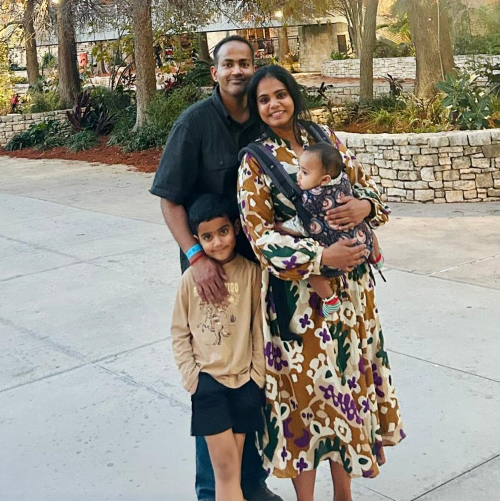 Creativity also plays a major role in her life. “I am a painter primarily in acrylics, and I do a lot of traditional Indian art.” She also dabbles with oils and frequently recreates nature scenes from her travels. “I love photography and will often take pictures of a tree with one flower in focus or other nature scenes.”
Dr. Aishwarya Gurumurthy’s story is one of persistence, adaptability, and boundless curiosity. With a passion for mentorship and translational science, she fully embodies her guiding principle: “Let curiosity guide the science, but rigor drive the conclusions.”
***
Citation:
Ashwin R. Iyer; Aishwarya Gurumurthy; Shih-chun A. Chu; Rohan Kodgule…Russell J. H. Ryan. Selective Enhancer Dependencies in MYC-Intact and MYC-Rearranged Germinal Center B-Cell Diffuse Large B-cell Lymphoma. Blood Cancer Discov (2025) 6(3): 233-253. https://doi.org/10.1158/2643-3320.BCD-24-0126
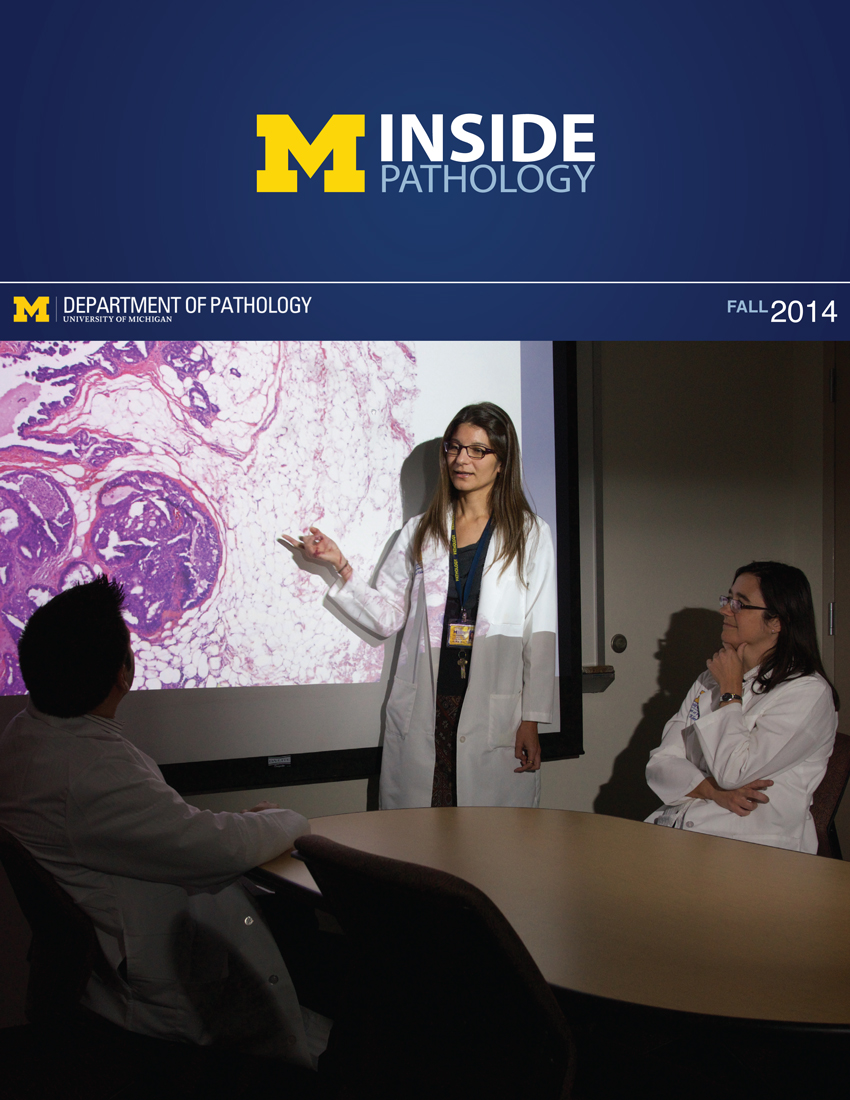 ON THE COVER
Breast team reviewing a patient's slide. (From left to right) Ghassan Allo, Fellow; Laura Walters, Clinical Lecturer; Celina Kleer, Professor. See Article |
newsletter
INSIDE PATHOLOGYAbout Our NewsletterInside Pathology is an newsletter published by the Chairman's Office to bring news and updates from inside the department's research and to become familiar with those leading it. It is our hope that those who read it will enjoy hearing about those new and familiar, and perhaps help in furthering our research. CONTENTS
|
 ON THE COVER
Autopsy Technician draws blood while working in the Wayne County morgue. See Article |
newsletter
INSIDE PATHOLOGYAbout Our NewsletterInside Pathology is an newsletter published by the Chairman's Office to bring news and updates from inside the department's research and to become familiar with those leading it. It is our hope that those who read it will enjoy hearing about those new and familiar, and perhaps help in furthering our research. CONTENTS
|
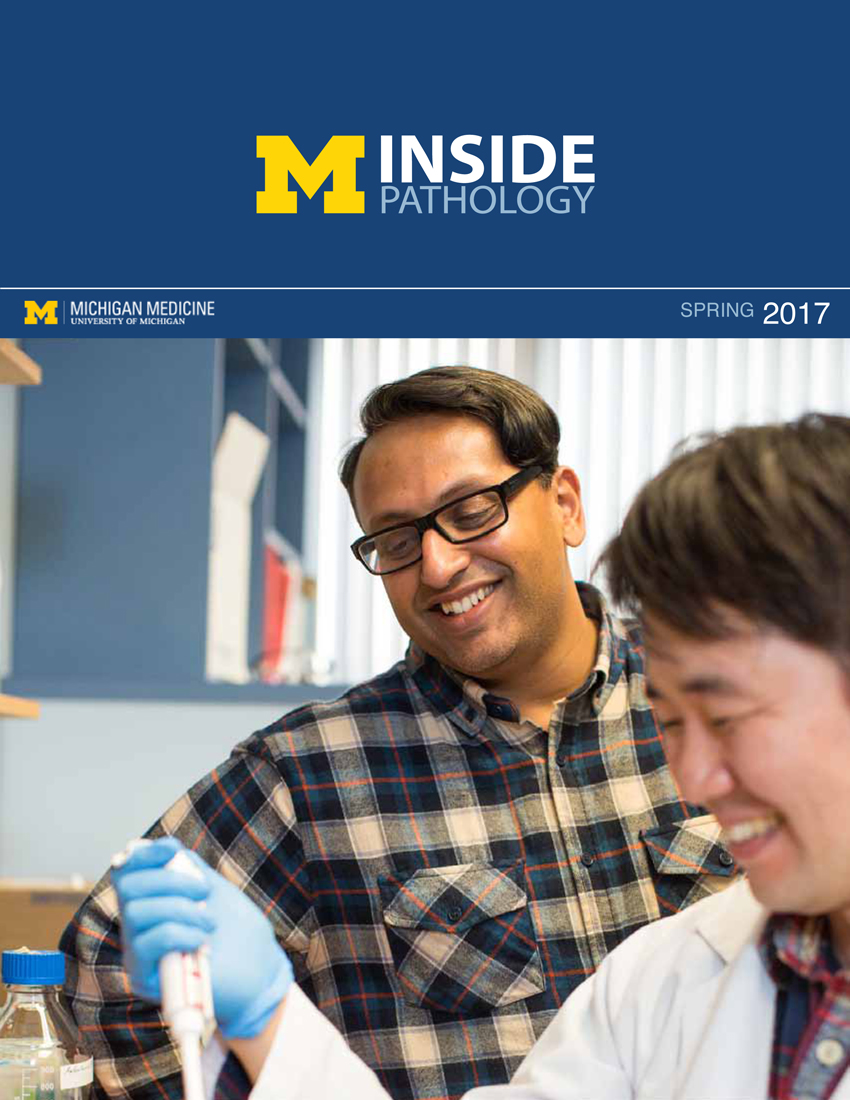 ON THE COVER
Dr. Sriram Venneti, MD, PhD and Postdoctoral Fellow, Chan Chung, PhD investigate pediatric brain cancer. See Article |
newsletter
INSIDE PATHOLOGYAbout Our NewsletterInside Pathology is an newsletter published by the Chairman's Office to bring news and updates from inside the department's research and to become familiar with those leading it. It is our hope that those who read it will enjoy hearing about those new and familiar, and perhaps help in furthering our research. CONTENTS
|
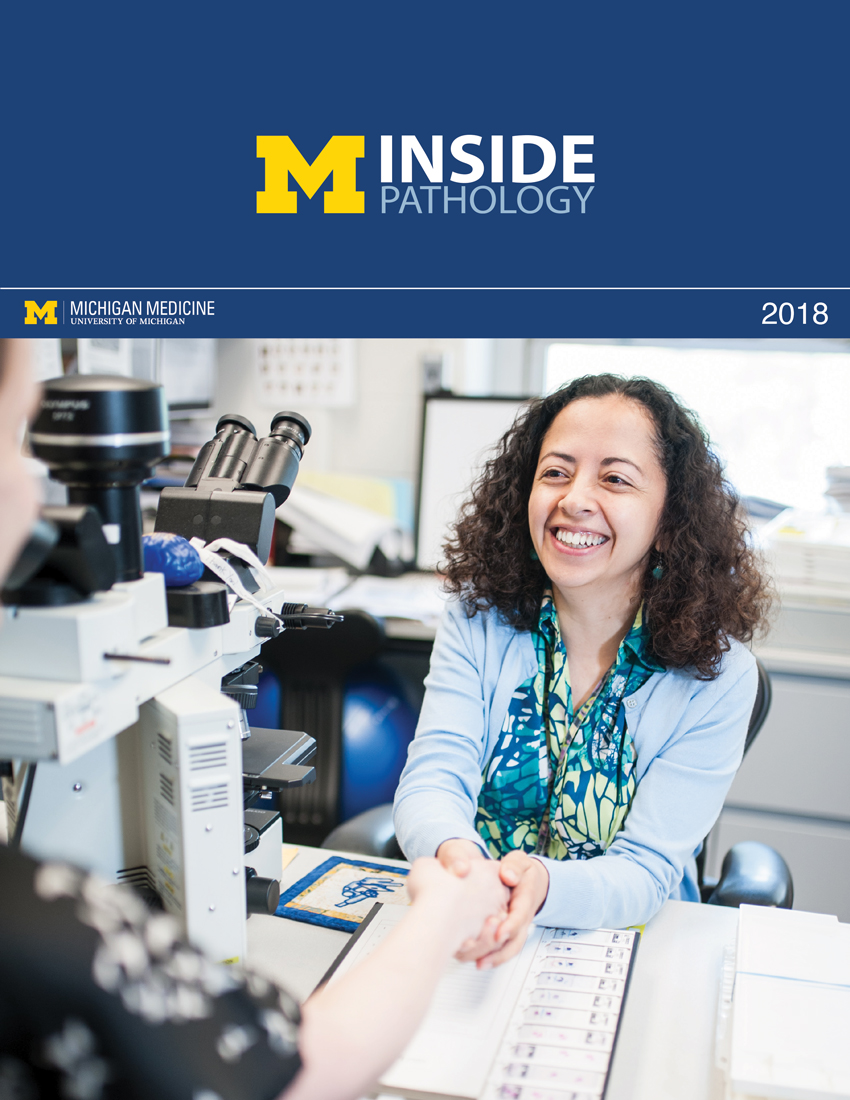 ON THE COVER
Director of the Neuropathology Fellowship, Dr. Sandra Camelo-Piragua serves on the Patient and Family Advisory Council. |
newsletter
INSIDE PATHOLOGYAbout Our NewsletterInside Pathology is an newsletter published by the Chairman's Office to bring news and updates from inside the department's research and to become familiar with those leading it. It is our hope that those who read it will enjoy hearing about those new and familiar, and perhaps help in furthering our research. CONTENTS
|
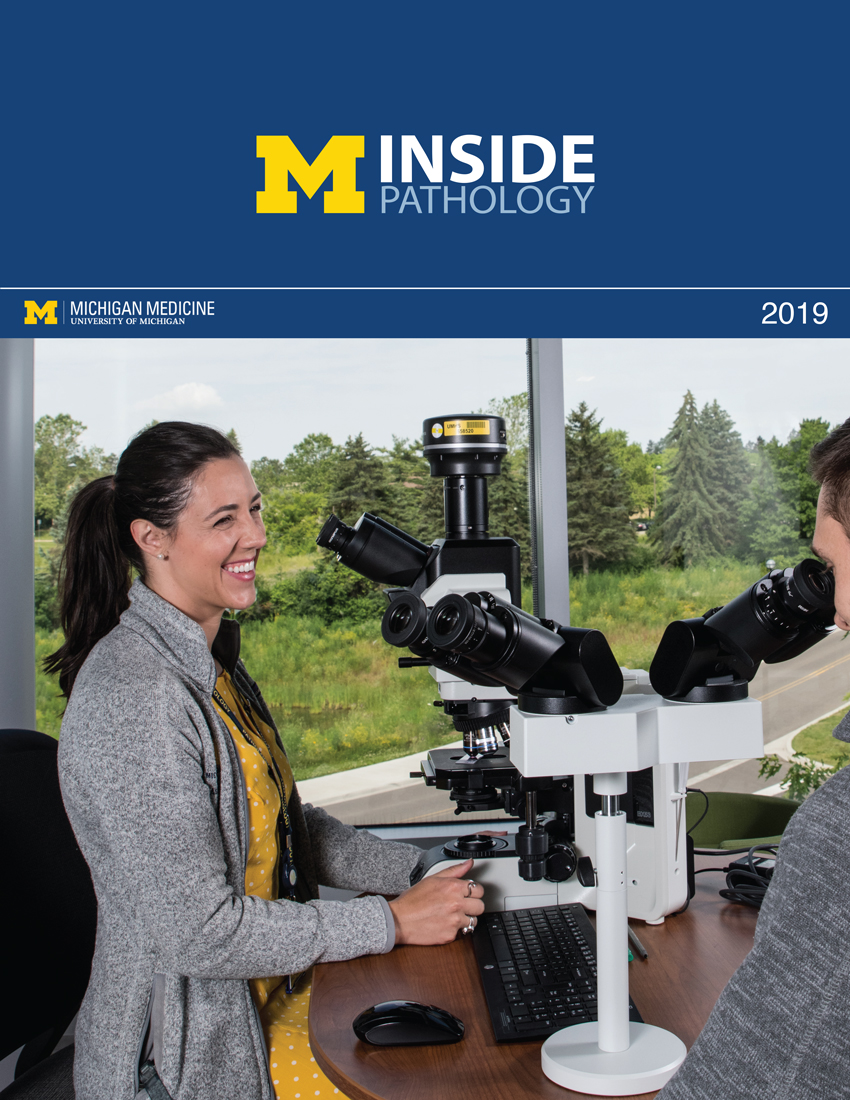 ON THE COVER
Residents Ashley Bradt (left) and William Perry work at a multi-headed scope in our new facility. |
newsletter
INSIDE PATHOLOGYAbout Our NewsletterInside Pathology is an newsletter published by the Chairman's Office to bring news and updates from inside the department's research and to become familiar with those leading it. It is our hope that those who read it will enjoy hearing about those new and familiar, and perhaps help in furthering our research. CONTENTS
|
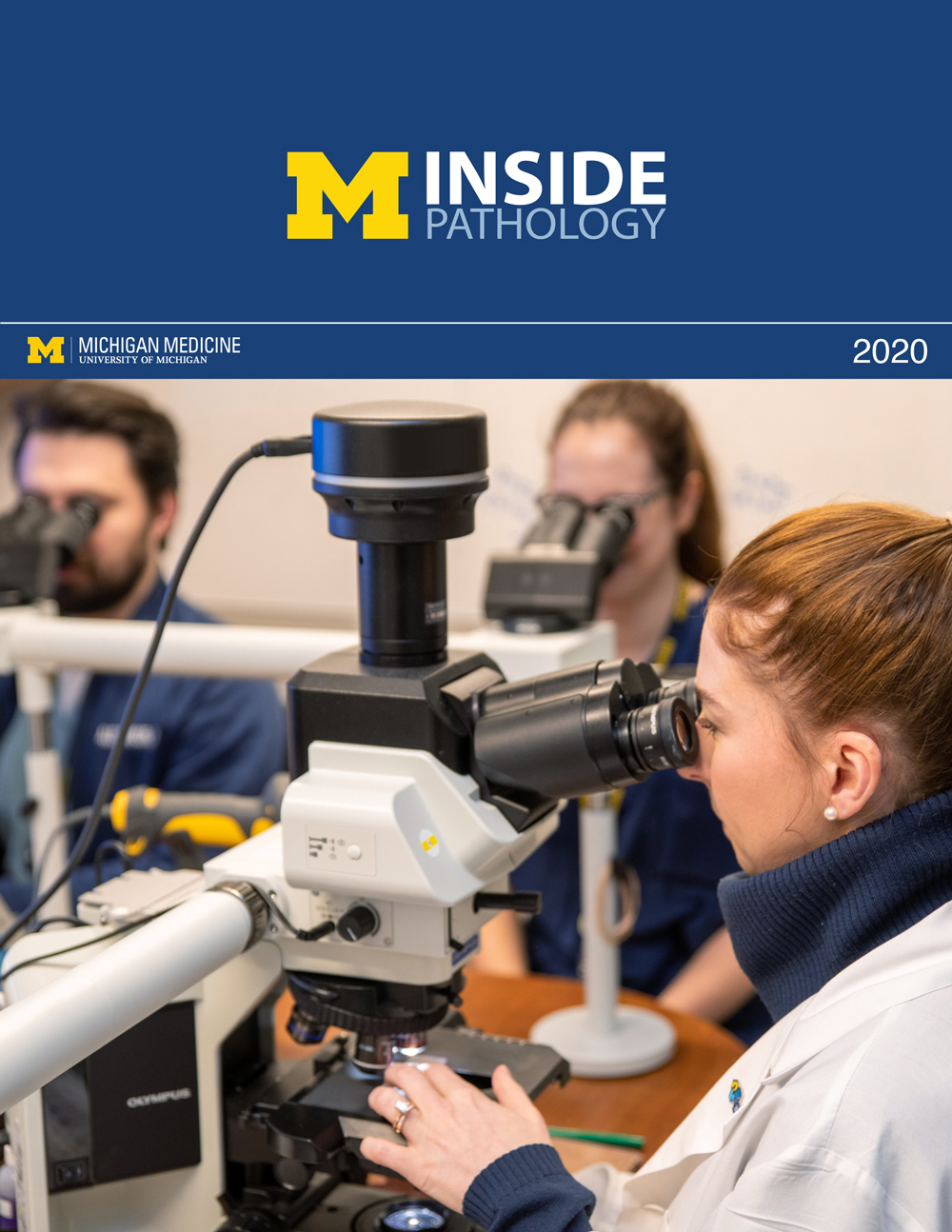 ON THE COVER
Dr. Kristine Konopka (right) instructing residents while using a multi-headed microscope. |
newsletter
INSIDE PATHOLOGYAbout Our NewsletterInside Pathology is an newsletter published by the Chairman's Office to bring news and updates from inside the department's research and to become familiar with those leading it. It is our hope that those who read it will enjoy hearing about those new and familiar, and perhaps help in furthering our research. CONTENTS
|
 ON THE COVER
Patient specimens poised for COVID-19 PCR testing. |
newsletter
INSIDE PATHOLOGYAbout Our NewsletterInside Pathology is an newsletter published by the Chairman's Office to bring news and updates from inside the department's research and to become familiar with those leading it. It is our hope that those who read it will enjoy hearing about those new and familiar, and perhaps help in furthering our research. CONTENTS
|
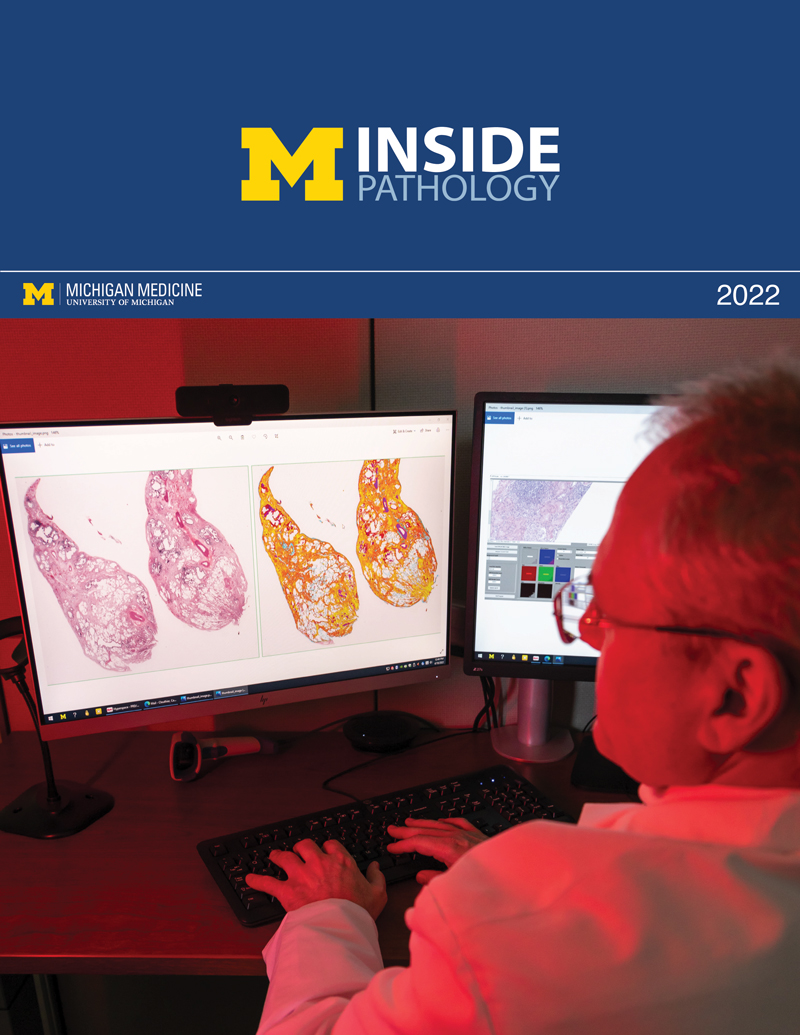 ON THE COVER
Dr. Pantanowitz demonstrates using machine learning in analyzing slides. |
newsletter
INSIDE PATHOLOGYAbout Our NewsletterInside Pathology is an newsletter published by the Chairman's Office to bring news and updates from inside the department's research and to become familiar with those leading it. It is our hope that those who read it will enjoy hearing about those new and familiar, and perhaps help in furthering our research. CONTENTS
|
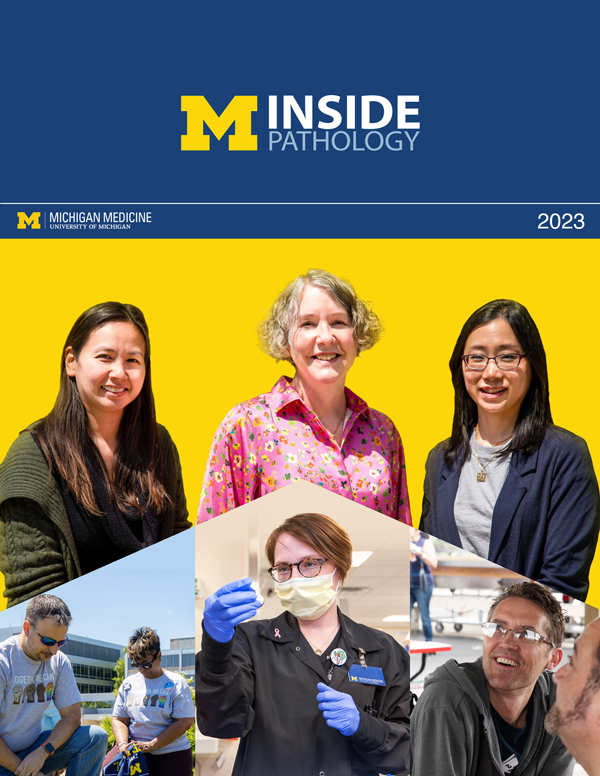 ON THE COVER
(Left to Right) Drs. Angela Wu, Laura Lamps, and Maria Westerhoff. |
newsletter
INSIDE PATHOLOGYAbout Our NewsletterInside Pathology is an newsletter published by the Chairman's Office to bring news and updates from inside the department's research and to become familiar with those leading it. It is our hope that those who read it will enjoy hearing about those new and familiar, and perhaps help in furthering our research. CONTENTS
|
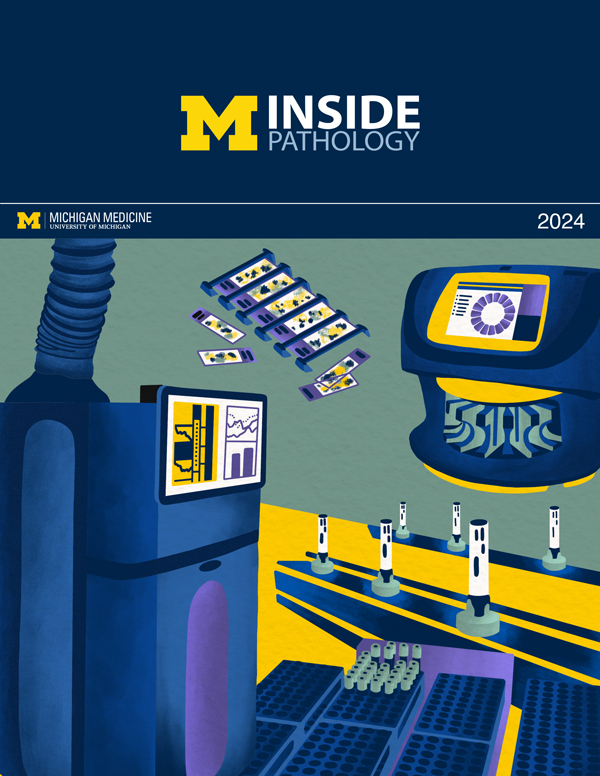 ON THE COVER
Illustration representing the various machines and processing used within our labs. |
newsletter
INSIDE PATHOLOGYAbout Our NewsletterInside Pathology is an newsletter published by the Chairman's Office to bring news and updates from inside the department's research and to become familiar with those leading it. It is our hope that those who read it will enjoy hearing about those new and familiar, and perhaps help in furthering our research. CONTENTS
|
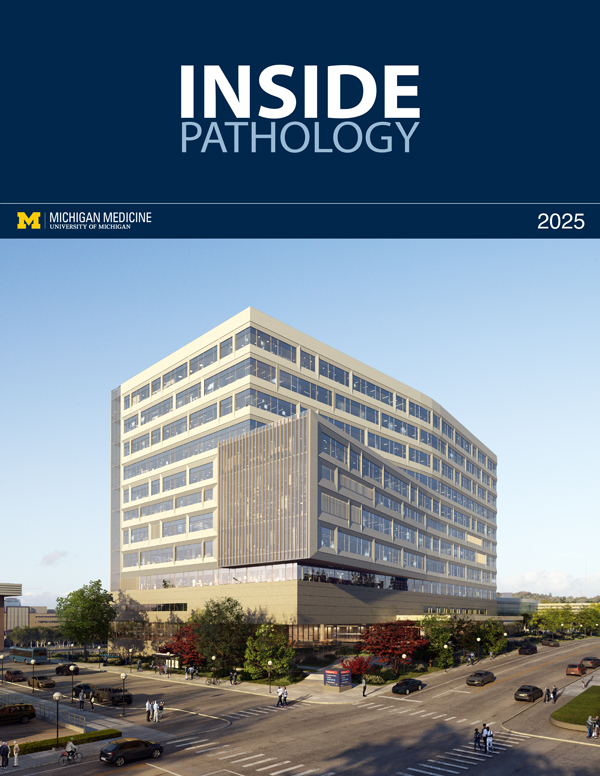 ON THE COVER
Rendering of the D. Dan and Betty Khn Health Care Pavilion. Credit: HOK |
newsletter
INSIDE PATHOLOGYAbout Our NewsletterInside Pathology is an newsletter published by the Chairman's Office to bring news and updates from inside the department's research and to become familiar with those leading it. It is our hope that those who read it will enjoy hearing about those new and familiar, and perhaps help in furthering our research. CONTENTS
|
MLabs, established in 1985, functions as a portal to provide pathologists, hospitals. and other reference laboratories access to the faculty, staff and laboratories of the University of Michigan Health System’s Department of Pathology. MLabs is a recognized leader for advanced molecular diagnostic testing, helpful consultants and exceptional customer service.