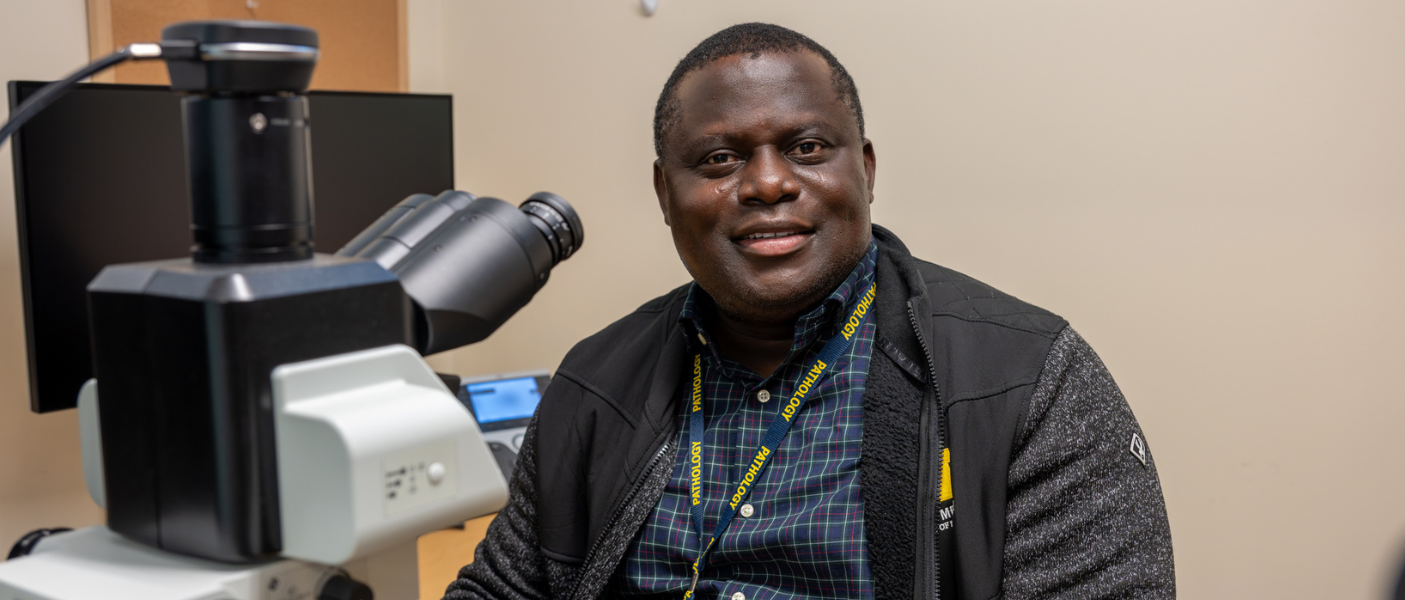
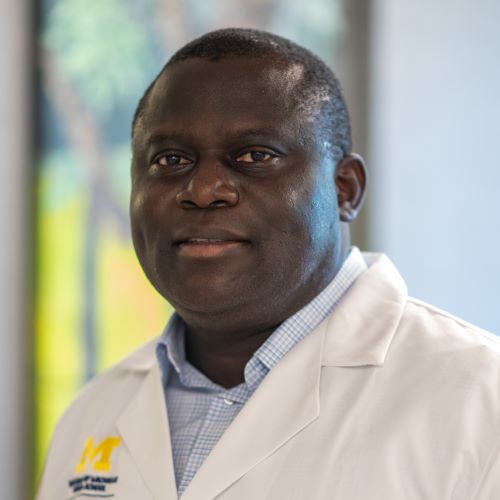
 Every pathologist has a story about how they found their way to the microscope. But Dr. Oyewale “Wale” Shiyanbola’s story is not just a path; it’s a continent-spanning journey driven by curiosity, resilience, and an unwavering commitment to improving patient care.
Wale began his medical career in Ibadan, Nigeria, where he earned his MBBS from the University of Ibadan, one of the region's most prestigious medical schools. His early years as a physician took him across the Nigerian health system, from the wards of Lautech Teaching Hospital to the Surgery Department at Lagos State Teaching Hospital. These experiences exposed him to the profound complexity of human disease. They sparked an interest in seeing medicine not just as a clinical practice, but as a scientific puzzle worth solving.
That spark grew into something larger.
In 2009, he made the bold decision to move to the United States, where he completed an externship at Avera McKennan Hospital and then pursued an MPH in Public Health Administration at the University of Nebraska Medical Center. During this time, he began building a strong foundation in population health, epidemiology, and data-driven clinical research, interests that would later shape his scientific career.
His love of inquiry led him next to the University of Wisconsin–Madison, where he completed a PhD in Epidemiology, with a focus on population-level cancer outcomes. There, he immersed himself in cancer research, studying breast cancer risk, screening patterns and decision-making, and emerging treatment trends for ductal carcinoma in situ (DCIS), and disease epidemiology across large, multi-institutional cohorts.
 His research used large datasets, including population registries, screening networks, and multi-site consortium data, to answer clinically important questions about how cancer risk is identified and how care patterns vary across the United States. This resulted in his landmark first-author publication, “Emerging trends in surgical and adjuvant radiation therapies among women diagnosed with DCIS (Cancer, 2016). In this study, he analyzed longitudinal data and identified patterns in radiation therapy following lumpectomies, uncovering demographic, clinical, and facility characteristics that influenced treatment decisions. His work earned him national recognition, including a top-ranked abstract award from the American Society of Preventive Oncology.
He followed up on this research by examining how reports of family history changed across generations and measured the impact of these shifts on estimated breast cancer risk. His research provided insights into screening guidelines and risk-based prevention strategies, and helped quantify the extent to which modern family structures and awareness shape self-reported history. This study was published in Cancer Epidemiology, Biomarkers & Prevention in 2017.
But even as he worked with data, populations, and models, Dr. Shiyanbola realized something: he missed the immediacy, humanity, and complexity of direct patient diagnosis.
That realization led him to Pathology, where he could bring together all the threads of his training—clinical medicine from Nigeria, public health from Nebraska, epidemiology from Wisconsin, and research experience across multiple institutions.
He completed his residency in Anatomic and Clinical Pathology at the University of Wisconsin, earning the department’s Award for Resident Excellence in Teaching. His curiosity for scientific detail and his calm mastery at the microscope led him to Stanford, where he completed fellowships in Surgical Pathology and Gastrointestinal Pathology.
During his training, Shiyanbola developed a special interest in epithelial and mesenchymal tumors of the gastrointestinal and hepatopancreatobiliary systems, as well as in the molecular underpinnings of bone and soft tissue disease. His publications reflect a clinician-scientist who loves a difficult case, appreciates the nuances of rare tumors, and embraces pathology's role in shaping patient outcomes. Perhaps his most impactful publication during this time is a multi-institutional analysis of extraskeletal Ewing sarcoma involving the GI tract and hepatobiliary system, a very rare location. He showed that these tumors frequently exhibit a deceptive immunophenotype, often expressing epithelial markers. This leads to recurrent misdiagnosis, often as carcinoma, neuroendocrine carcinoma, or other small-round-blue-cell tumors. This highlights the importance of conducting molecular testing for EWSR1 rearrangements, using expanded immunohistochemistry panels, and being aware of site-specific pitfalls. This publication filled a major gap, as these lesions are uncommon enough that many pathologists see only 1 or 2 cases in their careers, leading to diagnostic delays or incorrect treatment. The study provides practical guidance for improving accuracy.
 He also distinguished himself through service and leadership, representing pathology residents nationally, serving as an ambassador for the United States and Canadian Academy of Pathology, and contributing to equity and inclusion efforts at Stanford.
In September 2024, all these experiences, across Nigeria, the Midwest, the coasts, and across research, epidemiology, and diagnostic pathology, led him to the University of Michigan, where he serves as an Assistant Professor providing diagnostic services in bone and soft tissue pathology and gastrointestinal pathology. He enjoys the supportive environment and the high level of expertise present in the Department. “As a junior faculty it is important to have others with whom you can discuss challenging cases to make sure you have the right diagnosis. My most important priority is to first do no harm, as stated in the Hippocratic oath. The GI section is renowned for its expertise, which is one of the reasons I chose Michigan.”
****
Citations:
Shiyanbola O. O., Sprague, B. L., Hampton, J. M., Dittus, K, James, T.A., Herschorn S., Gangnon, R. E., Weaver, D. L., Trentham-Dietz, A. Emerging Trends in Surgical and Adjuvant Radiation Therapies among Women Diagnosed with Ductal Carcinoma In Situ. (2016) Cancer 122(18):2810-2818. https://doi.org/10.1002/cncr.30105.
Shiyanbola O. O., Arao R. F., Migloretti D. L., Sprague B. L., Hamton J. M., Stout N. K., Kerlikowske K., Braithwaite D., Buist D. S. M., Egan K. M., Newcomb P. A., Trentham-Dietz, A. Emerging Trends in Family History of Breast Cancer and Associated Risk. Cancer Epidemiol Biomarkers Prev (2017) 26(12):1753-1760. https://doi.org/10.1158/1055-9965.EPI-17-0531
Shiyanbola O, Nigdelioglu R, Dhall D, González IA, Warmke LM, Schechter S, Choi WT, Hu S, Voltaggio L, Zhang Y, Liang TZ, Ko HM, Charville GW, Longacre TA. Extraskeletal Ewing Sarcoma of the Gastrointestinal and Hepatobiliary Tract: Deceptive Immunophenotype Commonly Leads to Misdiagnosis. Am J Surg Pathol. 2024 Sep 1;48(9):1185-1194. doi: 10.1097/PAS.0000000000002236. Epub 2024 May 17. PMID: 38767576; PMCID: PMC11321603.
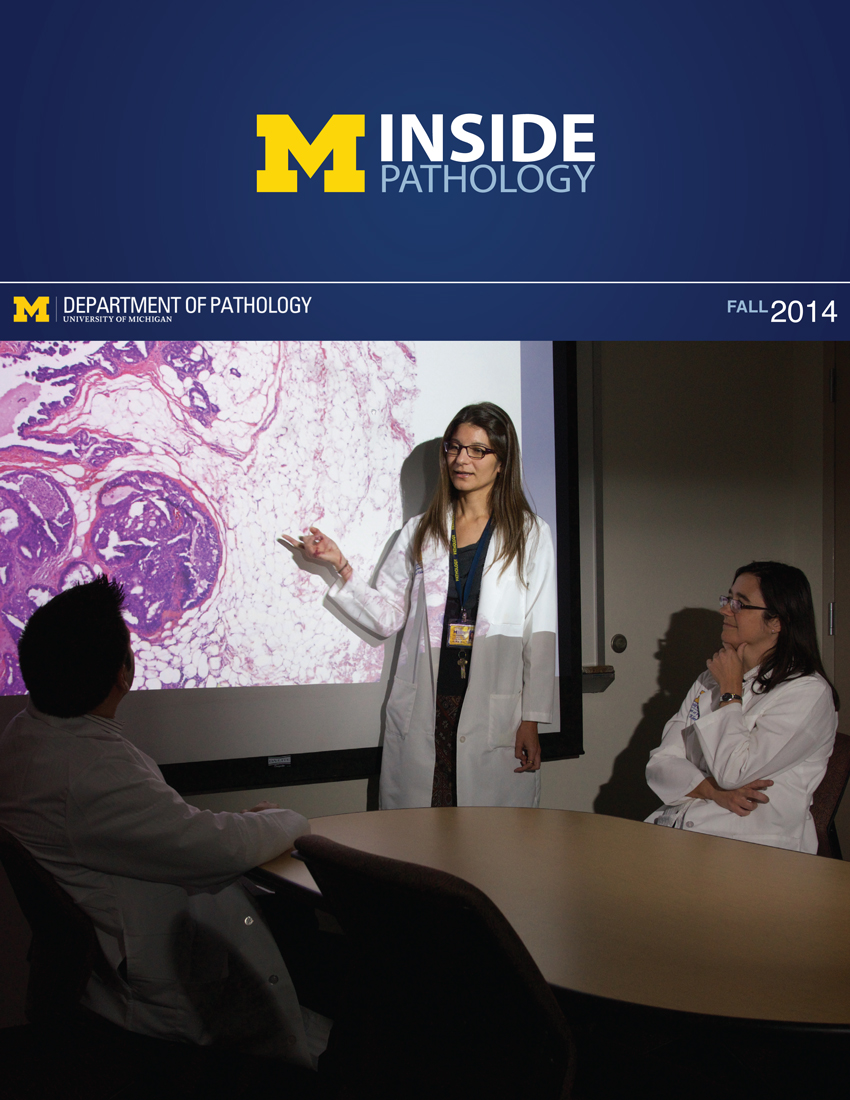 ON THE COVER
Breast team reviewing a patient's slide. (From left to right) Ghassan Allo, Fellow; Laura Walters, Clinical Lecturer; Celina Kleer, Professor. See Article |
newsletter
INSIDE PATHOLOGYAbout Our NewsletterInside Pathology is an newsletter published by the Chairman's Office to bring news and updates from inside the department's research and to become familiar with those leading it. It is our hope that those who read it will enjoy hearing about those new and familiar, and perhaps help in furthering our research. CONTENTS
|
 ON THE COVER
Autopsy Technician draws blood while working in the Wayne County morgue. See Article |
newsletter
INSIDE PATHOLOGYAbout Our NewsletterInside Pathology is an newsletter published by the Chairman's Office to bring news and updates from inside the department's research and to become familiar with those leading it. It is our hope that those who read it will enjoy hearing about those new and familiar, and perhaps help in furthering our research. CONTENTS
|
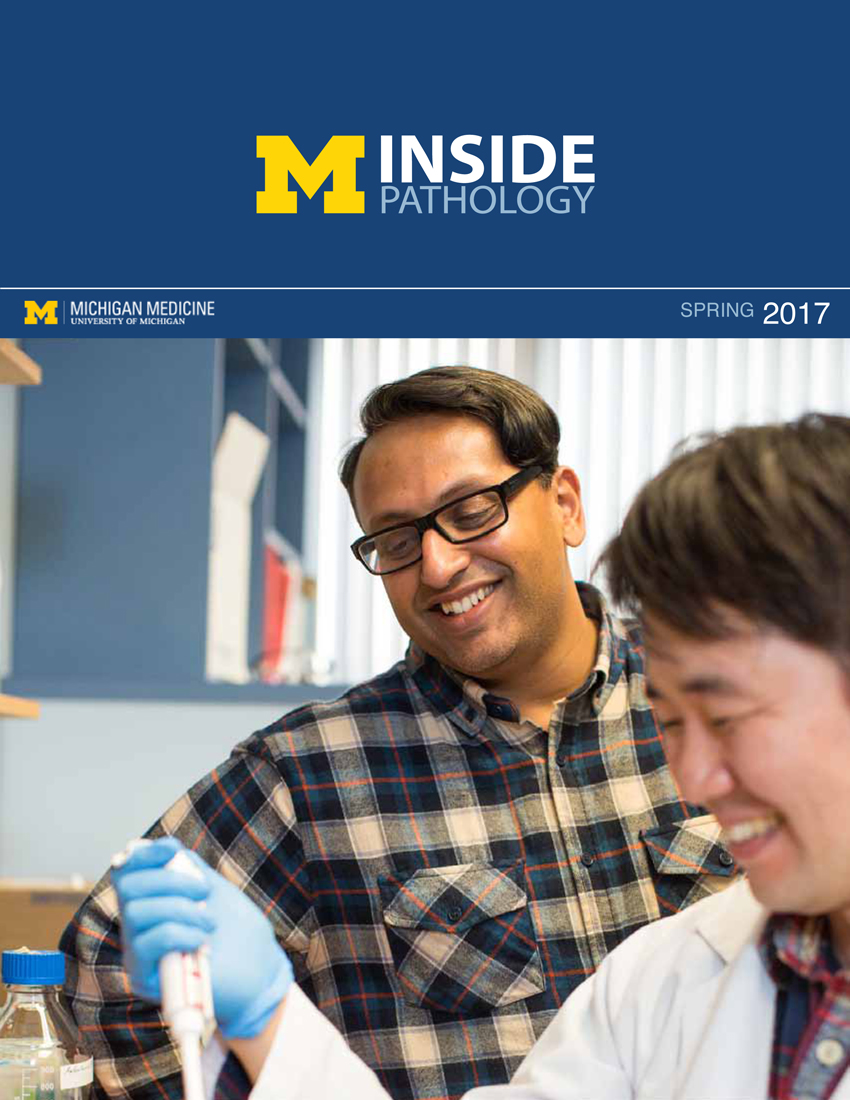 ON THE COVER
Dr. Sriram Venneti, MD, PhD and Postdoctoral Fellow, Chan Chung, PhD investigate pediatric brain cancer. See Article |
newsletter
INSIDE PATHOLOGYAbout Our NewsletterInside Pathology is an newsletter published by the Chairman's Office to bring news and updates from inside the department's research and to become familiar with those leading it. It is our hope that those who read it will enjoy hearing about those new and familiar, and perhaps help in furthering our research. CONTENTS
|
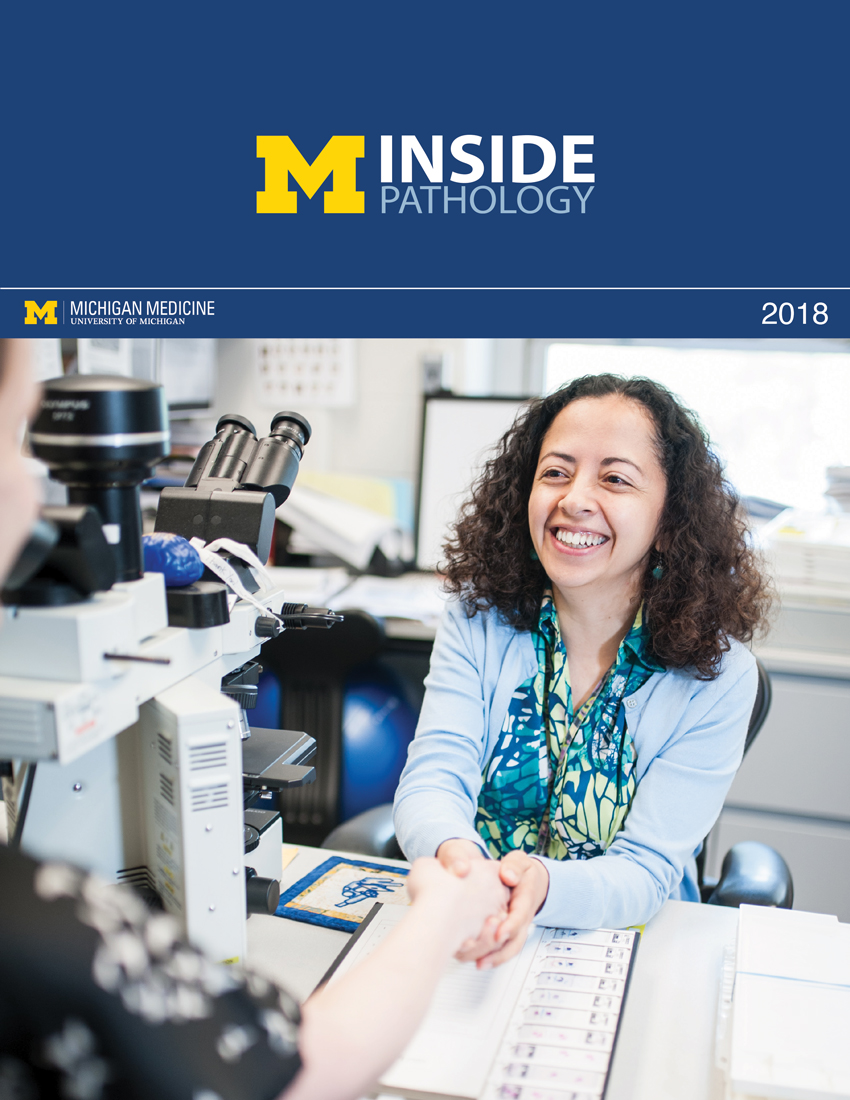 ON THE COVER
Director of the Neuropathology Fellowship, Dr. Sandra Camelo-Piragua serves on the Patient and Family Advisory Council. |
newsletter
INSIDE PATHOLOGYAbout Our NewsletterInside Pathology is an newsletter published by the Chairman's Office to bring news and updates from inside the department's research and to become familiar with those leading it. It is our hope that those who read it will enjoy hearing about those new and familiar, and perhaps help in furthering our research. CONTENTS
|
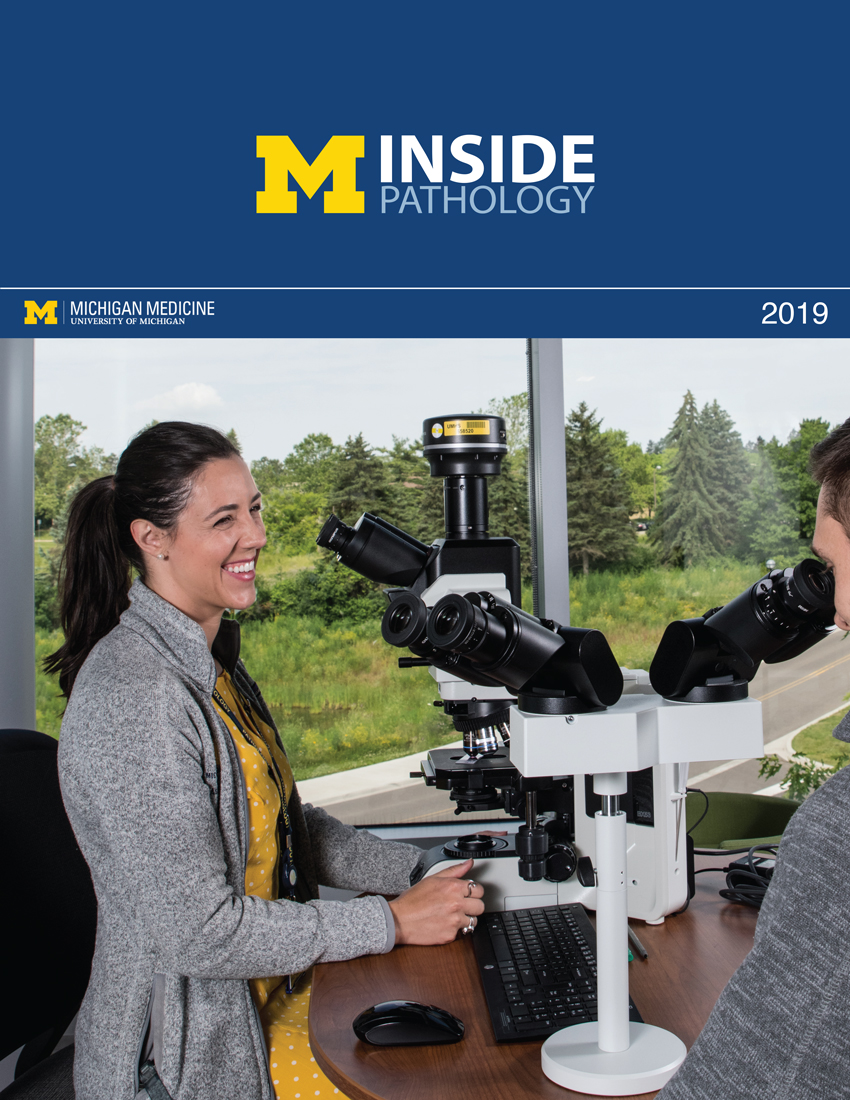 ON THE COVER
Residents Ashley Bradt (left) and William Perry work at a multi-headed scope in our new facility. |
newsletter
INSIDE PATHOLOGYAbout Our NewsletterInside Pathology is an newsletter published by the Chairman's Office to bring news and updates from inside the department's research and to become familiar with those leading it. It is our hope that those who read it will enjoy hearing about those new and familiar, and perhaps help in furthering our research. CONTENTS
|
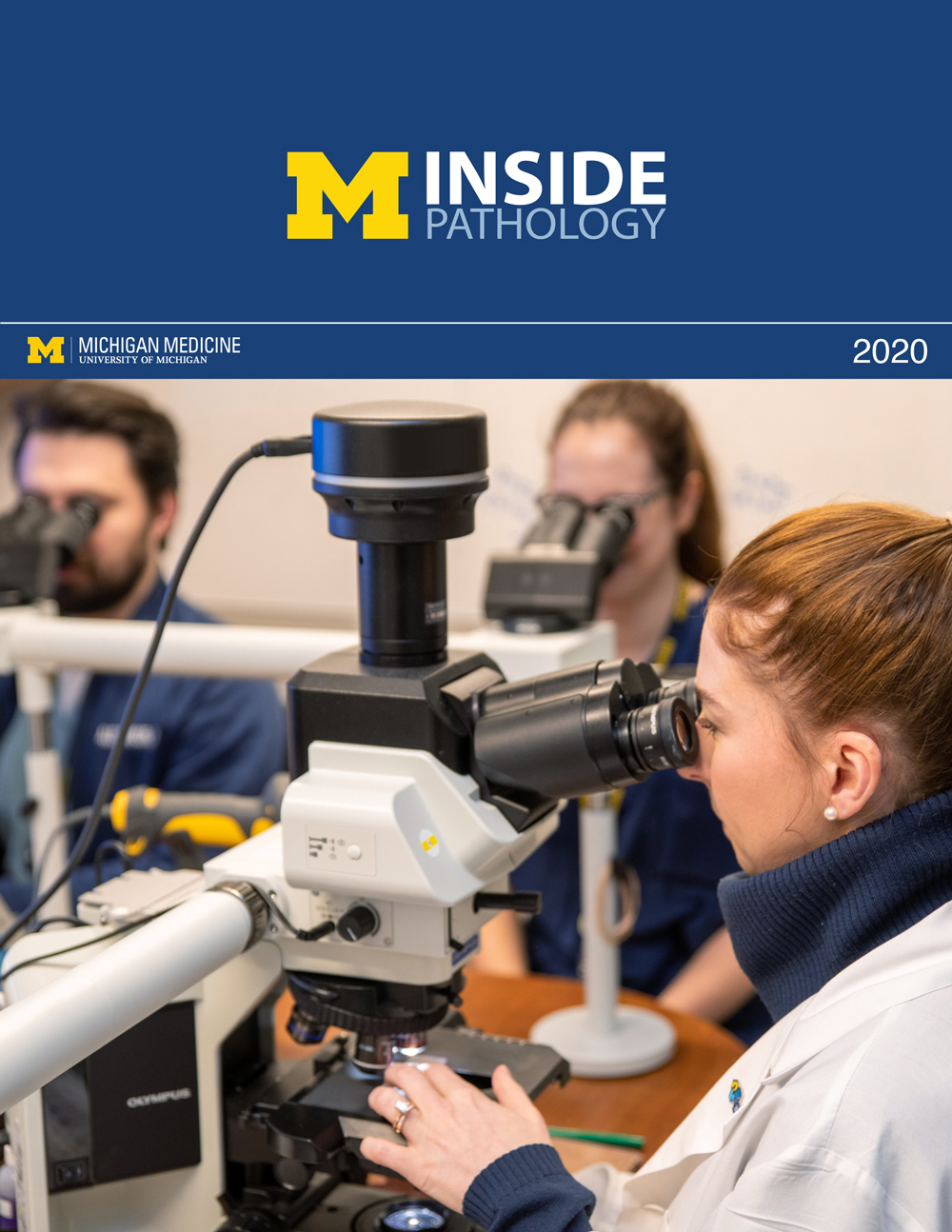 ON THE COVER
Dr. Kristine Konopka (right) instructing residents while using a multi-headed microscope. |
newsletter
INSIDE PATHOLOGYAbout Our NewsletterInside Pathology is an newsletter published by the Chairman's Office to bring news and updates from inside the department's research and to become familiar with those leading it. It is our hope that those who read it will enjoy hearing about those new and familiar, and perhaps help in furthering our research. CONTENTS
|
 ON THE COVER
Patient specimens poised for COVID-19 PCR testing. |
newsletter
INSIDE PATHOLOGYAbout Our NewsletterInside Pathology is an newsletter published by the Chairman's Office to bring news and updates from inside the department's research and to become familiar with those leading it. It is our hope that those who read it will enjoy hearing about those new and familiar, and perhaps help in furthering our research. CONTENTS
|
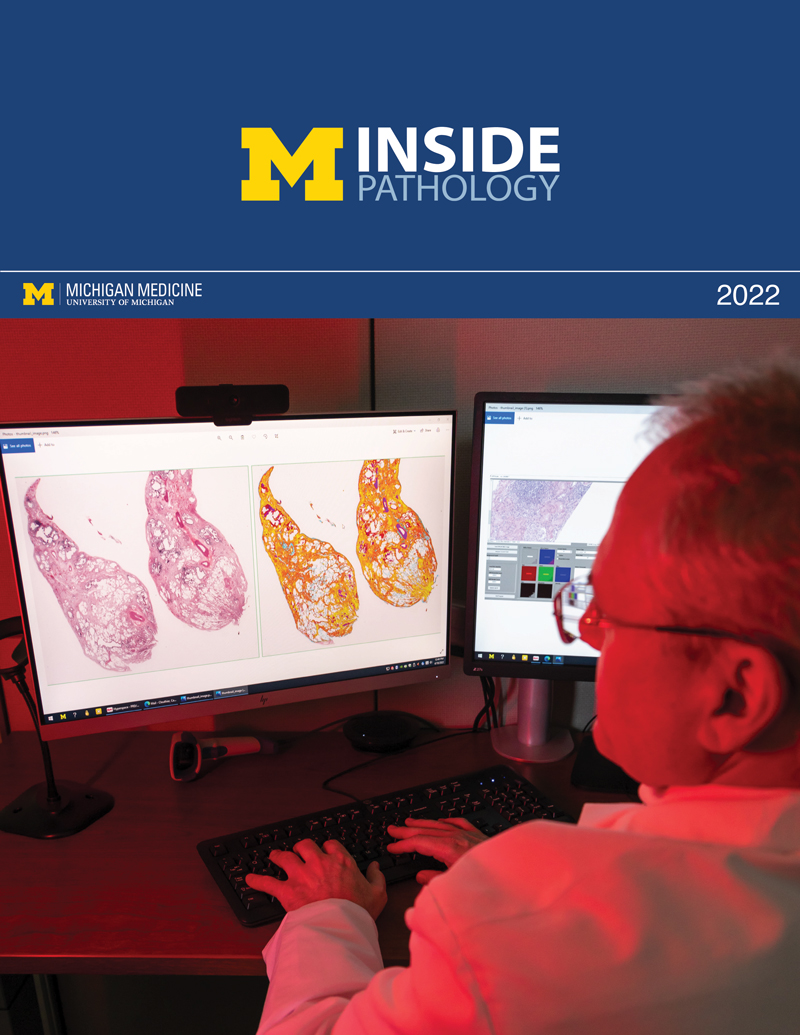 ON THE COVER
Dr. Pantanowitz demonstrates using machine learning in analyzing slides. |
newsletter
INSIDE PATHOLOGYAbout Our NewsletterInside Pathology is an newsletter published by the Chairman's Office to bring news and updates from inside the department's research and to become familiar with those leading it. It is our hope that those who read it will enjoy hearing about those new and familiar, and perhaps help in furthering our research. CONTENTS
|
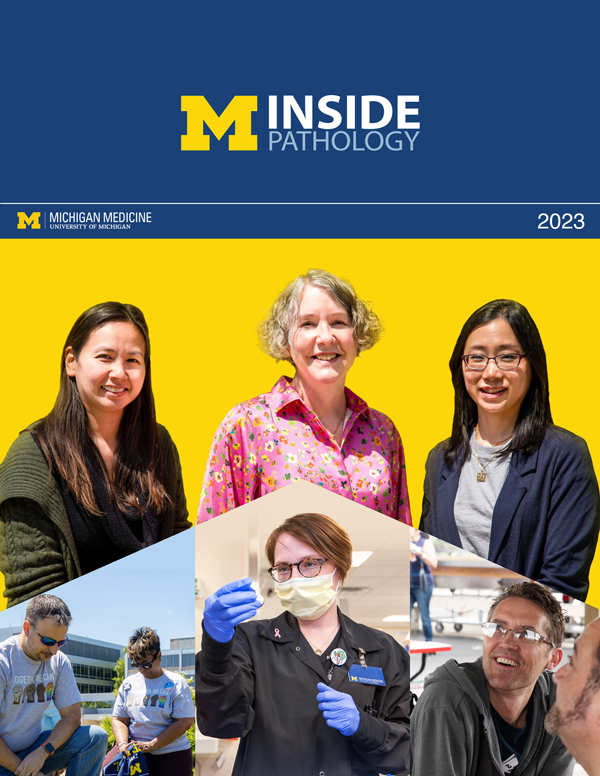 ON THE COVER
(Left to Right) Drs. Angela Wu, Laura Lamps, and Maria Westerhoff. |
newsletter
INSIDE PATHOLOGYAbout Our NewsletterInside Pathology is an newsletter published by the Chairman's Office to bring news and updates from inside the department's research and to become familiar with those leading it. It is our hope that those who read it will enjoy hearing about those new and familiar, and perhaps help in furthering our research. CONTENTS
|
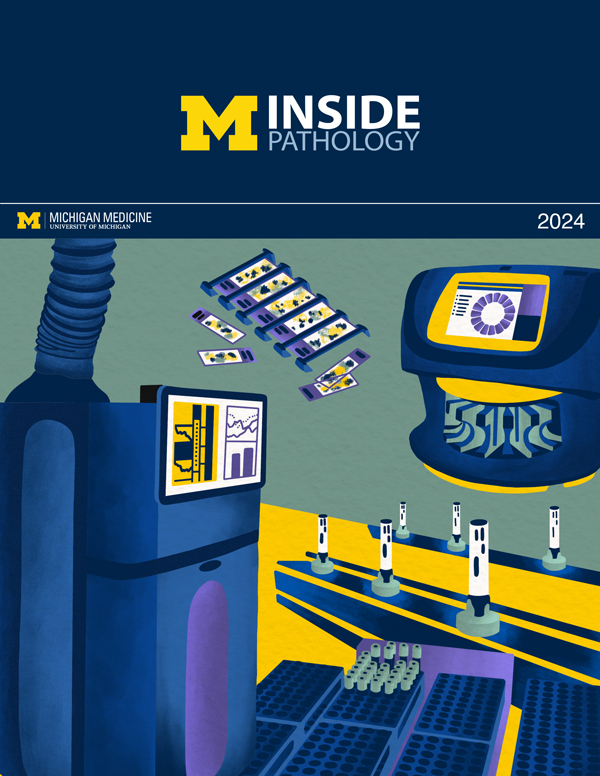 ON THE COVER
Illustration representing the various machines and processing used within our labs. |
newsletter
INSIDE PATHOLOGYAbout Our NewsletterInside Pathology is an newsletter published by the Chairman's Office to bring news and updates from inside the department's research and to become familiar with those leading it. It is our hope that those who read it will enjoy hearing about those new and familiar, and perhaps help in furthering our research. CONTENTS
|
 ON THE COVER
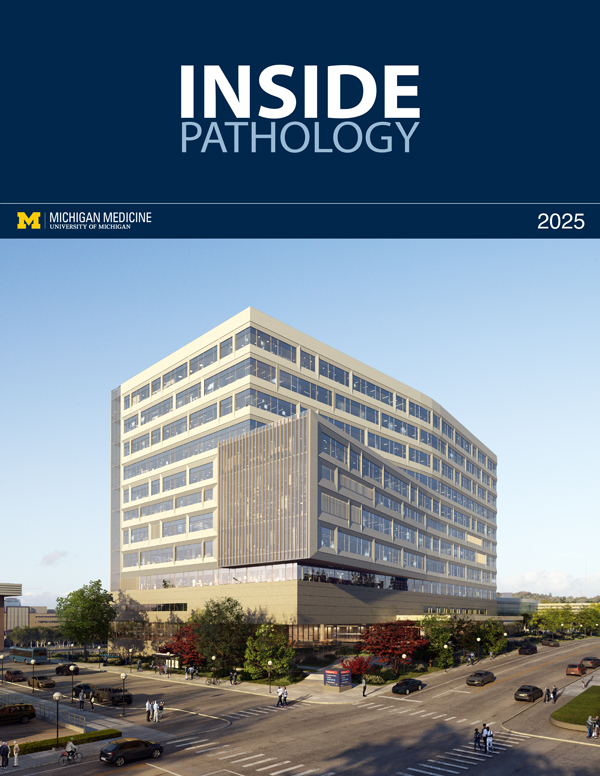
Rendering of the D. Dan and Betty Khn Health Care Pavilion. Credit: HOK |
newsletter
INSIDE PATHOLOGYAbout Our NewsletterInside Pathology is an newsletter published by the Chairman's Office to bring news and updates from inside the department's research and to become familiar with those leading it. It is our hope that those who read it will enjoy hearing about those new and familiar, and perhaps help in furthering our research. CONTENTS
|
MLabs, established in 1985, functions as a portal to provide pathologists, hospitals. and other reference laboratories access to the faculty, staff and laboratories of the University of Michigan Health System’s Department of Pathology. MLabs is a recognized leader for advanced molecular diagnostic testing, helpful consultants and exceptional customer service.