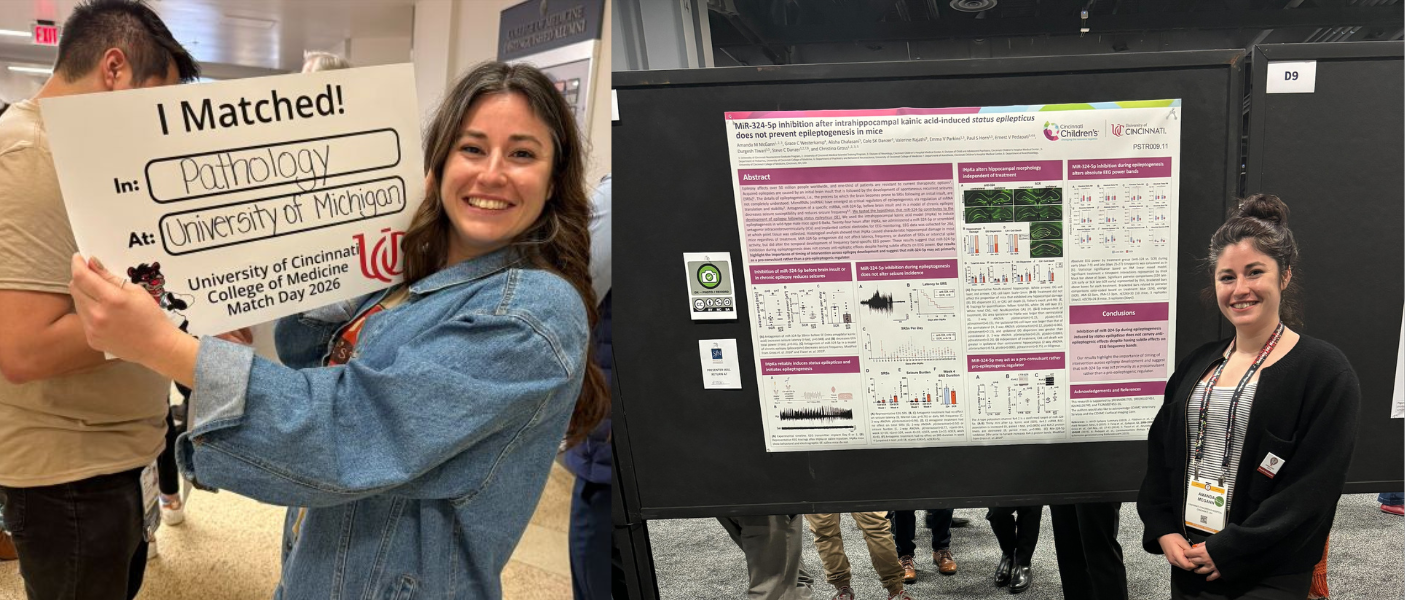
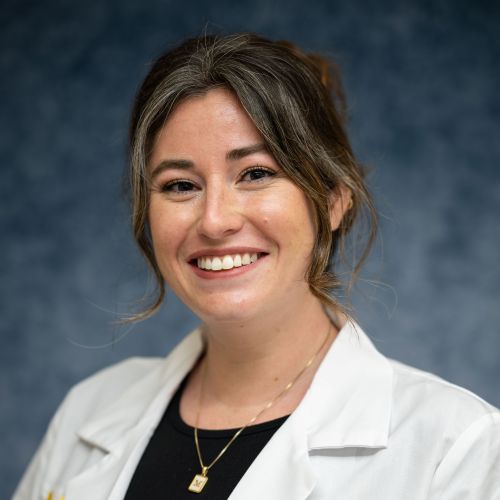
 When Amanda McGann, MD, PhD, arrived at the University of Michigan Department of Pathology this summer, she brought with her a passion for science, education and discovery, along with experience as a neuroscientist, endurance athlete and lifelong learner.
Originally from Colorado Springs, Colorado, McGann joins Michigan as a first-year AP/CP resident after completing her MD-PhD training at the University of Cincinnati. Although pathology was not always her planned destination, she says the specialty ultimately combined everything she loved most about medicine and research.
“I really liked histology when I was in medical school, and when I was in the lab, I loved microscopy and laboratory research,” McGann said. “By the time I got to my clinical rotations, I was pretty sure pathology was what I wanted to do.”
A Midwestern Journey
 McGann's path to pathology began far from the laboratory. Growing up in Colorado, she first became interested in medicine after suffering a torn ACL while playing soccer at age 13.
“I remember thinking the reconstruction was the coolest thing I'd ever seen,” she said. “My ligament was snapped in half, and they went in and built a new one from my muscle. That's when I first started thinking about medicine.”
She originally thought she would become an orthopedic surgeon, but her interests evolved during college at the University of Notre Dame. In fact, she initially planned to major in romance languages and literature, then switched to psychology before discovering neuroscience, a newly established program at the university.
“Neuroscience felt like the perfect combination of psychology and biology,” she said. “Once I found it, I loved it.”
After earning her undergraduate degree, McGann completed a combined MD-PhD program at the University of Cincinnati, where her doctoral research focused on the molecular mechanisms underlying epilepsy development.
Working under the mentorship of Nina Gross, PhD, at Cincinnati Children's Hospital, McGann studied microRNAs and their role in the biological changes that occur after a brain injury and can eventually lead to epilepsy.
“Our work showed that one particular microRNA could help reduce seizures after epilepsy was established, but it didn't prevent the brain changes that lead to epilepsy in the first place,” she said. “It wasn't the answer we hoped for, but negative results are still important science.”
Finding the Right Specialty
 While her academic background might suggest a future in neurology, McGann found herself increasingly drawn to pathology during medical school and graduate training.
“I realized I really liked the environment of the lab,” she said. “The testing, the microscopy, the investigation—everything I enjoyed doing in research looked a lot like what pathologists do every day.”
She also appreciated pathology's unique role in patient care.
“You have to ask yourself whether you're comfortable not seeing patients directly,” McGann said. “For me, the answer was yes. I enjoyed interacting with patients, but I enjoyed what pathologists do even more.”
Although she completed an MD-PhD through a Medical Scientist Training Program, McGann chose not to pursue the Physician-Scientist Training Program pathway during residency. Instead, she hopes to build a career that balances clinical work, teaching, and research.
“I still want to do research, but I don't necessarily see myself running an independent laboratory,” she said. “I enjoy too many other parts of medicine, especially education.”
Why Michigan?
When evaluating residency programs, McGann prioritized excellent training, opportunities for physician-scientists, and a location where she could see herself building a life.
Michigan checked every box.
“I wanted a program that would expose me to a huge variety of cases and give me as many opportunities as possible,” she said. “I also wanted to be somewhere that had experience training people with backgrounds like mine.”
The department's strong research environment, numerous MD-PhD trainees, and collaborative culture stood out during the interview process. Equally important was Michigan's location.
“I've spent most of my adult life in the Midwest, and I really wanted to stay here,” she said. “Ann Arbor offered an outstanding program, a great place to live, and the chance to be closer to family.”
First Impressions
Just a few weeks into residency, McGann says one thing has stood out more than anything else: the people.
“Everyone told me during interviews that the culture here was exceptional,” she said. “You always wonder if that's really true. But it absolutely is.”
Despite describing herself as an introvert, she says she quickly felt comfortable within the department.
“Within days, I realized I was looking forward to talking with people as they walked through the resident room,” she said. “The residents, faculty, and staff have all been so welcoming and supportive.”
Her first rotation in molecular pathology has reinforced her enthusiasm for the field.
“I can work the same number of hours I might in another specialty and not feel nearly as exhausted because I genuinely enjoy what I'm doing,” she said.
Looking Ahead
While it is still early in her training, McGann is particularly excited about surgical pathology, forensic pathology, and molecular pathology. She currently sees pediatric pathology as a possible future subspecialty because of its connection to developmental biology and broad exposure to different organ systems.
Long term, she hopes to build a career in academic pathology that combines patient care, education, and research.
“I really enjoy teaching,” she said. “I want to stay involved in medical education and continue thinking about how we can help people learn more effectively.”
Beyond the Microscope
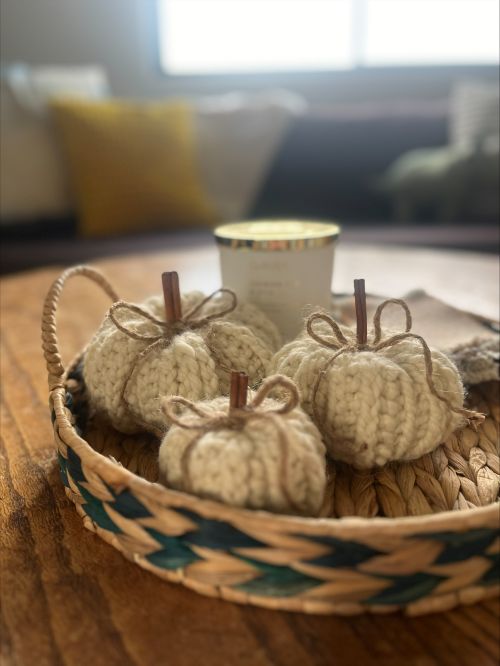 Outside of work, McGann maintains an active lifestyle that includes skiing, snowboarding, and triathlon competition. She has completed multiple half-Ironman events and has been racing triathlons since age 18.
“Cycling is my favorite,” she said. “I love being outside.”
An avid reader who has already finished nearly 20 books this year, McGann also enjoys knitting and crocheting, especially creating small stuffed pumpkins each fall.
She is equally passionate about sports, following everything from football and hockey to tennis and cycling. One item high on her bucket list is attending the Tour de France in person. She also hopes to go to Japan someday to enjoy sushi, one of her favorite foods.
 As she settles into Michigan, she is looking forward to exploring the state's outdoor recreation opportunities, from hiking and biking trails to northern Michigan destinations, and visiting Traverse City, which she has heard much about.
For now, however, she is excited simply to begin the next chapter of her career.
“I'm excited to do pathology all day, every day,” McGann said. “I feel incredibly lucky that this is my job and that I get to spend my career doing something I genuinely love.”
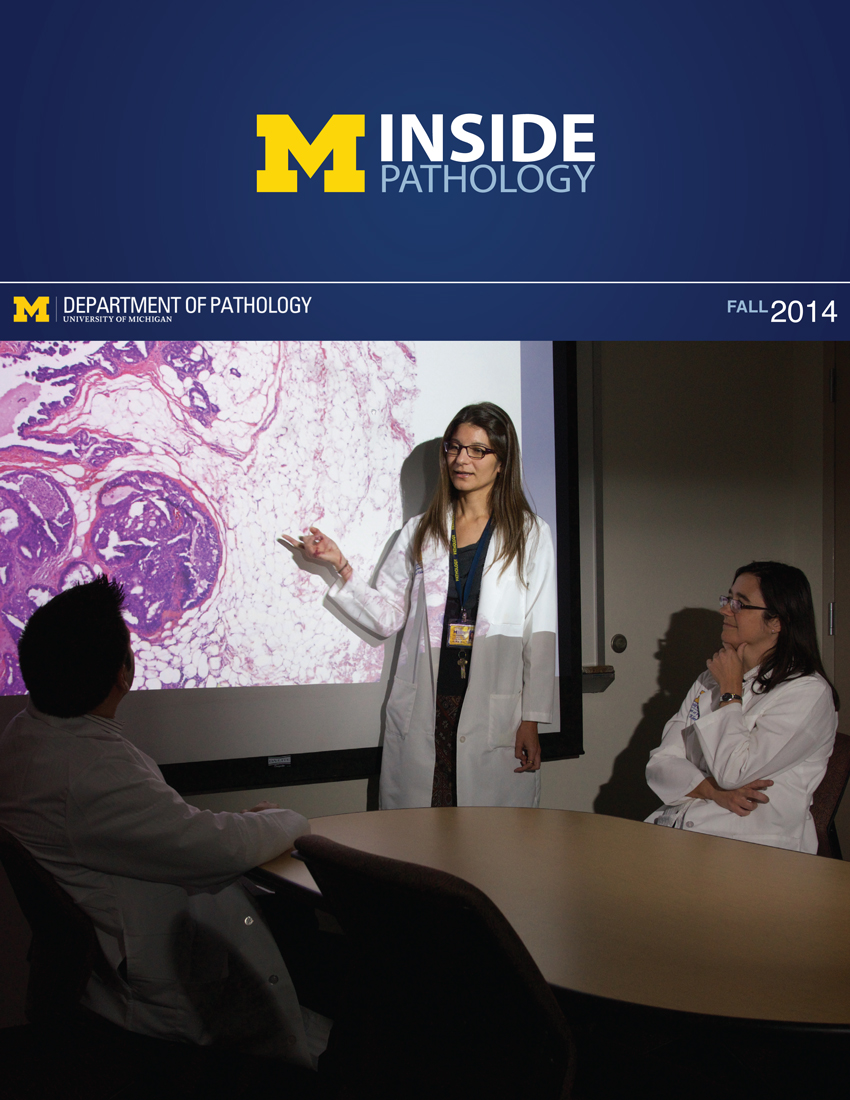 ON THE COVER
Breast team reviewing a patient's slide. (From left to right) Ghassan Allo, Fellow; Laura Walters, Clinical Lecturer; Celina Kleer, Professor. See Article |
newsletter
INSIDE PATHOLOGYAbout Our NewsletterInside Pathology is an newsletter published by the Chairman's Office to bring news and updates from inside the department's research and to become familiar with those leading it. It is our hope that those who read it will enjoy hearing about those new and familiar, and perhaps help in furthering our research. CONTENTS
|
 ON THE COVER
Autopsy Technician draws blood while working in the Wayne County morgue. See Article |
newsletter
INSIDE PATHOLOGYAbout Our NewsletterInside Pathology is an newsletter published by the Chairman's Office to bring news and updates from inside the department's research and to become familiar with those leading it. It is our hope that those who read it will enjoy hearing about those new and familiar, and perhaps help in furthering our research. CONTENTS
|
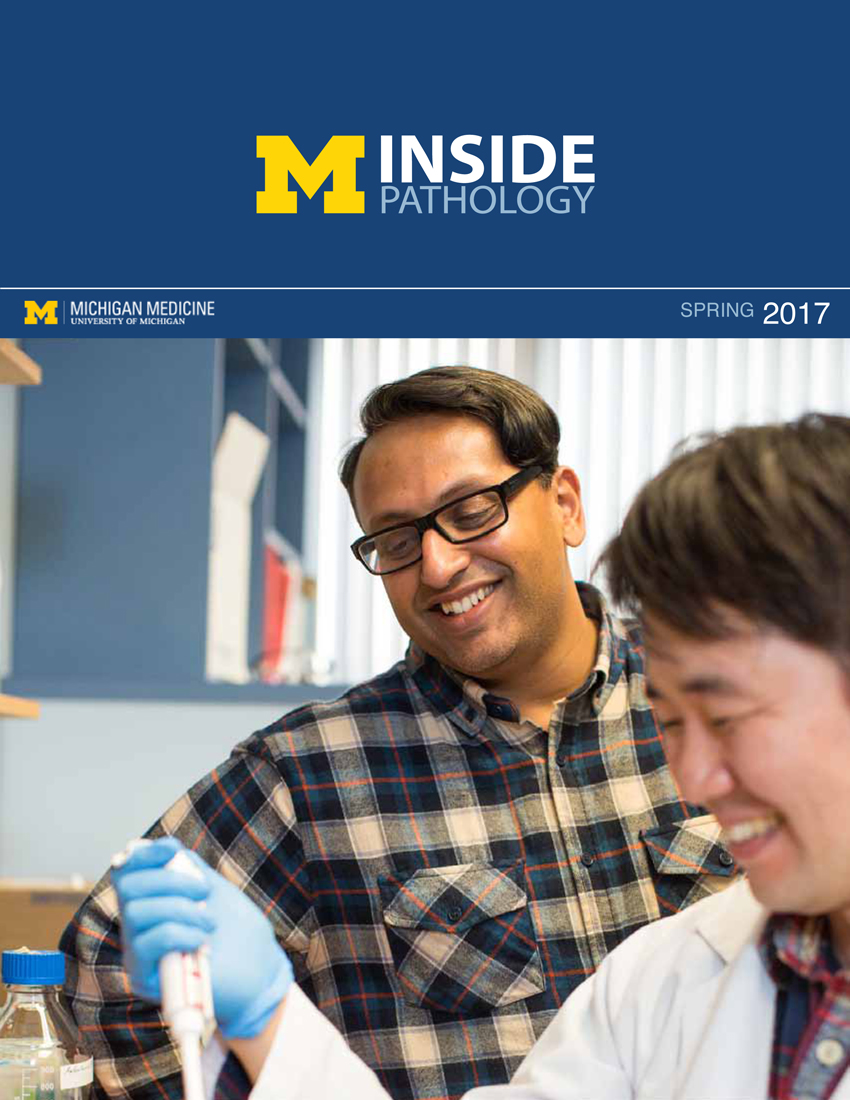 ON THE COVER
Dr. Sriram Venneti, MD, PhD and Postdoctoral Fellow, Chan Chung, PhD investigate pediatric brain cancer. See Article |
newsletter
INSIDE PATHOLOGYAbout Our NewsletterInside Pathology is an newsletter published by the Chairman's Office to bring news and updates from inside the department's research and to become familiar with those leading it. It is our hope that those who read it will enjoy hearing about those new and familiar, and perhaps help in furthering our research. CONTENTS
|
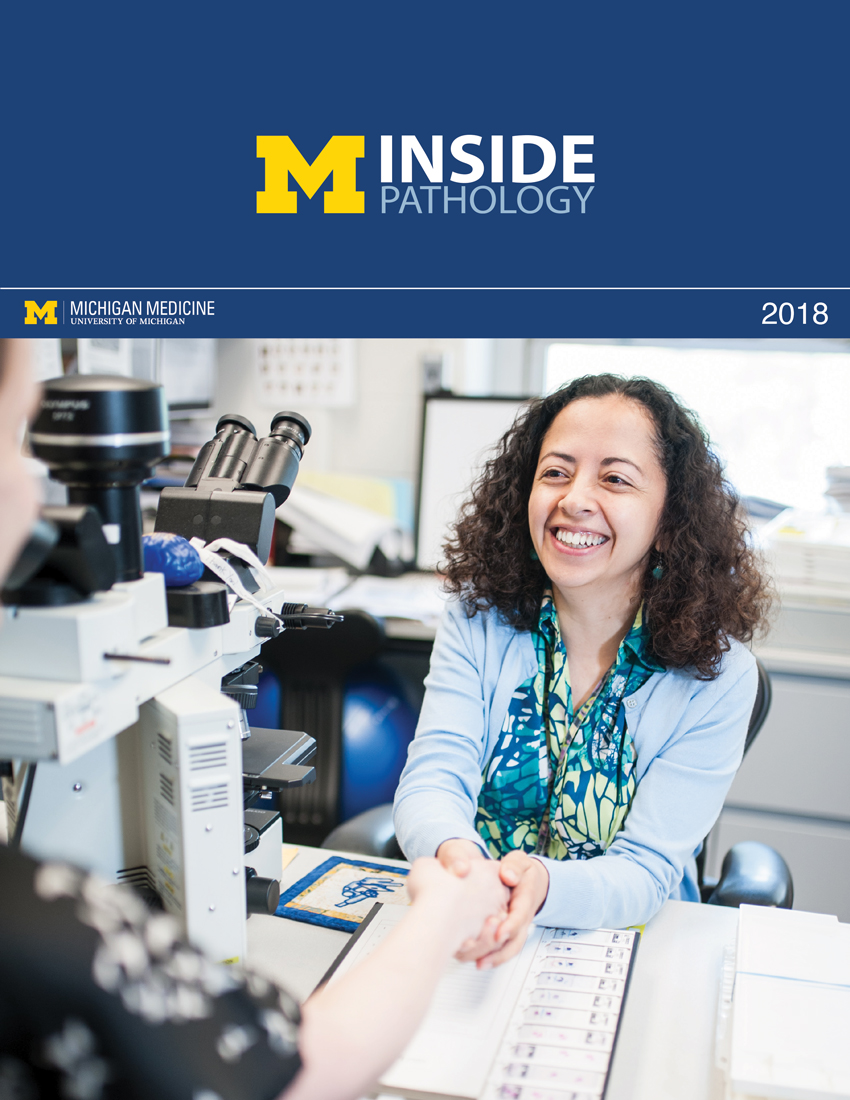 ON THE COVER
Director of the Neuropathology Fellowship, Dr. Sandra Camelo-Piragua serves on the Patient and Family Advisory Council. |
newsletter
INSIDE PATHOLOGYAbout Our NewsletterInside Pathology is an newsletter published by the Chairman's Office to bring news and updates from inside the department's research and to become familiar with those leading it. It is our hope that those who read it will enjoy hearing about those new and familiar, and perhaps help in furthering our research. CONTENTS
|
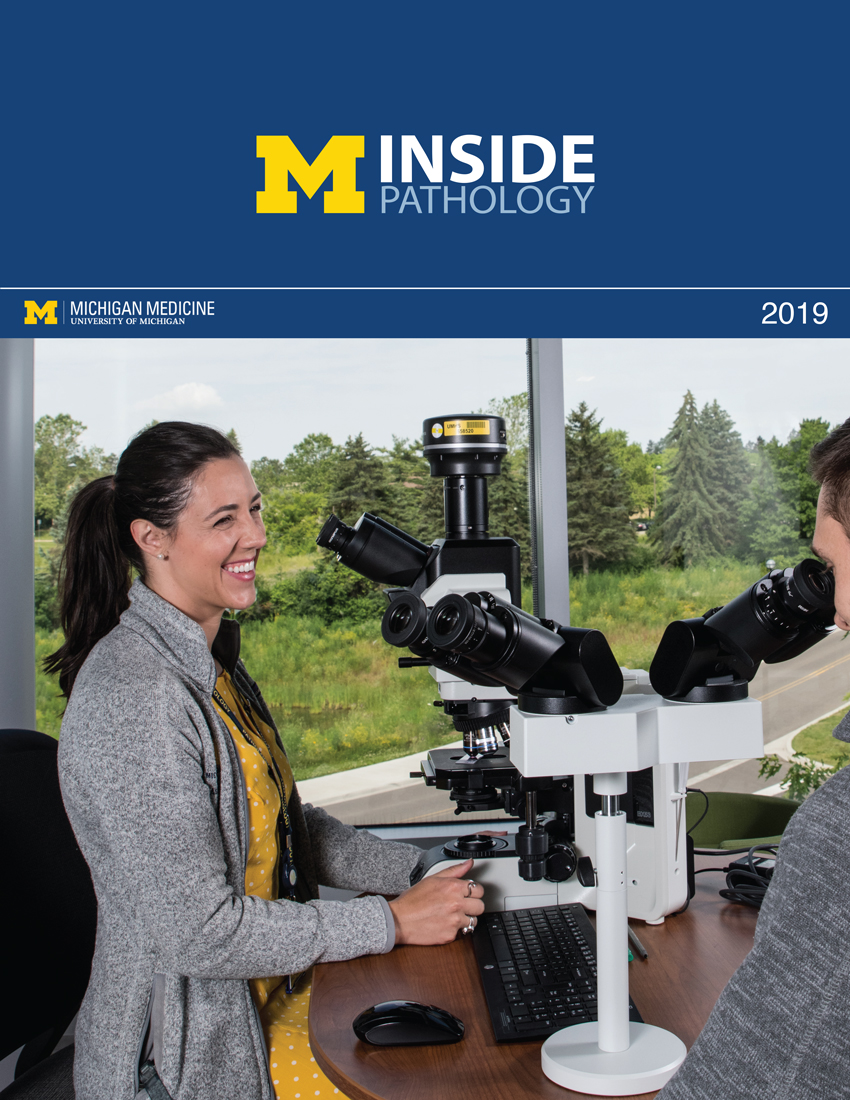 ON THE COVER
Residents Ashley Bradt (left) and William Perry work at a multi-headed scope in our new facility. |
newsletter
INSIDE PATHOLOGYAbout Our NewsletterInside Pathology is an newsletter published by the Chairman's Office to bring news and updates from inside the department's research and to become familiar with those leading it. It is our hope that those who read it will enjoy hearing about those new and familiar, and perhaps help in furthering our research. CONTENTS
|
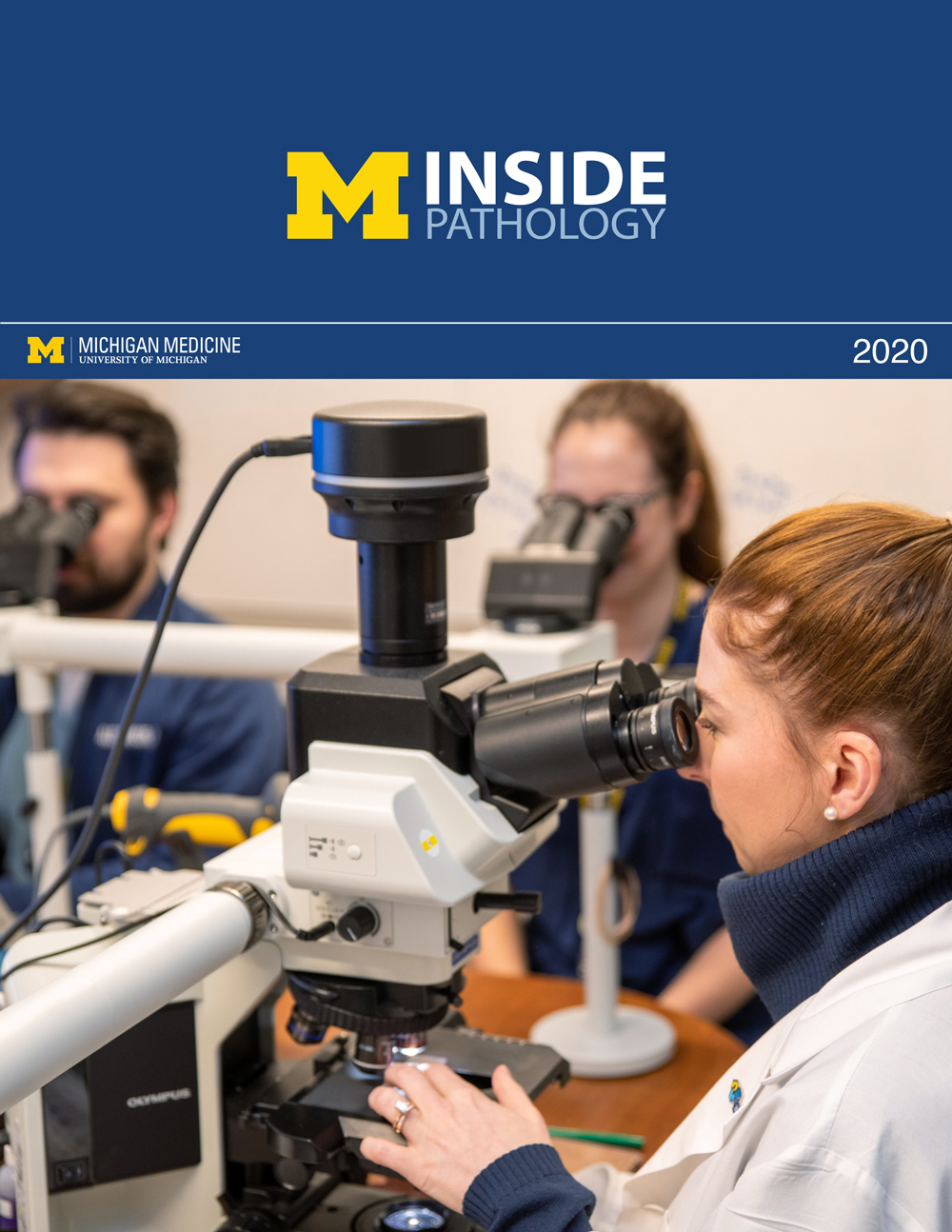 ON THE COVER
Dr. Kristine Konopka (right) instructing residents while using a multi-headed microscope. |
newsletter
INSIDE PATHOLOGYAbout Our NewsletterInside Pathology is an newsletter published by the Chairman's Office to bring news and updates from inside the department's research and to become familiar with those leading it. It is our hope that those who read it will enjoy hearing about those new and familiar, and perhaps help in furthering our research. CONTENTS
|
 ON THE COVER
Patient specimens poised for COVID-19 PCR testing. |
newsletter
INSIDE PATHOLOGYAbout Our NewsletterInside Pathology is an newsletter published by the Chairman's Office to bring news and updates from inside the department's research and to become familiar with those leading it. It is our hope that those who read it will enjoy hearing about those new and familiar, and perhaps help in furthering our research. CONTENTS
|
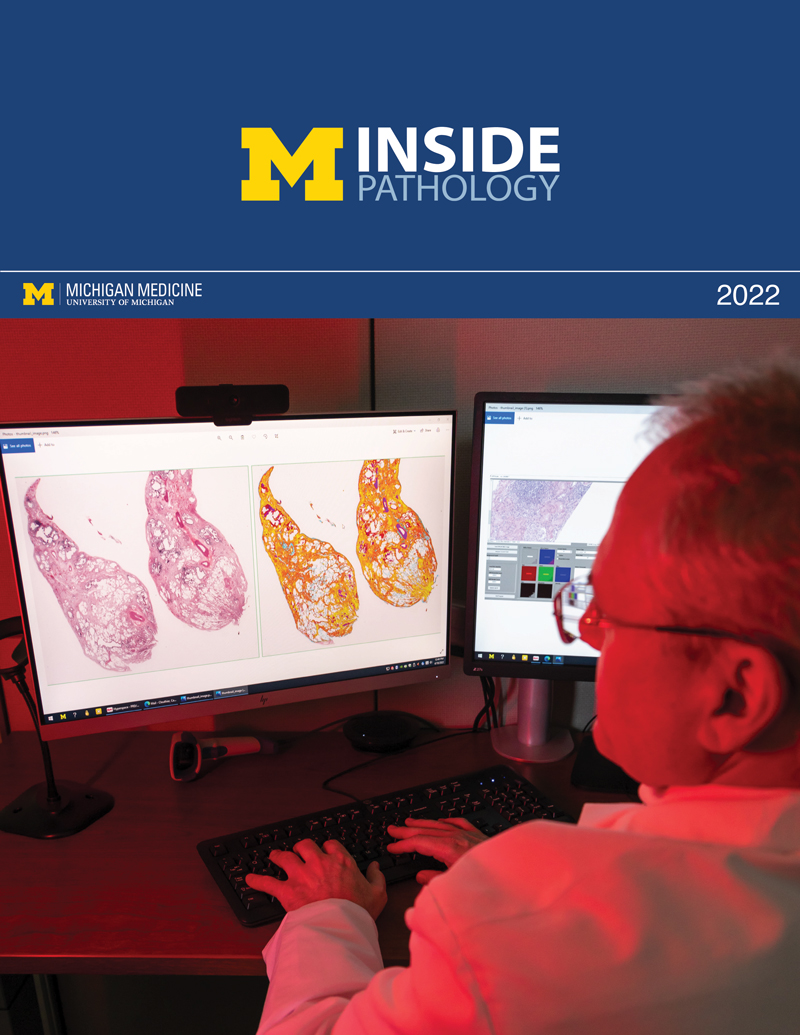 ON THE COVER
Dr. Pantanowitz demonstrates using machine learning in analyzing slides. |
newsletter
INSIDE PATHOLOGYAbout Our NewsletterInside Pathology is an newsletter published by the Chairman's Office to bring news and updates from inside the department's research and to become familiar with those leading it. It is our hope that those who read it will enjoy hearing about those new and familiar, and perhaps help in furthering our research. CONTENTS
|
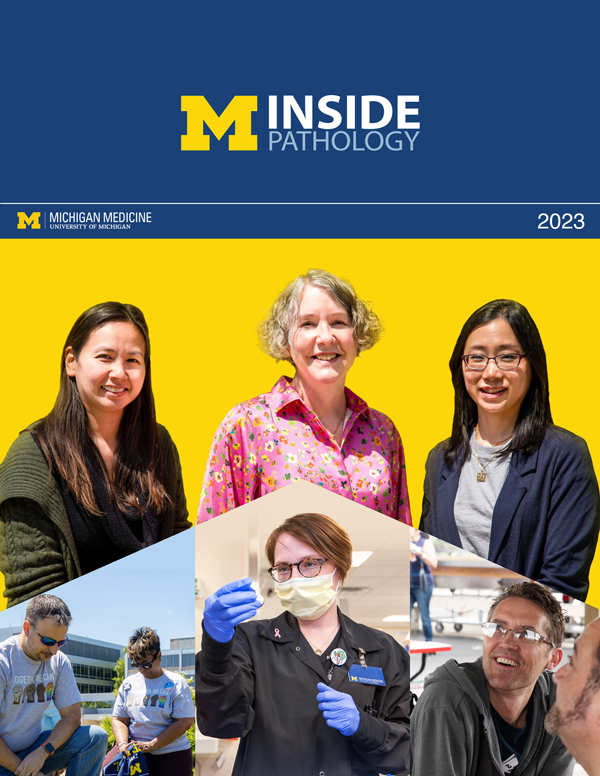 ON THE COVER
(Left to Right) Drs. Angela Wu, Laura Lamps, and Maria Westerhoff. |
newsletter
INSIDE PATHOLOGYAbout Our NewsletterInside Pathology is an newsletter published by the Chairman's Office to bring news and updates from inside the department's research and to become familiar with those leading it. It is our hope that those who read it will enjoy hearing about those new and familiar, and perhaps help in furthering our research. CONTENTS
|
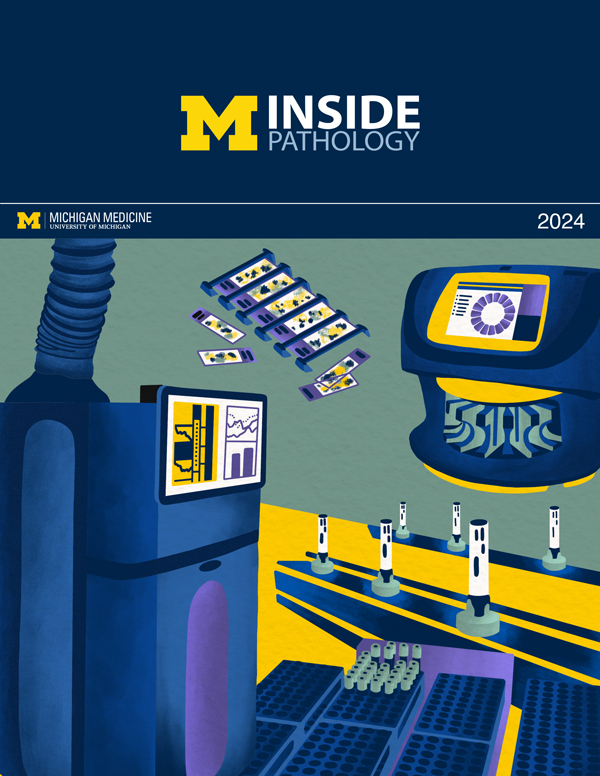 ON THE COVER
Illustration representing the various machines and processing used within our labs. |
newsletter
INSIDE PATHOLOGYAbout Our NewsletterInside Pathology is an newsletter published by the Chairman's Office to bring news and updates from inside the department's research and to become familiar with those leading it. It is our hope that those who read it will enjoy hearing about those new and familiar, and perhaps help in furthering our research. CONTENTS
|
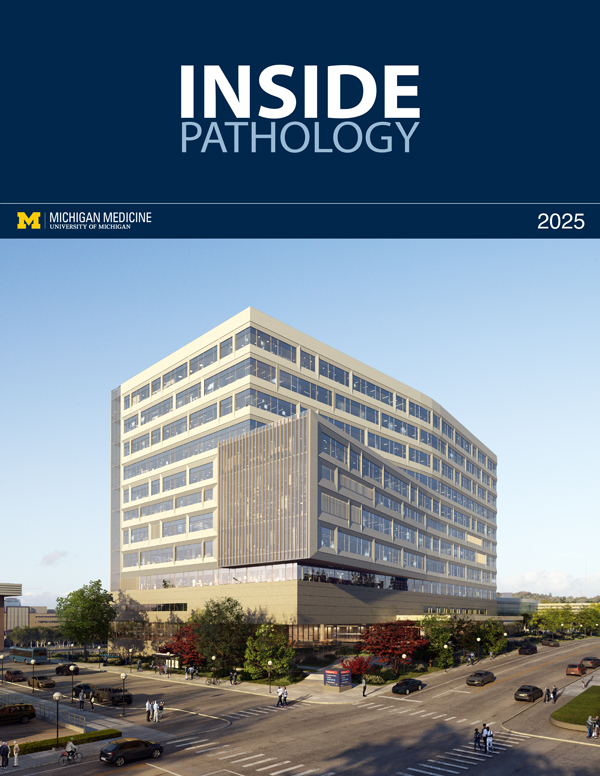 ON THE COVER
Rendering of the D. Dan and Betty Khn Health Care Pavilion. Credit: HOK |
newsletter
INSIDE PATHOLOGYAbout Our NewsletterInside Pathology is an newsletter published by the Chairman's Office to bring news and updates from inside the department's research and to become familiar with those leading it. It is our hope that those who read it will enjoy hearing about those new and familiar, and perhaps help in furthering our research. CONTENTS
|
MLabs, established in 1985, functions as a portal to provide pathologists, hospitals. and other reference laboratories access to the faculty, staff and laboratories of the University of Michigan Health System’s Department of Pathology. MLabs is a recognized leader for advanced molecular diagnostic testing, helpful consultants and exceptional customer service.