Drs. Simon Hogan and Nicholas Lukacs Receive Strategic Initiative Fund Award to Establish Michigan Center for Human Immunology Model Systems (Mi-CHIM)
By Lynn McCain | August 28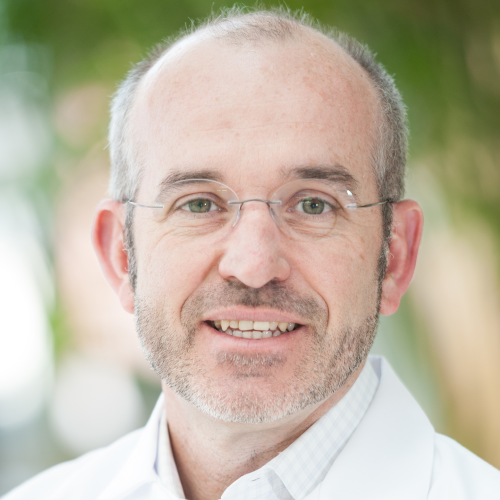 A new University of Michigan initiative aims to address one of biomedical research’s most persistent challenges: why therapies that succeed in animal models often fail in human patients. Now, a new initiative led by Drs. Simon P. Hogan, the Askwith Research Professor of Food Allergy, Mary H. Weiser Food Allergy Center and Professor of Pathology, and Nicholas W. Lukacs, the Godfrey Dorr Stobbe Professor of Pathology and interim Director of the Mary H. Weiser Food Allergy Center, aims to help close that gap.
 Hogan and Lukacs recently received one of the University of Michigan's first-round Strategic Initiative Fund awards to establish the Michigan Center for Human Immunology Model Systems (MiCHIM), a shared research facility designed to accelerate human-centered immunology research. The center will give researchers access to two key resources: laboratory-grown human immune cells derived from induced pluripotent stem cells (iPSCs), and humanized mouse models that can more accurately capture how the human immune system actually responds, something traditional mouse models often fail to replicate.
The project builds on years of research by both investigators. Hogan's lab has focused on mast cells, specialized immune cells that play a central role in food allergies and other inflammatory diseases. Lukacs' research, meanwhile, centers on innate and acquired immune responses in allergen- and respiratory virus-induced acute and chronic disease, as well as the role the gut microbiome plays in the development of allergic disease. Together, their work has highlighted a longstanding challenge in biomedical research: findings in animal models do not always predict human biology.
"Traditional animal models sometimes fail to predict human immune responses because of species differences between mice and humans," Hogan explained during a recent interview. Those differences can limit researchers' ability to understand immune cell function, disease mechanisms and contribute to failures in drug development and clinical trials.
Hogan's laboratory laid the foundation for MiCHIM by developing a system to create human mast cells from induced pluripotent stem cells. These stem cells can be reprogrammed from adult cells and then directed to become specific immune cell types. The approach enabled researchers to generate and study human mast cells in the laboratory, overcoming a longstanding obstacle in the field: mast cells are relatively rare in blood and tissues, making them difficult to obtain in sufficient numbers for research.
In 2024 Hogan and colleagues reported in Mucosal Immunology, a method for generating human mast cells from induced pluripotent stem cells. The resulting cells closely resembled naturally occurring human mast cells, providing researchers with a reliable and renewable source of cells for studying allergic and inflammatory diseases.
The success of that work helped inspire a broader vision: creating a shared resource that would allow researchers across the university to generate and study a wide range of human immune cells.
MiCHIM aims to transform that capability into a university-wide resource. Working in partnership with U-M's Human Stem Cell & Gene Editing Core, the center will create a pipeline through which researchers can generate a variety of human immune cells, including T cells, B cells, natural killer cells, neutrophils, eosinophils, basophils, and mast cells. Investigators will be able to study these cells in laboratory settings and, when appropriate, in humanized mouse models that allow researchers to observe cellular behavior within a living organism.
The potential applications extend well beyond allergy research. The platform could eventually allow scientists to generate patient-specific immune cells from an individual’s own blood. Researchers could then study how particular genetic mutations influence disease or treatment responses in an individual's own cells.
Beyond supporting individual research programs, MiCHIM aims to position the University of Michigan as a national leader in human immunology model systems. By providing access to specialized technologies, expertise, and human cell-based model systems, the center will help investigators generate the preliminary data needed to compete for major external funding and launch new collaborative research initiatives.
Although the award has only recently been announced, planning is already underway. Hogan and Lukacs are now working with university leaders to identify space, recruit personnel, develop standard operating procedures, and build the infrastructure needed to support a robust research enterprise. They anticipate establishing the center and validating its workflows will take approximately 12 to 18 months before full operations begin.
Ultimately, MiCHIM is an investment in the future of biomedical discovery. By providing researchers with more accurate models of human immune function, the center has the potential to accelerate scientific breakthroughs, improve drug development, and advance therapies for patients affected by allergic, inflammatory, infectious, and immune-mediated diseases.
****
Citation:
Idelman G, Rizza CF, Marella S, Sharma A, Chakraborty S, Tay HL, Tomar S, Ganesan V, Schuler IV CF, Baker JR, Hogan SP. Inducible pluripotent stem cells to study human mast cell trajectories. Mucosal Immunology 17(2024):1029-1044. https://doi.org/10.10161/j.mucimm.2024.07.003.
 ON THE COVER
 ON THE COVER
 ON THE COVER
 ON THE COVER
 ON THE COVER
 ON THE COVER
 ON THE COVER
 ON THE COVER
 ON THE COVER
 ON THE COVER
 ON THE COVER