Joanna Lum Becomes Dr. Joanna Lum
By Lynn McCain | September 10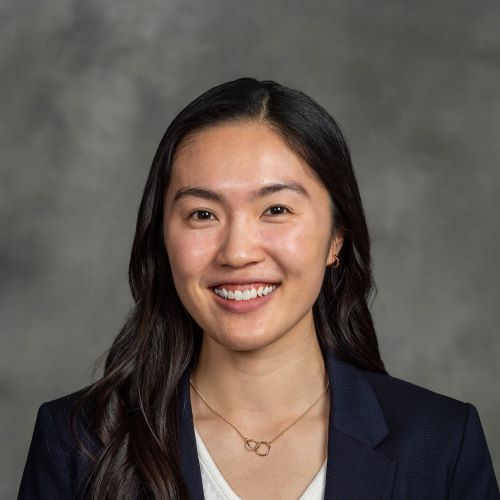 When Joanna Lum began doing undergraduate research in Dr. Erin Green’s yeast lab at the University of Maryland, Baltimore County (UMBC), she was drawn to the idea that small discoveries in simple organisms could help explain much larger questions in human biology.
At the time, she was studying methyltransferases in yeast. Later, she came to understand that many proteins involved in gene regulation and translational research were first studied in model organisms like yeast. That realization helped point her toward a future in pathology and cancer biology.
“I really enjoyed being in the lab and pipetting and doing the fundamental lab skills,” Lum said. “But on top of that, there’s something really cool about asking questions that don’t have obvious answers. You’re discovering something for the first time.”
That curiosity eventually brought Lum to the University of Michigan, where she recently defended her dissertation, “Histone lactylation and epigenetic reprogramming in diffuse midline glioma.”
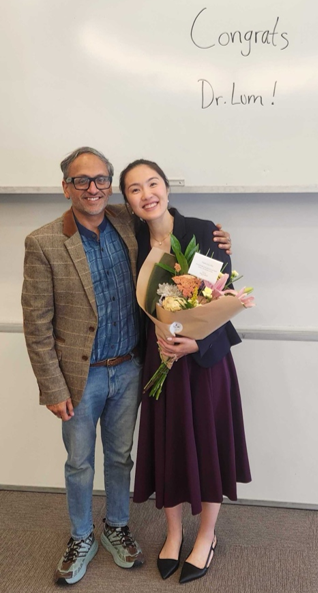
Now officially Dr. Joanna Lum, she has spent her time as a Molecular and Cellular Pathology graduate student studying how cancer cells use altered metabolism to influence gene expression in one of the most aggressive pediatric brain cancers.
 Lum conducted her doctoral research in the laboratory of Sriram Venneti, MD, PhD, whose lab studies epigenetics and metabolism in childhood brain tumors. Her work focused on diffuse midline glioma, or DMG, a devastating tumor that often arises in the brainstem and primarily affects children. Treatment options remain limited, and the disease is typically highly aggressive.
The central question driving Lum’s thesis was how altered metabolism contributes to tumor behavior.
Cancer cells often increase glucose uptake to sustain rapid growth. In H3K27M-mutant DMG, that metabolic shift enhances glycolysis and leads to excess production of lactate.
“For decades, lactate was thought of as a waste product, something cells would throw out,” Lum said. “But recently, the field has come to realize that cancer cells are pretty good at using lactate to decorate the genome in multiple places.”
 In fact, in the last decade, scientists have begun to recognize that lactate can do much more, contributing to tumor acidity, immune suppression, therapy resistance, and changes in gene regulation.
Lum’s work investigated one of those emerging roles: histone lactylation, an epigenetic modification in which lactate is used to modify histones, the proteins around which DNA is packaged. These modifications can help regulate whether genes are turned on or off.
In her dissertation research, Lum found that H3K27M-mutant DMG cells exhibit elevated levels of H3K27Lac, a histone lactylation marker associated with active gene expression. Her work showed that this marker correlates with other activating epigenetic markers and is linked to gene programs that help maintain tumor cells in aggressive developmental states. These findings identify a previously underappreciated role for lactate in high-grade glioma and point to a lactate-lactylation axis as a potentially targetable dependency in H3K27M DMG.
 For Lum, the work was meaningful not only because of the biology, but also because of the patients behind the research. During her graduate training, she was supported by the NIH Training Program in Translational Research T32, which gave her the opportunity to shadow clinicians and observe how children with brain tumors are examined, diagnosed, enrolled in clinical trials, and treated.
“That gave me a real appreciation for how research is linked to what we can do in the clinic,” she said. “I think that is really rare to see as a PhD student.”
Lum also received a ChadTough Defeat DIPG Pre-Doctoral Fellowship Grant, which supported her DMG research and connected her with a community deeply invested in improving outcomes for children with these tumors.
“Receiving support from ChadTough was a huge honor,” Lum said. “Getting to meet some of the families and children affected by this disease had a big impact on me.”
Lum’s path to Michigan began years earlier, after she moved from Hong Kong to Maryland with her family at age 15. The transition to a new country and culture was difficult, but she said it helped her develop resilience and adaptability, qualities that later became essential in graduate school.
“What may be familiar or accepted in one culture can be very different in another,” Lum said. “Learning to adapt and remain resilient as a teenager helped me navigate that transition. I didn’t realize it at the time, but those experiences became some of the most formative lessons I carried with me. In graduate school, that same resilience and adaptability gave me the confidence to step outside my comfort zone, seek out new opportunities, and actively pursue the skills and goals I set for myself.”
As a first-generation college student, Lum credits mentorship with helping her find her way into science. At UMBC, she participated in the MARC U-STAR program, now known as U-RISE, which introduced her to graduate research training and helped demystify the process of applying to PhD programs.
“My parents didn’t go to college or get PhDs,” Lum said. “Being part of a program that had structure, where I had mentors and learned when to apply to graduate school and how to write a personal statement, was really helpful.”
One of her mentors, Dr. Jacqueline King, encouraged her to add Michigan to her graduate school list. Lum had not initially considered U-M, but during her interview visit she saw an environment where she believed she could thrive.
“The student organizations were plenty,” she said. “There was a lot of support, excellent research, and lots of labs to choose from. It was also clear that research was not the only thing Michigan would support; there was also support for thinking about what comes after the PhD.”
 That support shaped her graduate experience. In addition to her dissertation research, Lum took bioinformatics courses, participated in workshops through the Bioinformatics Core, and mentored undergraduate and high school students in the lab. She said helping younger students has become one of the most rewarding parts of her work.
“I’m only where I am today because I’ve been fortunate to meet so many incredible people who have supported and guided me along the way,” she said. “Their generosity has had such a meaningful impact on my journey, and I hope to pay that forward by supporting and mentoring younger students.”
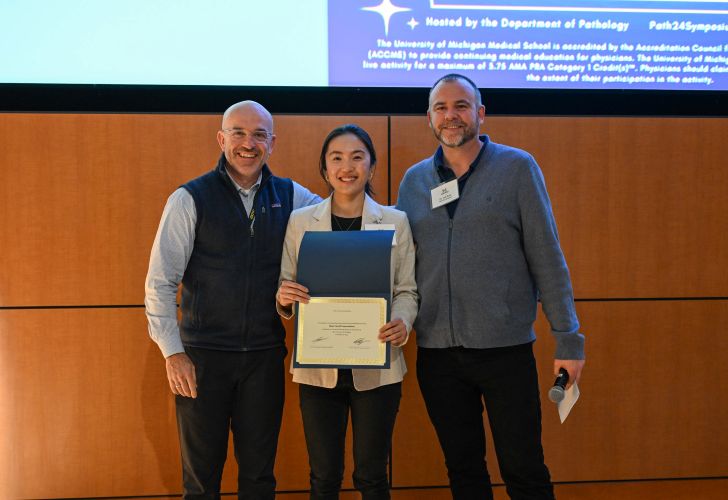
Lum’s ability to communicate science clearly was recognized in 2024, when she received the Best Oral Presentation Award at the University of Michigan Annual Pathology Research Symposium. During her time in graduate school, she also received the Rackham Merit Fellowship, and the Molecular and Cellular Pathology Research Grant.
Her publication record spans metabolism, epigenetics, pediatric brain tumors, leukemia, and model organism biology, including work published in Cancer Cell, Nature, Molecular Cytogenetics, and G3. Her dissertation work on lactate and tumor cell differentiation states in H3K27M diffuse midline glioma is currently in preparation.
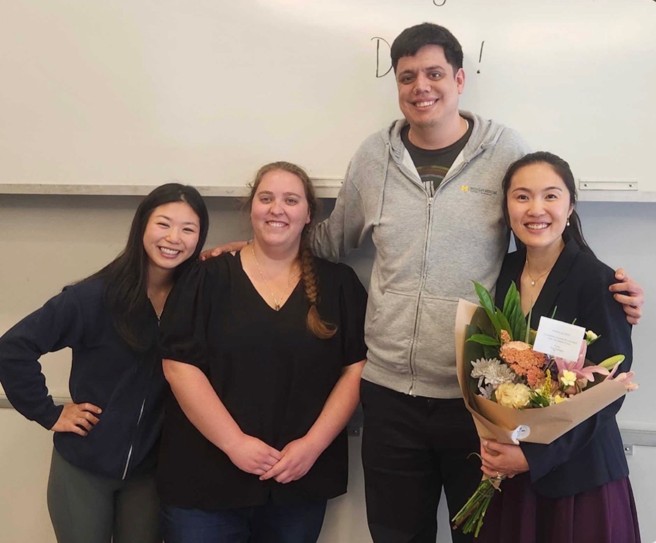
Looking back, Lum said defending her dissertation was a major highlight, but the larger achievement was learning how to think like an independent scientist.
“Becoming more of an independent thinker, learning resilience when things don’t work over and over, learning to pivot and think about things differently, and how my mind has changed is a huge highlight,” she said.
Following her defense, Lum is continuing in the Venneti lab as a postdoctoral fellow while completing projects, mentoring students, and building new skills. Her next goal is to pursue a Laboratory Genetics and Genomics Fellowship, a two- to three-year clinical training program that would allow her to continue connecting molecular science with patient care.
 Outside the lab, Lum finds joy in spending time with her husband, enjoying Ann Arbor’s natural spaces, her fish tank, and her two rescue dogs, Indy and Argo. Argo, still a puppy, is named after Argo Park, one of Lum’s favorite places in the city.
“I love nature,” Lum said. “I love living in Ann Arbor and exploring all the trails and natural spaces.”
From adapting to life in a new country to uncovering how cancer cells use metabolism to shape gene expression, Lum’s story is one of curiosity, perseverance, and mentorship. As she moves into the next stage of her career, she carries with her both a deep appreciation for those who opened doors for her and a commitment to doing the same for others.
 ON THE COVER
 ON THE COVER
 ON THE COVER
 ON THE COVER
 ON THE COVER
 ON THE COVER
 ON THE COVER
 ON THE COVER
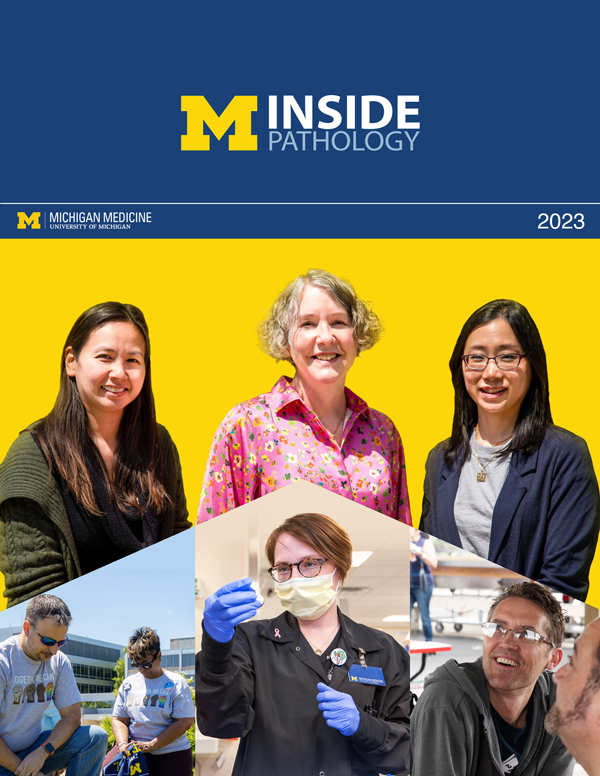 ON THE COVER
 ON THE COVER
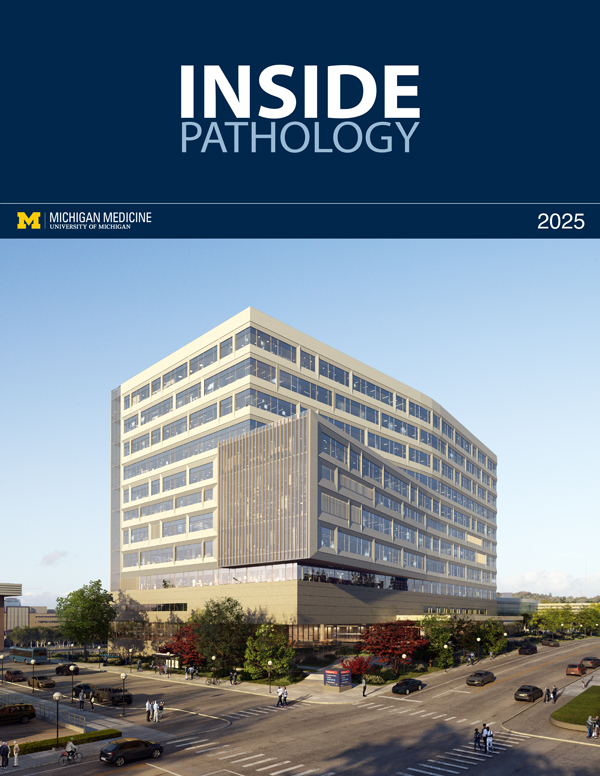 ON THE COVER