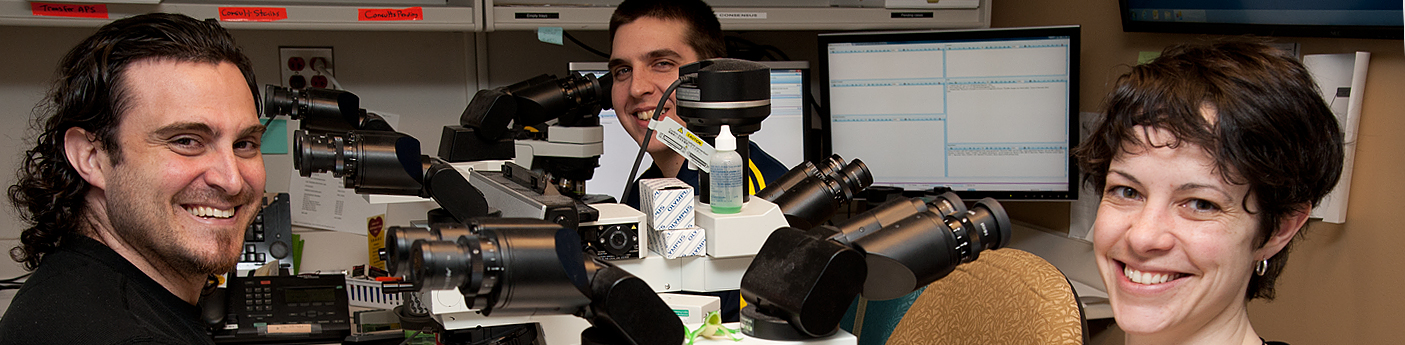
Jessica Anderson-Calleja, MD, a hematopathology fellow at Michigan Medicine, is gaining recognition for her work exploring how artificial intelligence can improve laboratory operations.
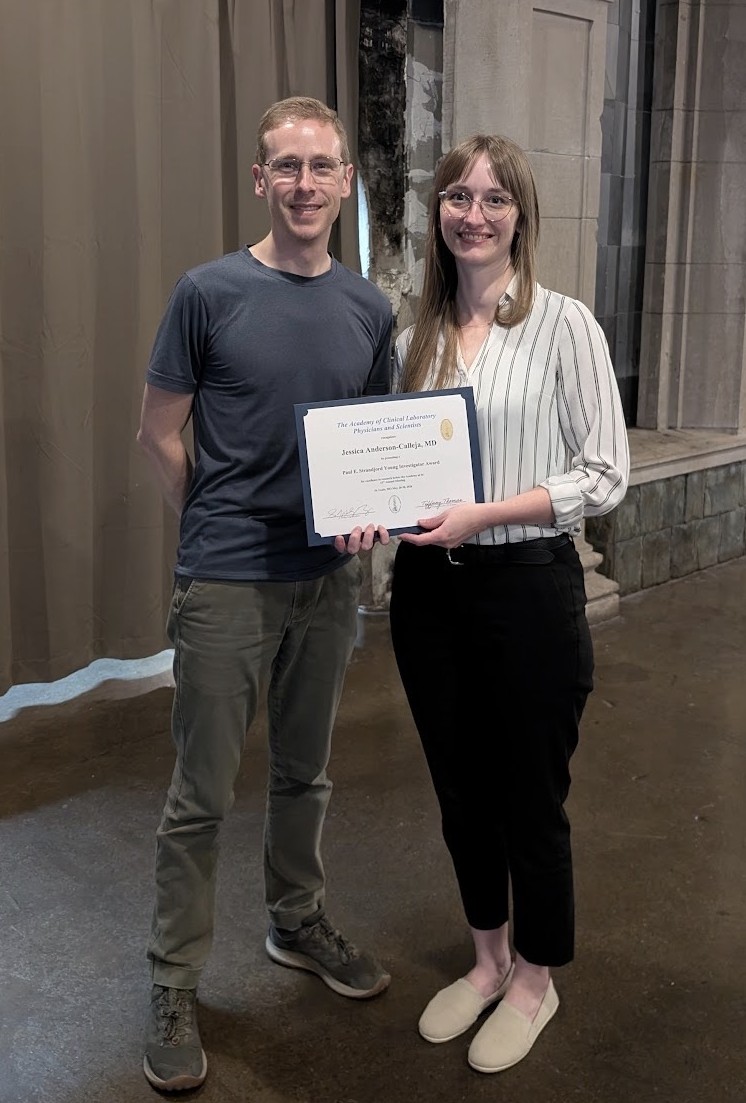
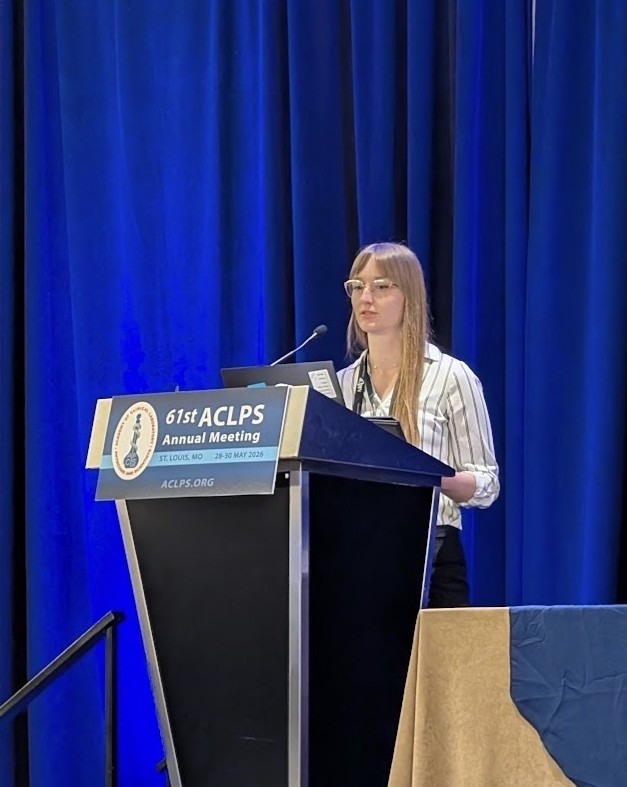 Anderson-Calleja recently received the Paul E. Strandjord Young Investigator Award from the Academy of Clinical Laboratory Physicians and Scientists (ACLPS) after presenting her research at the organization’s annual meeting in St. Louis. The award highlights emerging leaders in laboratory medicine and recognizes innovative research contributions from fellows and residents.
Her presentation, titled “Artificial Intelligence in the Clinical Laboratory: A Tool for Laboratory Document Review,” focused on a quality improvement project that used AI to streamline document comparison processes within the laboratory.
“I’ve always been interested in projects involving AI and how we can use it in pathology and laboratory medicine,” Anderson-Calleja said. “This award is really encouraging and motivates me to keep working in this space.”
Using AI to Improve Accuracy and Efficiency
 In her project, Anderson-Calleja used an AI tool, NotebookLM, to compare a laboratory handbook and procedural documents to identify discrepancies between them. Ensuring consistency across such materials is critical in clinical settings, where accuracy directly impacts patient care and operational quality.
The project reflects a growing interest in applying artificial intelligence to laboratory medicine, an area where adoption is still emerging. Anderson-Calleja noted that AI-focused presentations drew particular attention from attendees.
“A lot of people are interested in what AI can be used for in laboratory medicine,” she said. “It’s still a relatively new topic, so there was a lot of curiosity about how tools like this can be applied.”
Collaborative Effort
Anderson-Calleja emphasized that the project was a team effort. She worked closely with Dr. Mark Girton, a hematopathologist at Michigan Medicine and hematology laboratory director, as well as laboratory staff members Elizabeth Perez Vasquez, Reem Halabi, and Department of Pathology She also acknowledged the support of hematology lab manager Kristy Wendt.
“I’m very grateful to Dr. Girton and the lab team for their guidance and support throughout this project,” Anderson-Calleja said.
Building a Career in Innovation
Originally from Hurley, Wisconsin, Anderson-Calleja completed medical school at Wayne State University in Detroit and her residency at Corewell Health in Royal Oak before coming to the University of Michigan for her fellowship.
Receiving the Young Investigator recognition, she said, is both an honor and a meaningful milestone in her career.
As laboratory medicine faces increasing workloads and demand, innovations like Anderson-Calleja’s AI-driven approach could play a key role in improving efficiency and supporting clinical teams.
Looking Ahead
Anderson-Calleja will soon return to Corewell Health, where she will begin her next role as a hematopathologist. She plans to continue exploring the integration of artificial intelligence into clinical practice.
With early-career recognition and a strong interest in innovation, she represents a new generation of physicians working to shape the future of laboratory medicine.
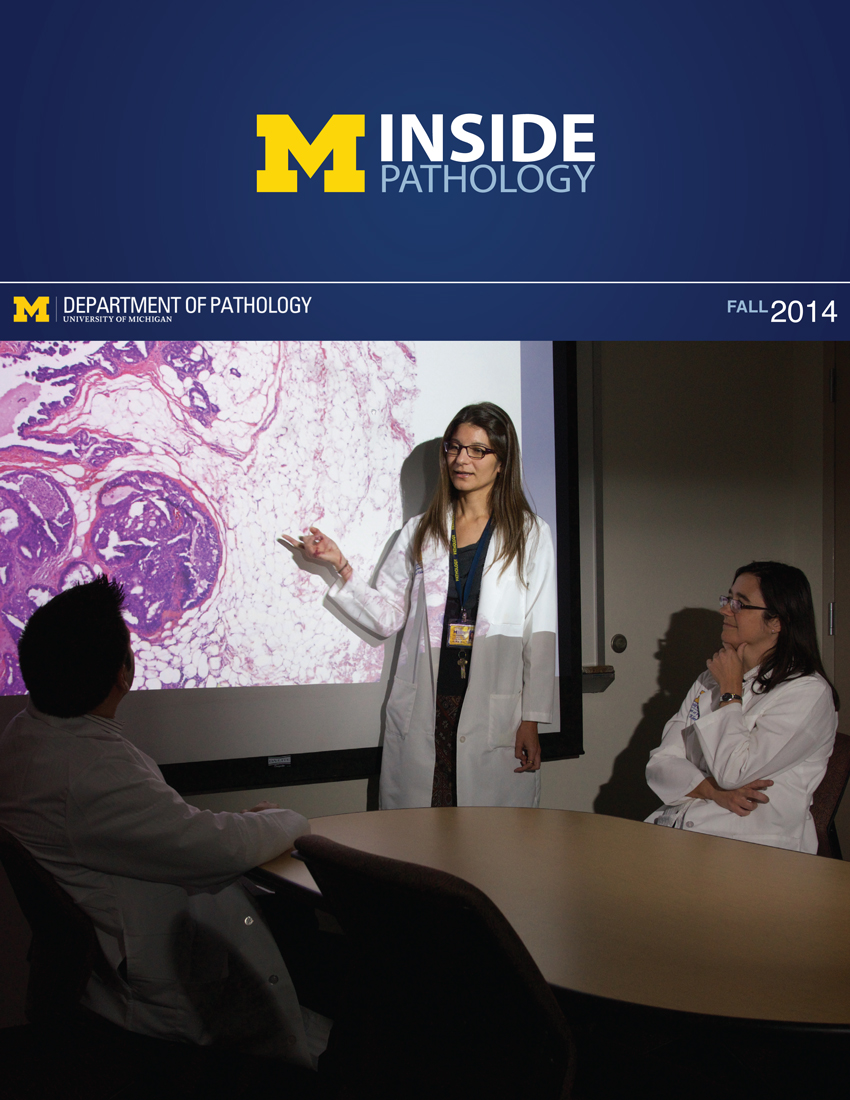 ON THE COVER
Breast team reviewing a patient's slide. (From left to right) Ghassan Allo, Fellow; Laura Walters, Clinical Lecturer; Celina Kleer, Professor. See Article |
newsletter
INSIDE PATHOLOGYAbout Our NewsletterInside Pathology is an newsletter published by the Chairman's Office to bring news and updates from inside the department's research and to become familiar with those leading it. It is our hope that those who read it will enjoy hearing about those new and familiar, and perhaps help in furthering our research. CONTENTS
|
 ON THE COVER
Autopsy Technician draws blood while working in the Wayne County morgue. See Article |
newsletter
INSIDE PATHOLOGYAbout Our NewsletterInside Pathology is an newsletter published by the Chairman's Office to bring news and updates from inside the department's research and to become familiar with those leading it. It is our hope that those who read it will enjoy hearing about those new and familiar, and perhaps help in furthering our research. CONTENTS
|
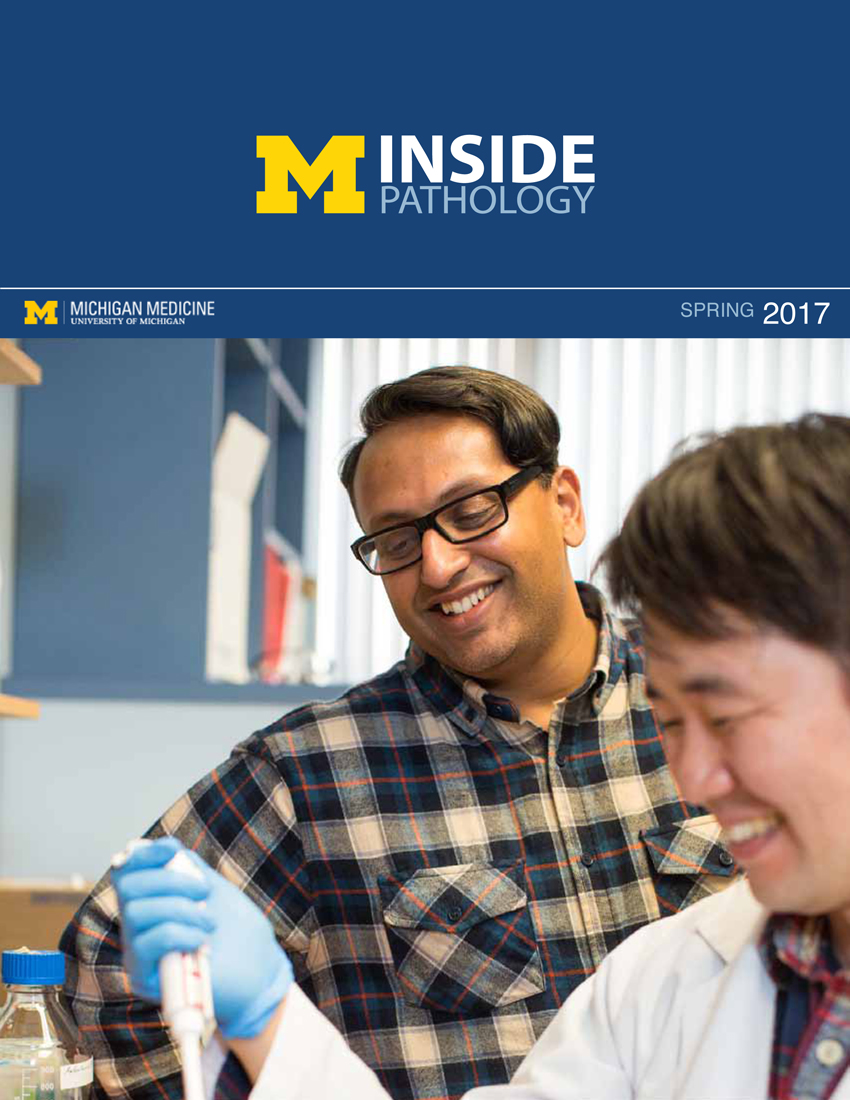 ON THE COVER
Dr. Sriram Venneti, MD, PhD and Postdoctoral Fellow, Chan Chung, PhD investigate pediatric brain cancer. See Article |
newsletter
INSIDE PATHOLOGYAbout Our NewsletterInside Pathology is an newsletter published by the Chairman's Office to bring news and updates from inside the department's research and to become familiar with those leading it. It is our hope that those who read it will enjoy hearing about those new and familiar, and perhaps help in furthering our research. CONTENTS
|
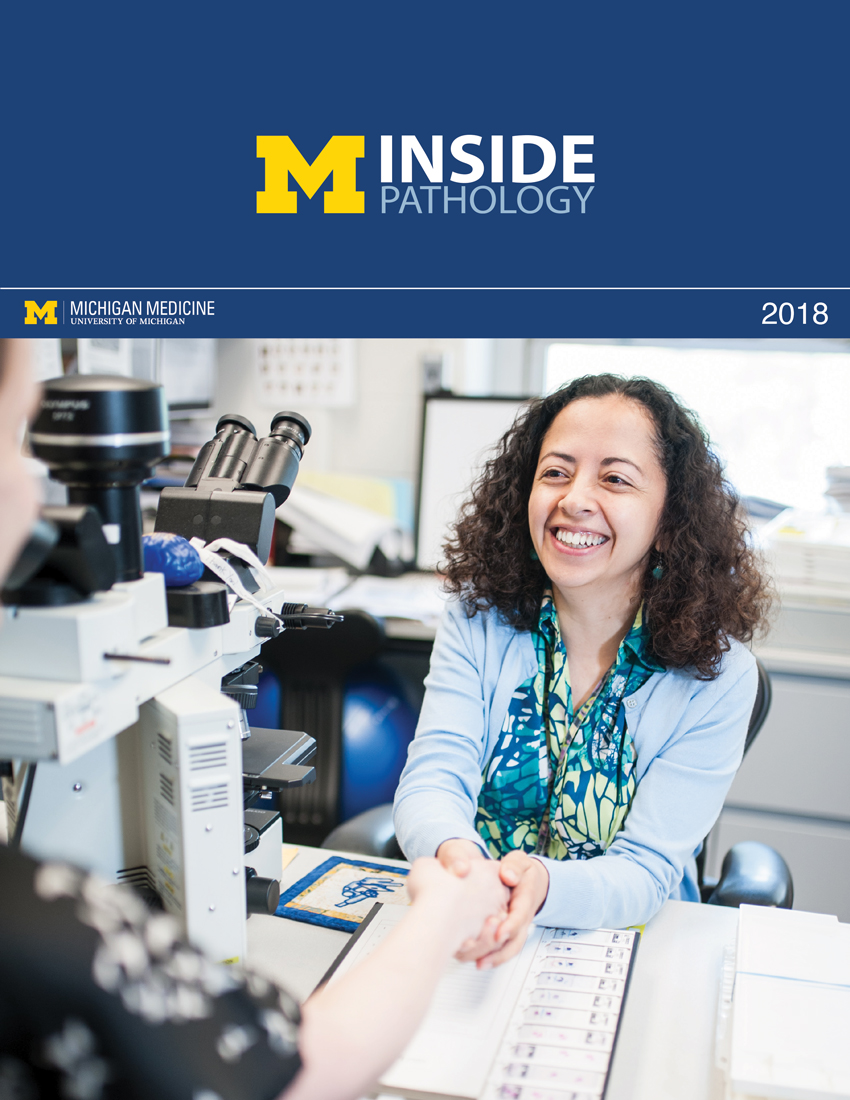 ON THE COVER
Director of the Neuropathology Fellowship, Dr. Sandra Camelo-Piragua serves on the Patient and Family Advisory Council. |
newsletter
INSIDE PATHOLOGYAbout Our NewsletterInside Pathology is an newsletter published by the Chairman's Office to bring news and updates from inside the department's research and to become familiar with those leading it. It is our hope that those who read it will enjoy hearing about those new and familiar, and perhaps help in furthering our research. CONTENTS
|
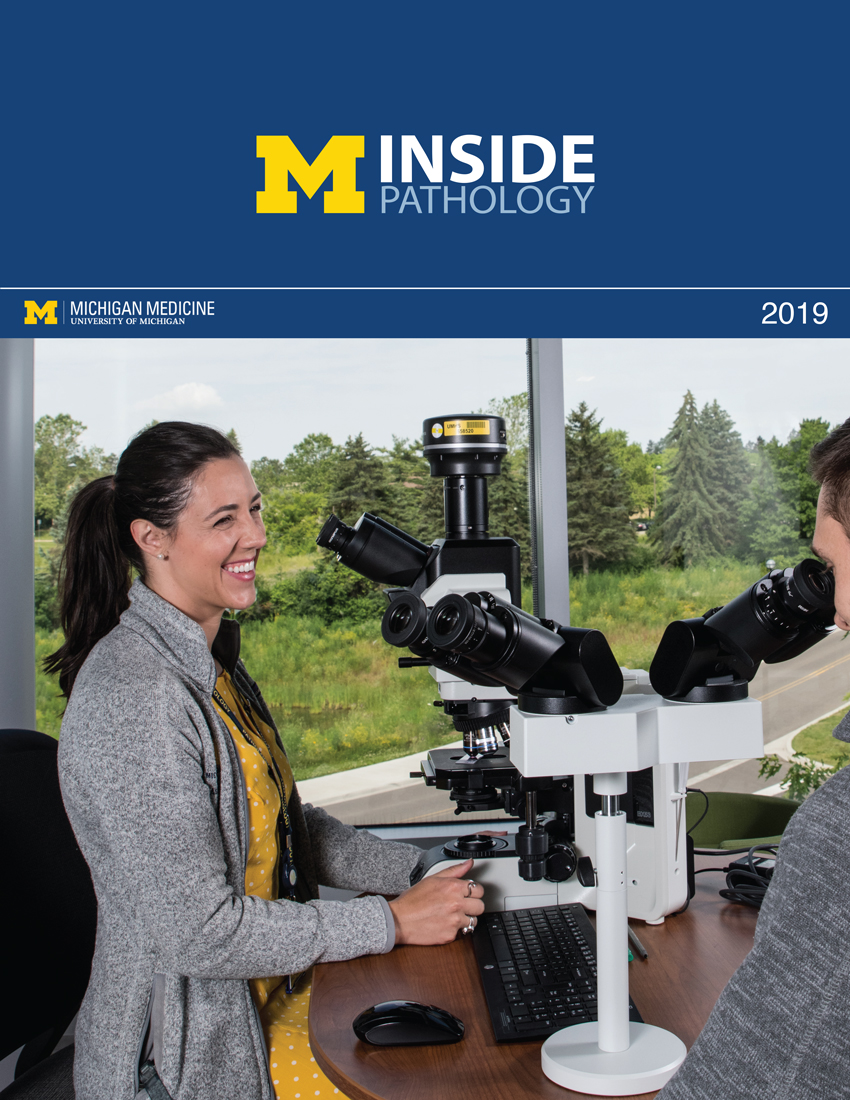 ON THE COVER
Residents Ashley Bradt (left) and William Perry work at a multi-headed scope in our new facility. |
newsletter
INSIDE PATHOLOGYAbout Our NewsletterInside Pathology is an newsletter published by the Chairman's Office to bring news and updates from inside the department's research and to become familiar with those leading it. It is our hope that those who read it will enjoy hearing about those new and familiar, and perhaps help in furthering our research. CONTENTS
|
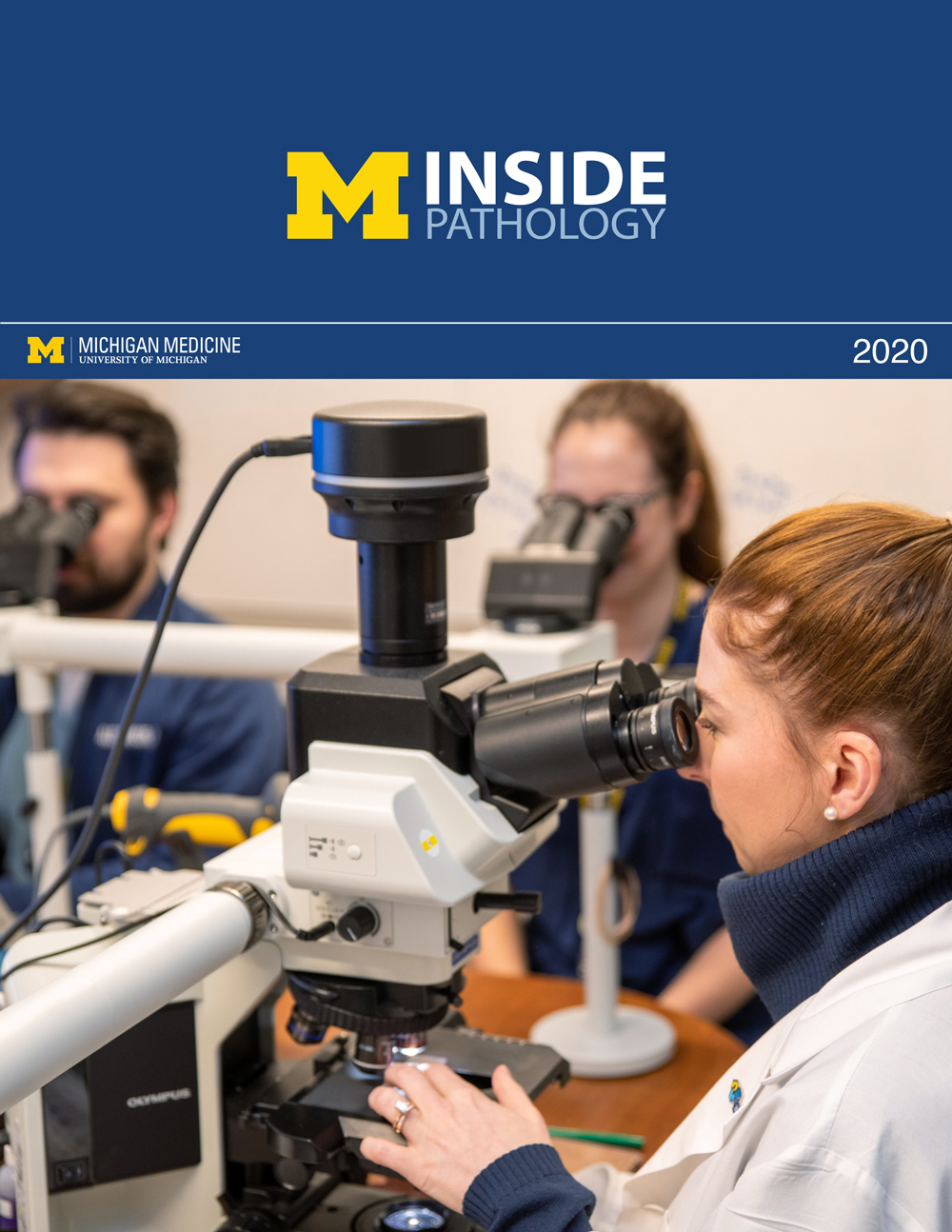 ON THE COVER
Dr. Kristine Konopka (right) instructing residents while using a multi-headed microscope. |
newsletter
INSIDE PATHOLOGYAbout Our NewsletterInside Pathology is an newsletter published by the Chairman's Office to bring news and updates from inside the department's research and to become familiar with those leading it. It is our hope that those who read it will enjoy hearing about those new and familiar, and perhaps help in furthering our research. CONTENTS
|
 ON THE COVER
Patient specimens poised for COVID-19 PCR testing. |
newsletter
INSIDE PATHOLOGYAbout Our NewsletterInside Pathology is an newsletter published by the Chairman's Office to bring news and updates from inside the department's research and to become familiar with those leading it. It is our hope that those who read it will enjoy hearing about those new and familiar, and perhaps help in furthering our research. CONTENTS
|
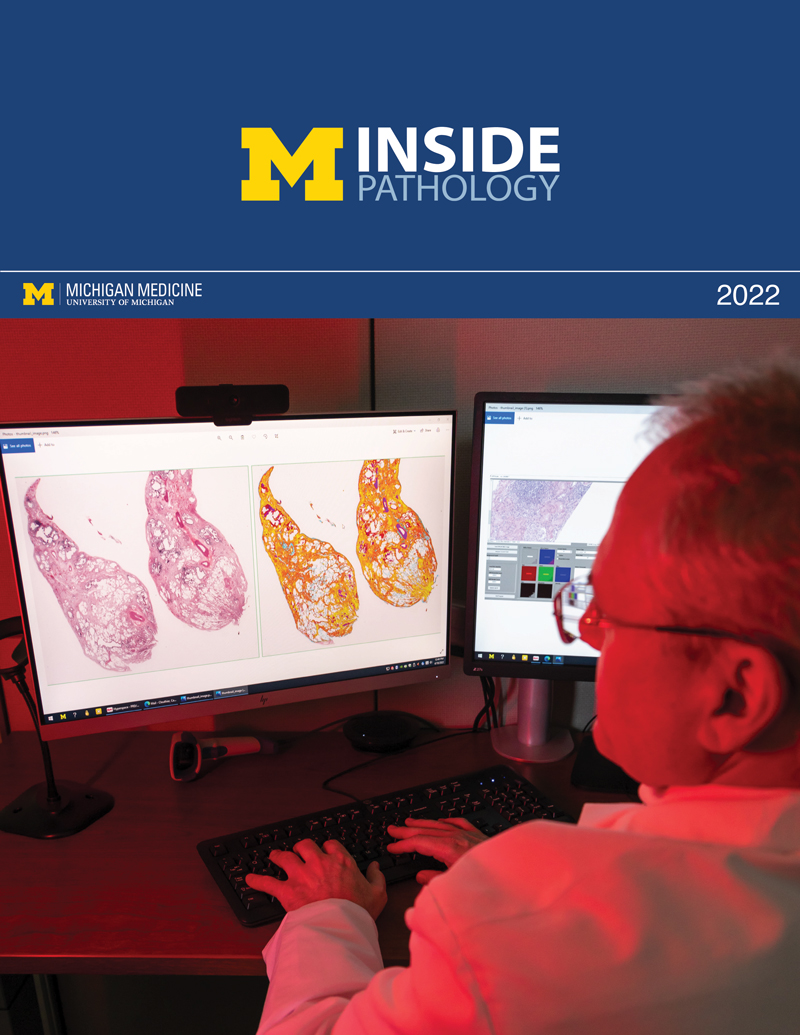 ON THE COVER
Dr. Pantanowitz demonstrates using machine learning in analyzing slides. |
newsletter
INSIDE PATHOLOGYAbout Our NewsletterInside Pathology is an newsletter published by the Chairman's Office to bring news and updates from inside the department's research and to become familiar with those leading it. It is our hope that those who read it will enjoy hearing about those new and familiar, and perhaps help in furthering our research. CONTENTS
|
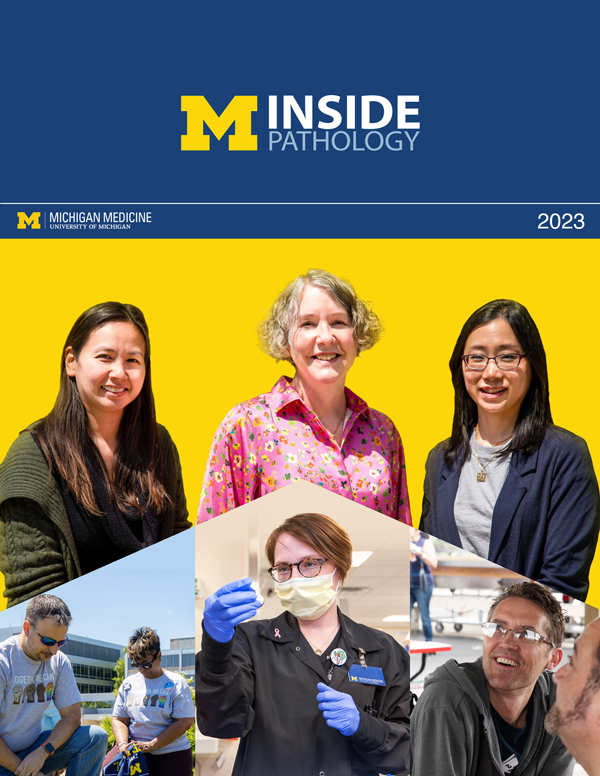 ON THE COVER
(Left to Right) Drs. Angela Wu, Laura Lamps, and Maria Westerhoff. |
newsletter
INSIDE PATHOLOGYAbout Our NewsletterInside Pathology is an newsletter published by the Chairman's Office to bring news and updates from inside the department's research and to become familiar with those leading it. It is our hope that those who read it will enjoy hearing about those new and familiar, and perhaps help in furthering our research. CONTENTS
|
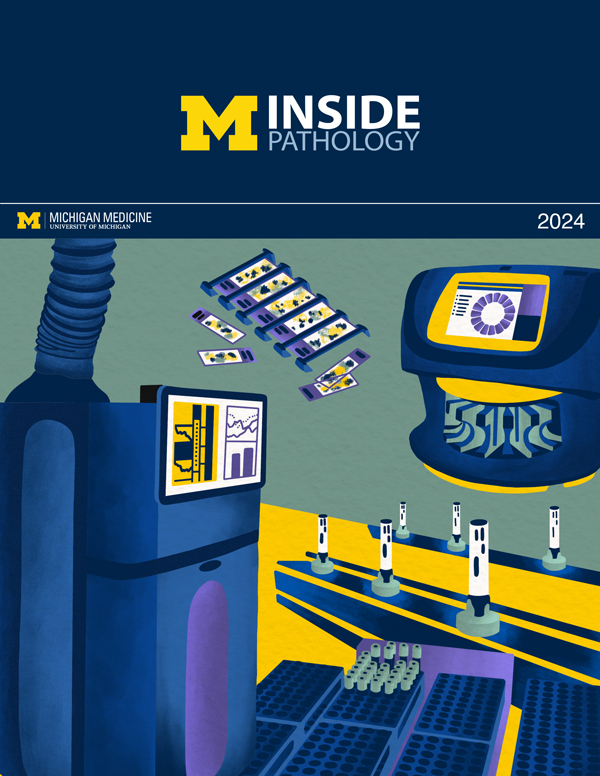 ON THE COVER
Illustration representing the various machines and processing used within our labs. |
newsletter
INSIDE PATHOLOGYAbout Our NewsletterInside Pathology is an newsletter published by the Chairman's Office to bring news and updates from inside the department's research and to become familiar with those leading it. It is our hope that those who read it will enjoy hearing about those new and familiar, and perhaps help in furthering our research. CONTENTS
|
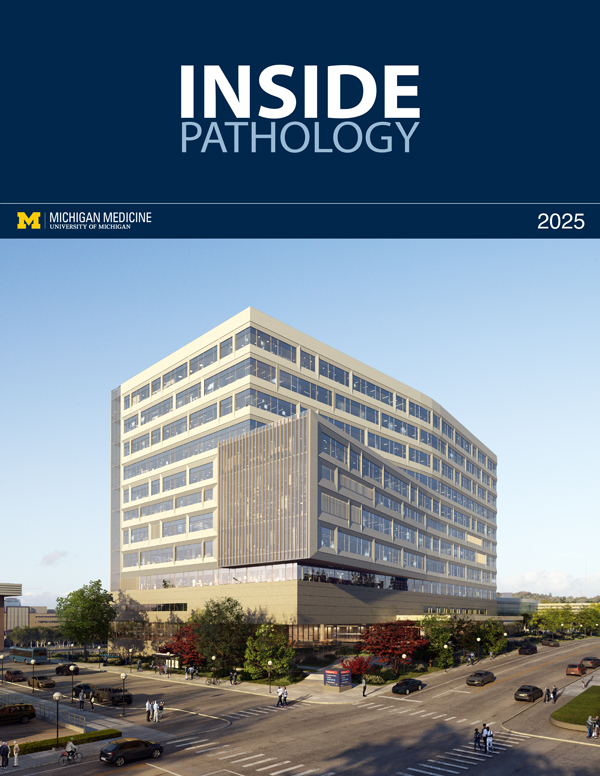 ON THE COVER
Rendering of the D. Dan and Betty Khn Health Care Pavilion. Credit: HOK |
newsletter
INSIDE PATHOLOGYAbout Our NewsletterInside Pathology is an newsletter published by the Chairman's Office to bring news and updates from inside the department's research and to become familiar with those leading it. It is our hope that those who read it will enjoy hearing about those new and familiar, and perhaps help in furthering our research. CONTENTS
|
MLabs, established in 1985, functions as a portal to provide pathologists, hospitals. and other reference laboratories access to the faculty, staff and laboratories of the University of Michigan Health System’s Department of Pathology. MLabs is a recognized leader for advanced molecular diagnostic testing, helpful consultants and exceptional customer service.