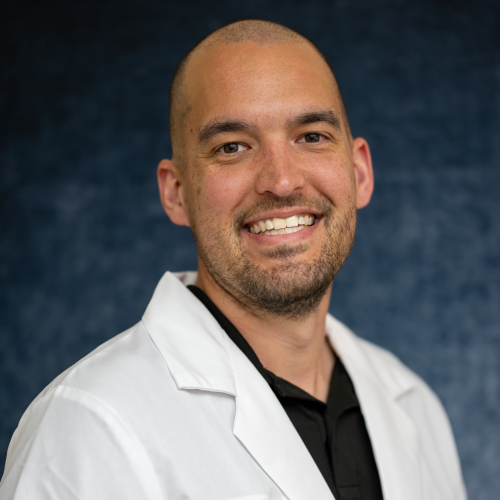
 When Kai Rogers, MD, PhD, finished high school, instead of heading to college, he joined the United States Marine Corps, where he became a tank mechanic and deployed to Iraq. After serving in the Marines, he returned home to Seattle, Washington, where he attended the University of Washington and earned a degree in microbiology. “At the end of my junior year, our oldest son was born. He had a traumatic birth and was in the NICU for a long time. That is where I got my first taste of medicine, not in a way anyone wants to, but I saw the application and the potential. As a microbiology major, I had pretty much completed a pre-med program by accident, so I was able to take the MCAT and apply for medical school quickly. The timing worked out, so I just pivoted.”
Rogers chose to attend medical school at the University of Iowa. “I was at Iowa for 11 years to complete medical school, a PhD, CP residency training, a research fellowship, and a clinical fellowship in transfusion medicine.” As he entered medical school, Rogers was not overly familiar with medicine. “All I knew about medicine was what I learned from Scrubs on TV. I realized as I went through medical school that I really liked diagnosing, but I didn’t like managing patients as much. Once the diagnosis was made, I would lose interest, because then it becomes social issues, discharge planning, and things like that.” He discovered pathology and realized it was an excellent option for him. “It is a little behind the scenes, a little more my style. I like solving problems and puzzles, so pathology is a good fit.”
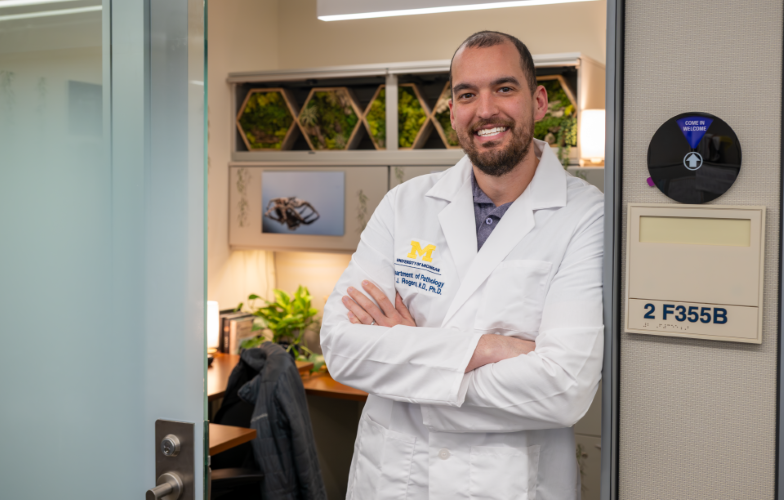 As he pursued his education, he completed his doctoral research in the lab of Dr. Wendy Maury, focusing on the innate immune response to Ebola virus. “I started in her lab in 2016, which was right when people were very focused on the Ebola virus due to the recent West African outbreak.” When SARS-CoV-2 hit in 2020, Rogers returned to the Maury lab and focused on COVID. “Labs were pretty much shut down due to the pandemic unless they were doing work on SARS-CoV-2, so we pivoted from Ebola and hopped on the COVID bandwagon. I’ll always have a soft spot in my heart for viruses.”
Following residency and fellowship, Rogers studied a transfusion medicine procedure, extracorporeal photopheresis (ECP) in the laboratory of Dr. Nitin Karandikar. “It always bothered me that we didn’t fully understand ECP despite using it to modulate immune responses for around 40 years. Dr. Karandikar had a mouse model of multiple sclerosis, so we used it to explore the mechanism of action of ECP in more detail. In doing so, we identified changes in cell populations in response to therapy that may help us identify biomarkers for disease progression and treatment efficacy in patients.” As he neared the end of his postdoctoral research, the NIH was facing funding difficulties, and he began to consider clinical positions.
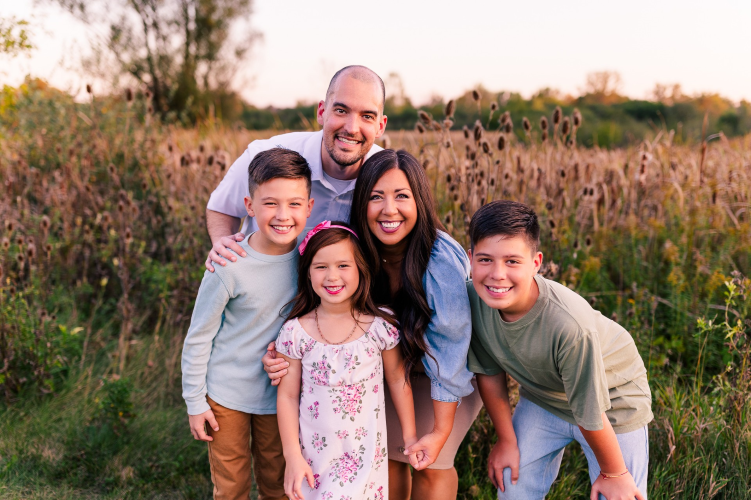 “There were quite a few open jobs, but I have three kids, so we were pretty focused on finding a smaller community with a college-town vibe rather than a big city. We also had fallen in love with the Midwest, so we narrowed our search to places that checked those two boxes. I interviewed at a couple of places, but I really liked Ann Arbor and the University of Michigan. Hopefully, this is a place we can call home for a long time.” On October 1, Rogers, his wife Lalana, and their children, Capri (7), Ronin (9), and Cason (12), officially became Wolverines.
Rogers is an assistant professor in transfusion medicine, where he splits his time between the apheresis service, the blood bank, signing out transfusion reactions, and working up platelet-refractory patients. “We just rescued ECP from a different department, so our goal is to expand that program, and I hope to explore more experimental uses for the procedure moving forward.” In addition, Rogers hopes to establish a research biorepository of samples from apheresis patients. “This can be used for projects done in pathology, but also in collaboration with other departments. We need to clear regulatory hurdles first, so it could take six months to a year to get it off the ground and allow us to conduct research based on biospecimens from our patients.”
He is also enjoying Ann Arbor. “I love Ann Arbor, it is beautiful. My office is maybe a five-minute walk from the Arboretum, so I can walk through there on my lunch breaks. There are so many places to hike and be outdoors, and there is just a lot to see. The kids are doing great, and everybody’s super happy.”
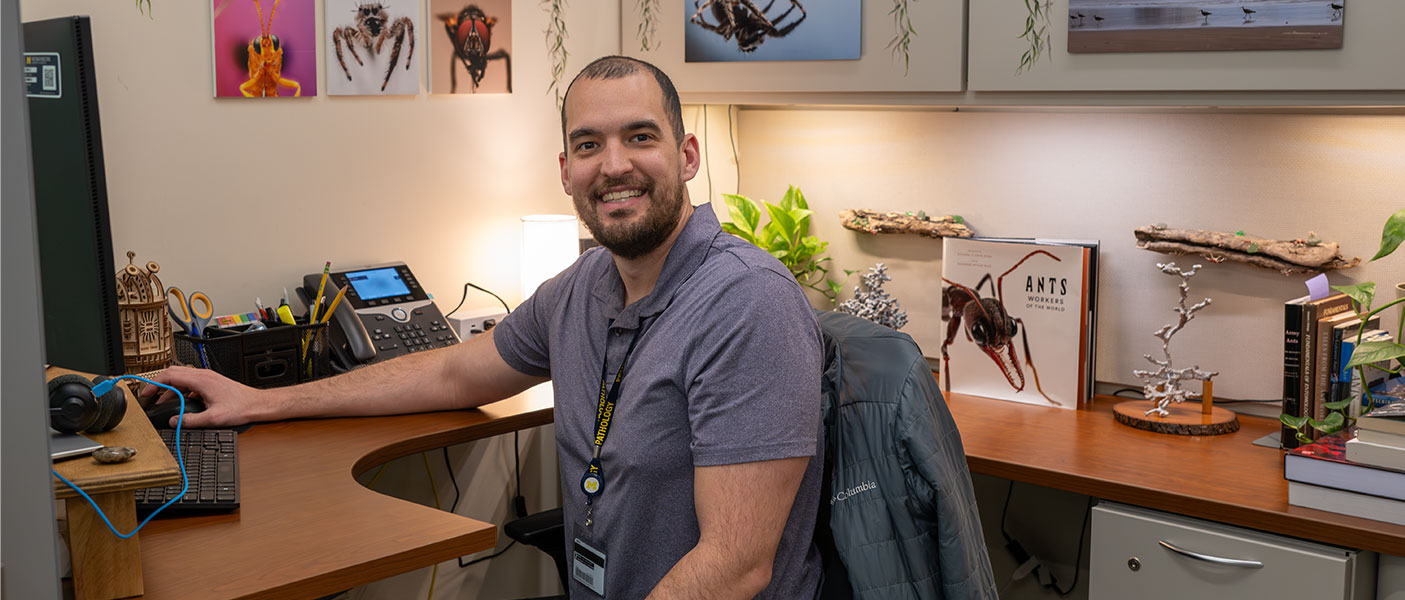
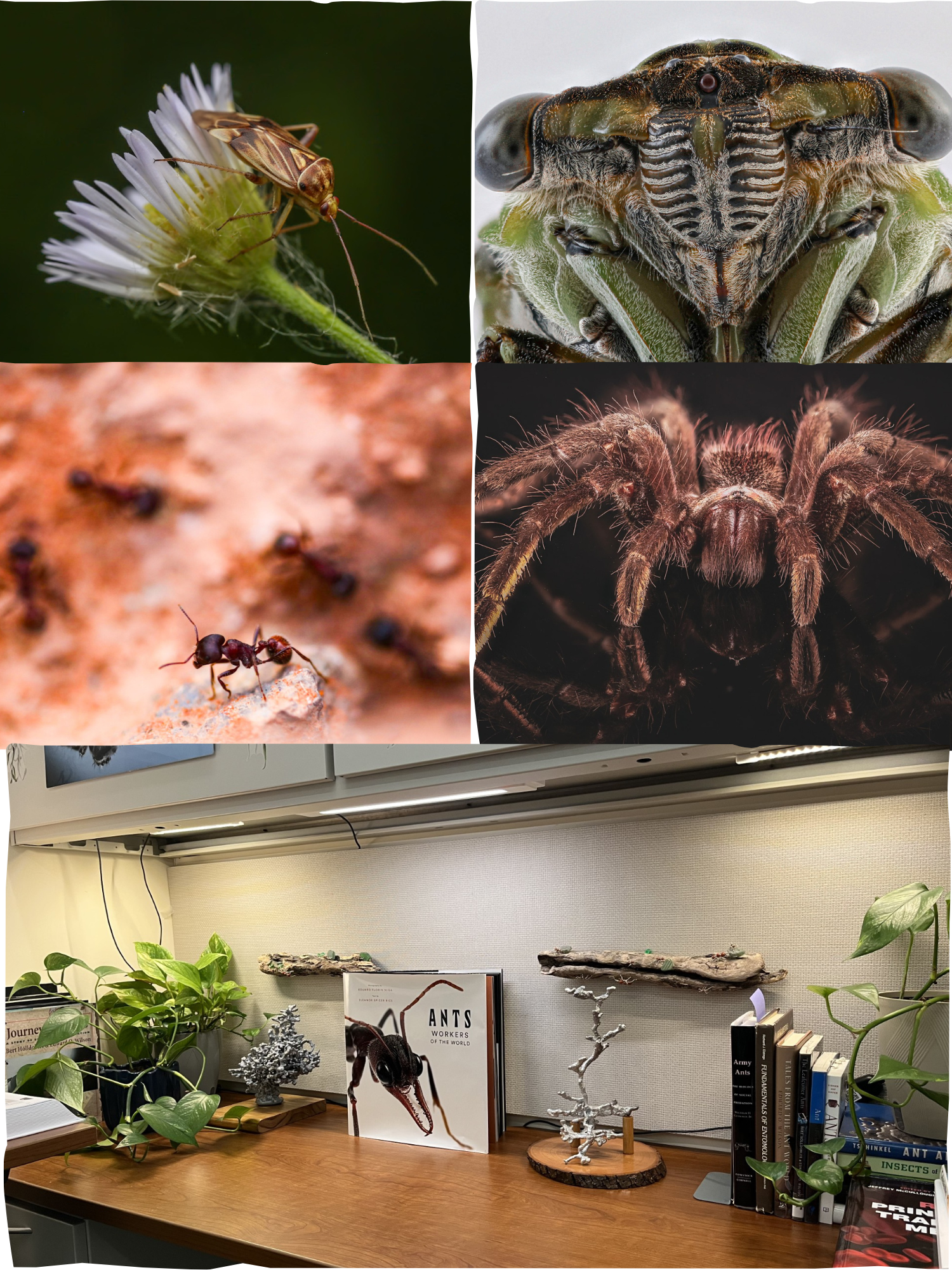 Arthropod photography is a unique hobby that Rogers enjoys in his free time. His office is filled with artistic photos of ants and other insects. Rogers began his “bug” photography in college. “I became fascinated by ants. I have ant books all over my desk and a couple of ant nests cast in aluminum. I got an old camera from my dad and started taking pictures of ants, which then expanded to other arthropods. The coolest experience of my life was flying to Texas and spending three days with Alex Wild for my 30th birthday. He is the most famous ant photographer in the world, which is an admittedly low bar.” However, his wife was not as keen on insects as he was. “I have had to slowly acclimatize my wife to this idea over 15 years of marriage. At first, it was, ‘How about one tarantula?’ Then, ‘How about five tarantulas? How about tarantulas and some ants?’ She is on board now, as long as they stay in their cages. As soon as they get out, it becomes a problem. My powers of negotiation were put to the test when we found one of my hissing cockroaches climbing the walls in our bedroom.”
He also enjoys woodworking. “I like being creative and having a tangible outcome. Whether that is building a bench or taking a photograph and editing it. We bought an older home that needed some love, so I am remodeling it as well. These hobbies keep me busy in my free time and allow me to spend time with my family and be outside.” His wife is also a photographer, specializing in portrait photography. “She takes pictures of things people actually want to see.” In addition, she is a fitness instructor at a gym and a substitute teacher. “It is kind of fun because she subs in our kids’ classes sometimes, so they get to have their mom at school with them. The 12-year-old doesn’t love it as much as the other two, though…”
Welcome to Michigan, Dr. Rogers! If you're near his office, be sure to stop by, say hi, and see his photos. They are amazing!
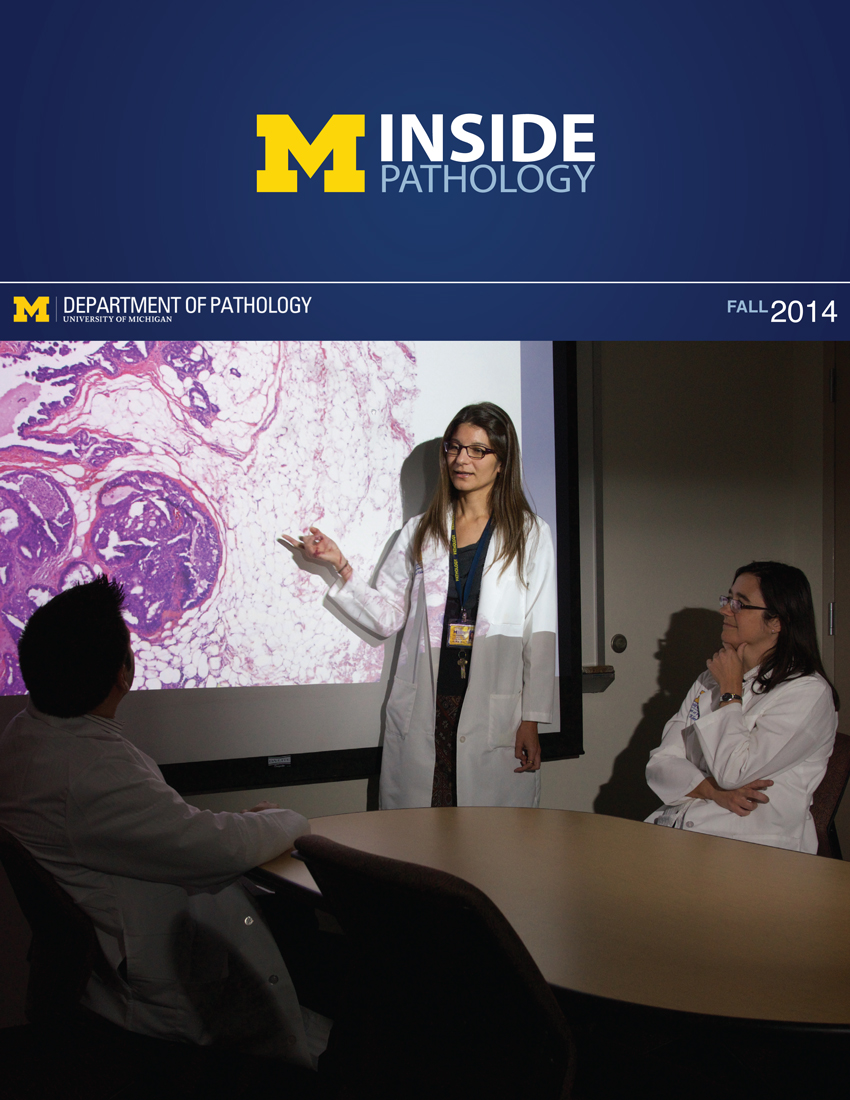 ON THE COVER
Breast team reviewing a patient's slide. (From left to right) Ghassan Allo, Fellow; Laura Walters, Clinical Lecturer; Celina Kleer, Professor. See Article |
newsletter
INSIDE PATHOLOGYAbout Our NewsletterInside Pathology is an newsletter published by the Chairman's Office to bring news and updates from inside the department's research and to become familiar with those leading it. It is our hope that those who read it will enjoy hearing about those new and familiar, and perhaps help in furthering our research. CONTENTS
|
 ON THE COVER
Autopsy Technician draws blood while working in the Wayne County morgue. See Article |
newsletter
INSIDE PATHOLOGYAbout Our NewsletterInside Pathology is an newsletter published by the Chairman's Office to bring news and updates from inside the department's research and to become familiar with those leading it. It is our hope that those who read it will enjoy hearing about those new and familiar, and perhaps help in furthering our research. CONTENTS
|
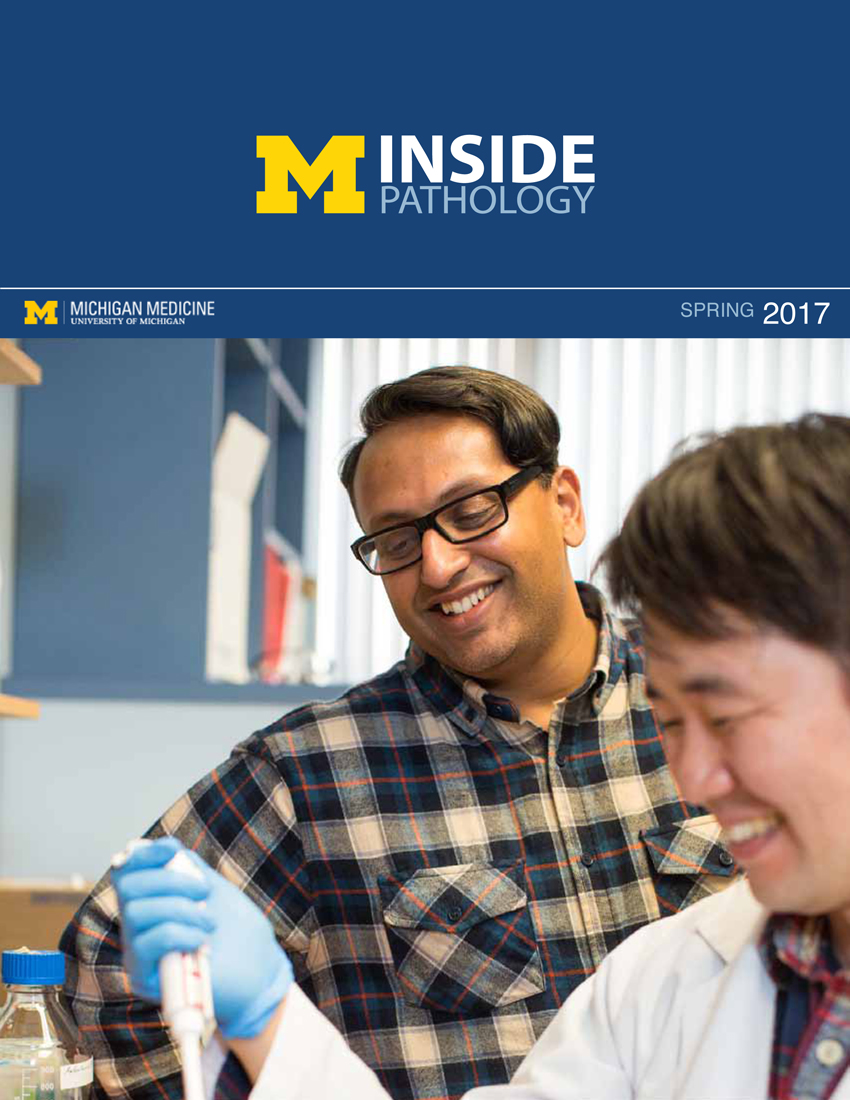 ON THE COVER
Dr. Sriram Venneti, MD, PhD and Postdoctoral Fellow, Chan Chung, PhD investigate pediatric brain cancer. See Article |
newsletter
INSIDE PATHOLOGYAbout Our NewsletterInside Pathology is an newsletter published by the Chairman's Office to bring news and updates from inside the department's research and to become familiar with those leading it. It is our hope that those who read it will enjoy hearing about those new and familiar, and perhaps help in furthering our research. CONTENTS
|
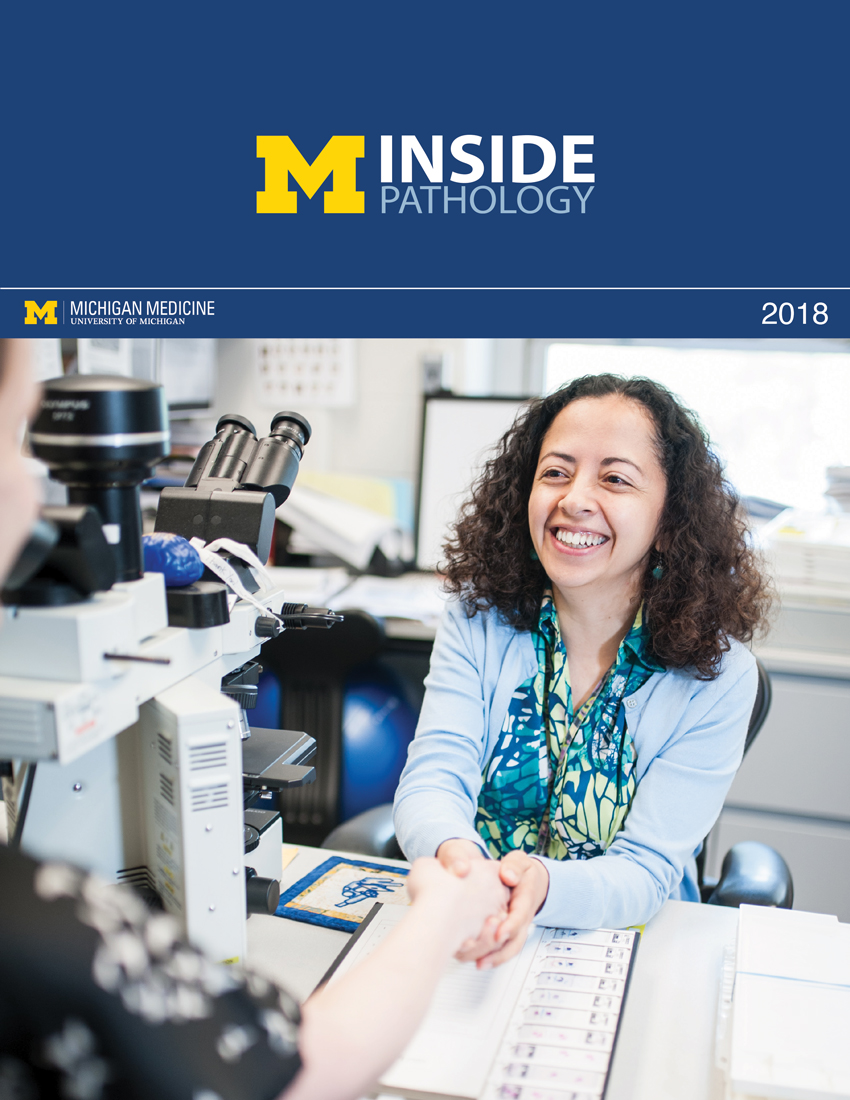 ON THE COVER
Director of the Neuropathology Fellowship, Dr. Sandra Camelo-Piragua serves on the Patient and Family Advisory Council. |
newsletter
INSIDE PATHOLOGYAbout Our NewsletterInside Pathology is an newsletter published by the Chairman's Office to bring news and updates from inside the department's research and to become familiar with those leading it. It is our hope that those who read it will enjoy hearing about those new and familiar, and perhaps help in furthering our research. CONTENTS
|
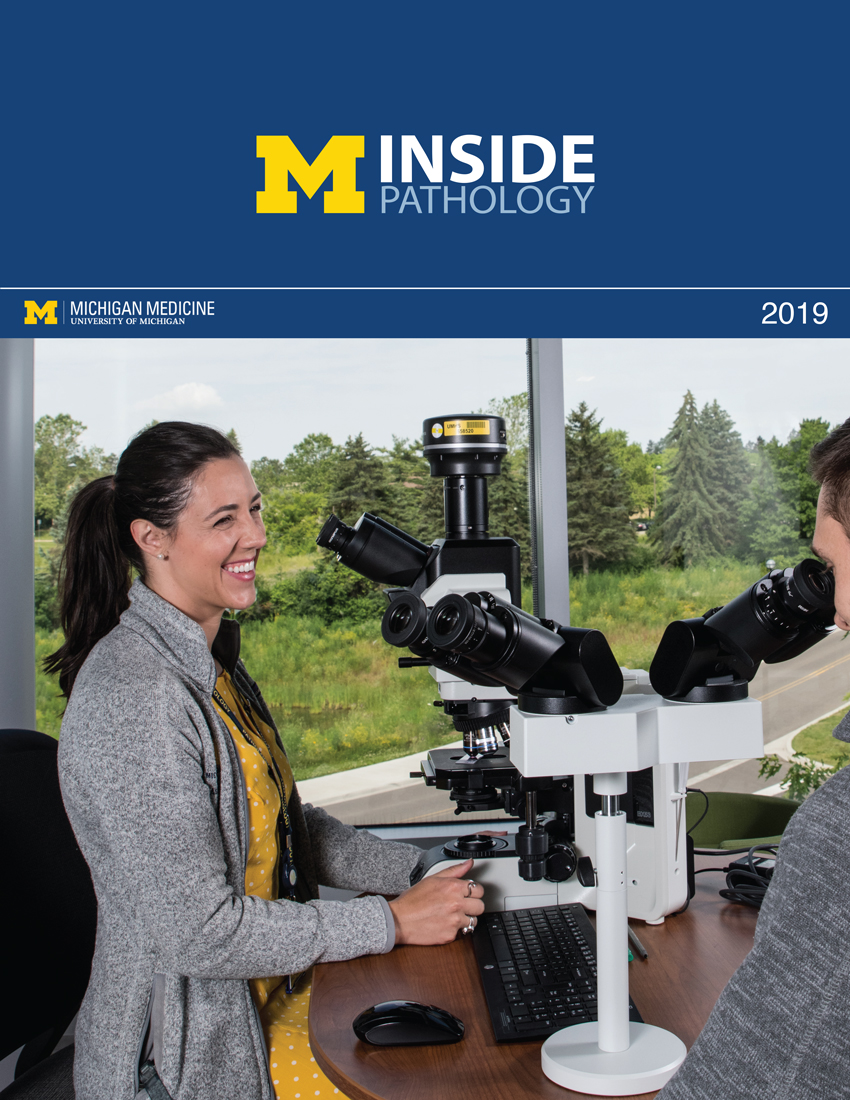 ON THE COVER
Residents Ashley Bradt (left) and William Perry work at a multi-headed scope in our new facility. |
newsletter
INSIDE PATHOLOGYAbout Our NewsletterInside Pathology is an newsletter published by the Chairman's Office to bring news and updates from inside the department's research and to become familiar with those leading it. It is our hope that those who read it will enjoy hearing about those new and familiar, and perhaps help in furthering our research. CONTENTS
|
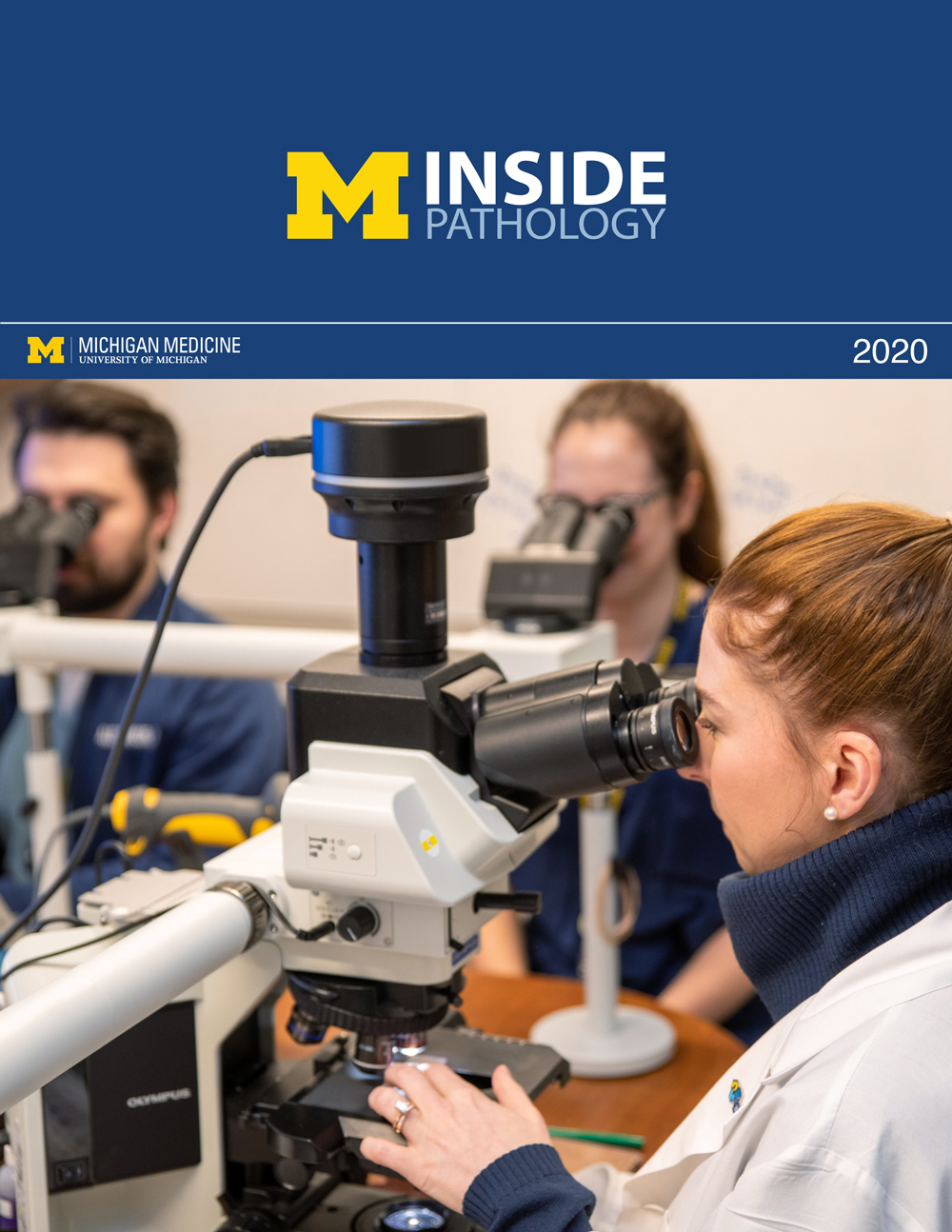 ON THE COVER
Dr. Kristine Konopka (right) instructing residents while using a multi-headed microscope. |
newsletter
INSIDE PATHOLOGYAbout Our NewsletterInside Pathology is an newsletter published by the Chairman's Office to bring news and updates from inside the department's research and to become familiar with those leading it. It is our hope that those who read it will enjoy hearing about those new and familiar, and perhaps help in furthering our research. CONTENTS
|
 ON THE COVER
Patient specimens poised for COVID-19 PCR testing. |
newsletter
INSIDE PATHOLOGYAbout Our NewsletterInside Pathology is an newsletter published by the Chairman's Office to bring news and updates from inside the department's research and to become familiar with those leading it. It is our hope that those who read it will enjoy hearing about those new and familiar, and perhaps help in furthering our research. CONTENTS
|
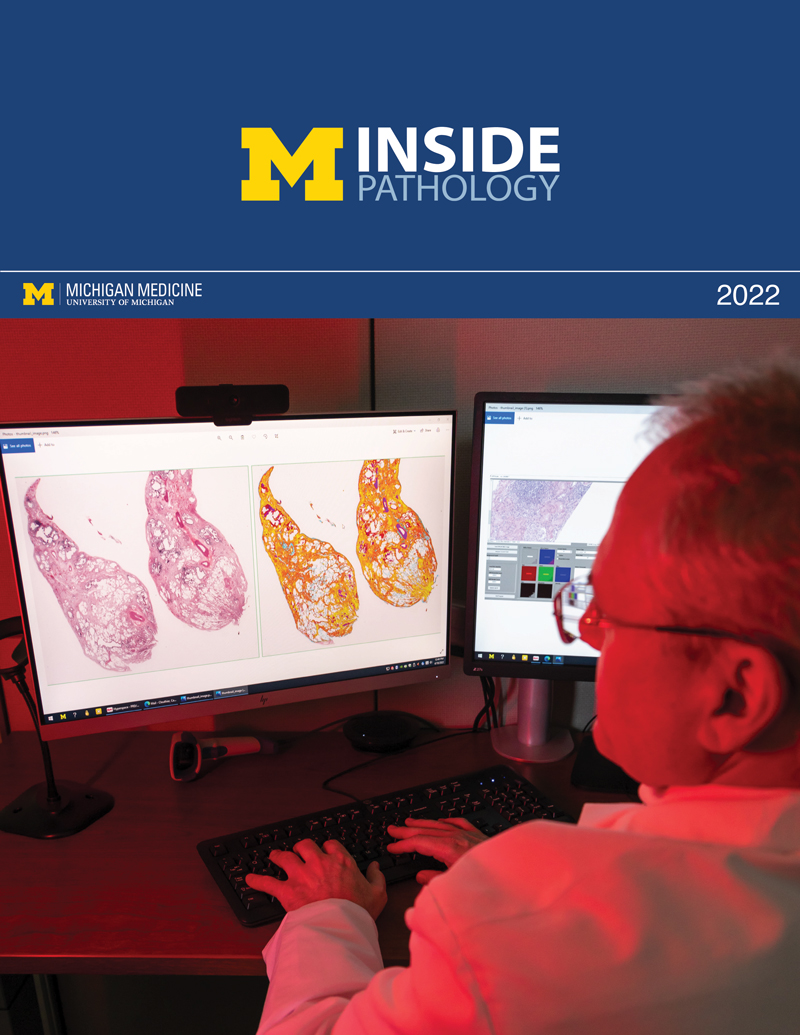 ON THE COVER
Dr. Pantanowitz demonstrates using machine learning in analyzing slides. |
newsletter
INSIDE PATHOLOGYAbout Our NewsletterInside Pathology is an newsletter published by the Chairman's Office to bring news and updates from inside the department's research and to become familiar with those leading it. It is our hope that those who read it will enjoy hearing about those new and familiar, and perhaps help in furthering our research. CONTENTS
|
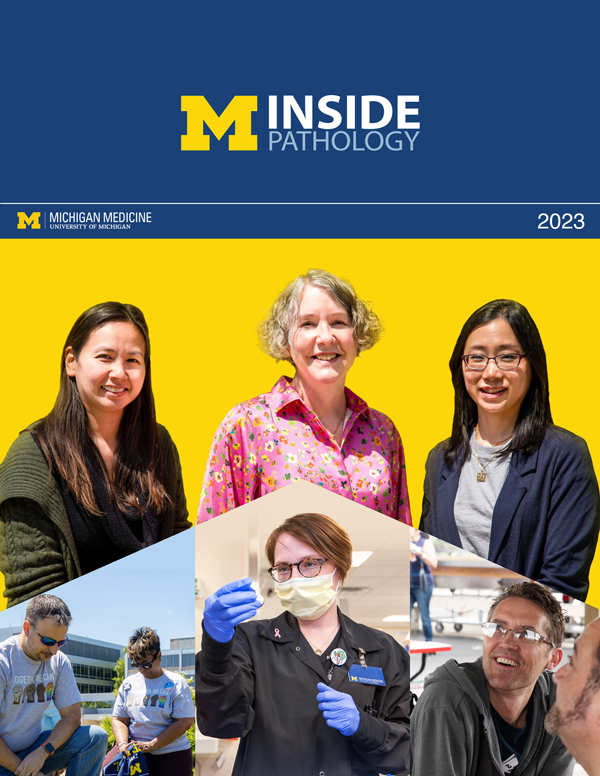 ON THE COVER
(Left to Right) Drs. Angela Wu, Laura Lamps, and Maria Westerhoff. |
newsletter
INSIDE PATHOLOGYAbout Our NewsletterInside Pathology is an newsletter published by the Chairman's Office to bring news and updates from inside the department's research and to become familiar with those leading it. It is our hope that those who read it will enjoy hearing about those new and familiar, and perhaps help in furthering our research. CONTENTS
|
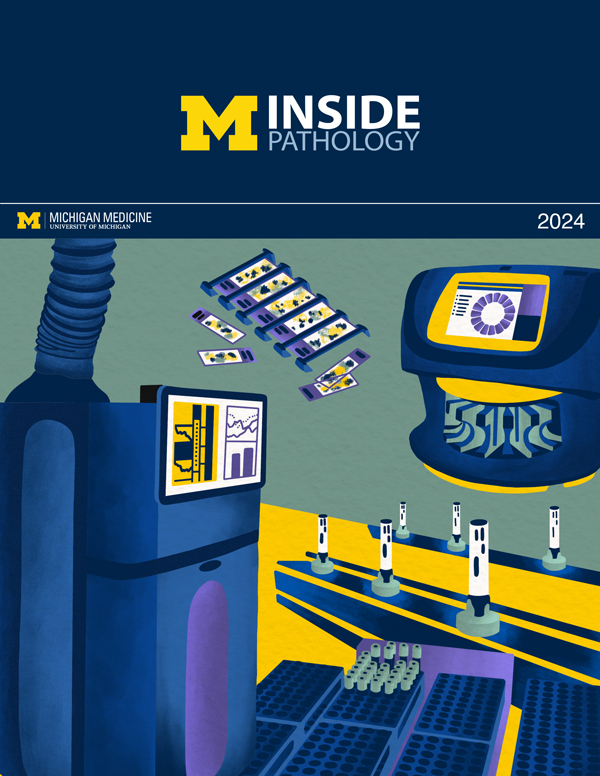 ON THE COVER
Illustration representing the various machines and processing used within our labs. |
newsletter
INSIDE PATHOLOGYAbout Our NewsletterInside Pathology is an newsletter published by the Chairman's Office to bring news and updates from inside the department's research and to become familiar with those leading it. It is our hope that those who read it will enjoy hearing about those new and familiar, and perhaps help in furthering our research. CONTENTS
|
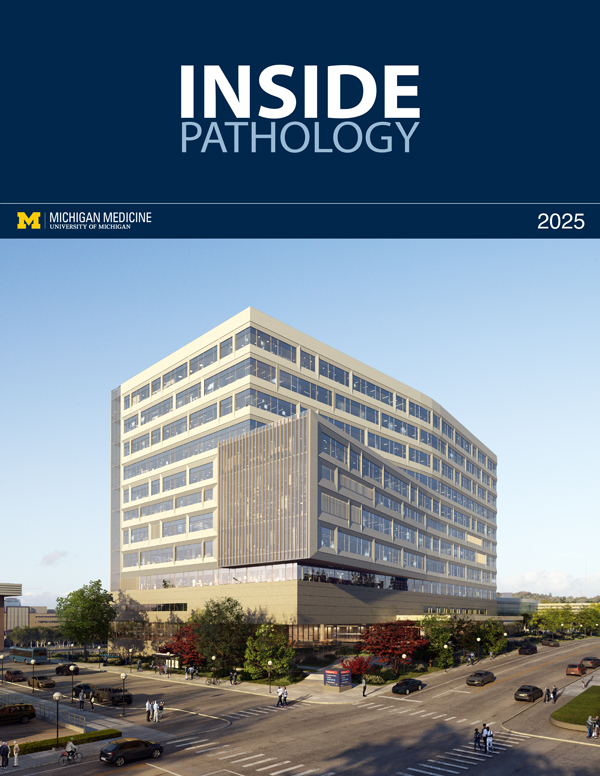 ON THE COVER
Rendering of the D. Dan and Betty Khn Health Care Pavilion. Credit: HOK |
newsletter
INSIDE PATHOLOGYAbout Our NewsletterInside Pathology is an newsletter published by the Chairman's Office to bring news and updates from inside the department's research and to become familiar with those leading it. It is our hope that those who read it will enjoy hearing about those new and familiar, and perhaps help in furthering our research. CONTENTS
|
MLabs, established in 1985, functions as a portal to provide pathologists, hospitals. and other reference laboratories access to the faculty, staff and laboratories of the University of Michigan Health System’s Department of Pathology. MLabs is a recognized leader for advanced molecular diagnostic testing, helpful consultants and exceptional customer service.