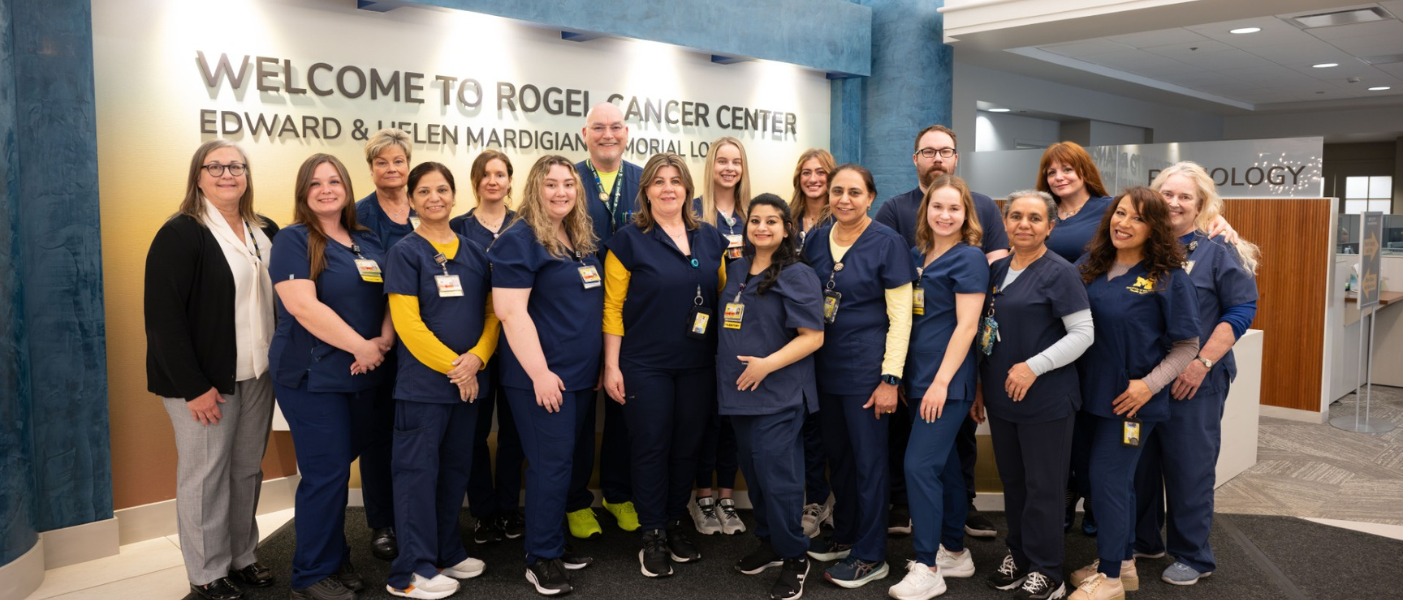
 Before most of the hospital wakes up, U-M Department of Pathology inpatient phlebotomists are already on the move.
By 4 a.m., hundreds of lab orders populate across inpatient units. By day’s end, between 1,700 and 1,800 blood collections will be performed on the main campus alone; each one requiring technical precision, compassion, and trust built in a matter of moments. It’s demanding, often unseen work, but its impact on patient care is profound.
Meanwhile, as clinics across U-M open, outpatient phlebotomists are hard at work drawing thousands of additional blood samples and processing on-site testing of urine, sputum, and stool. They collect specimens, package them, and send them to UH Hospital specimen processing for distribution to various labs.
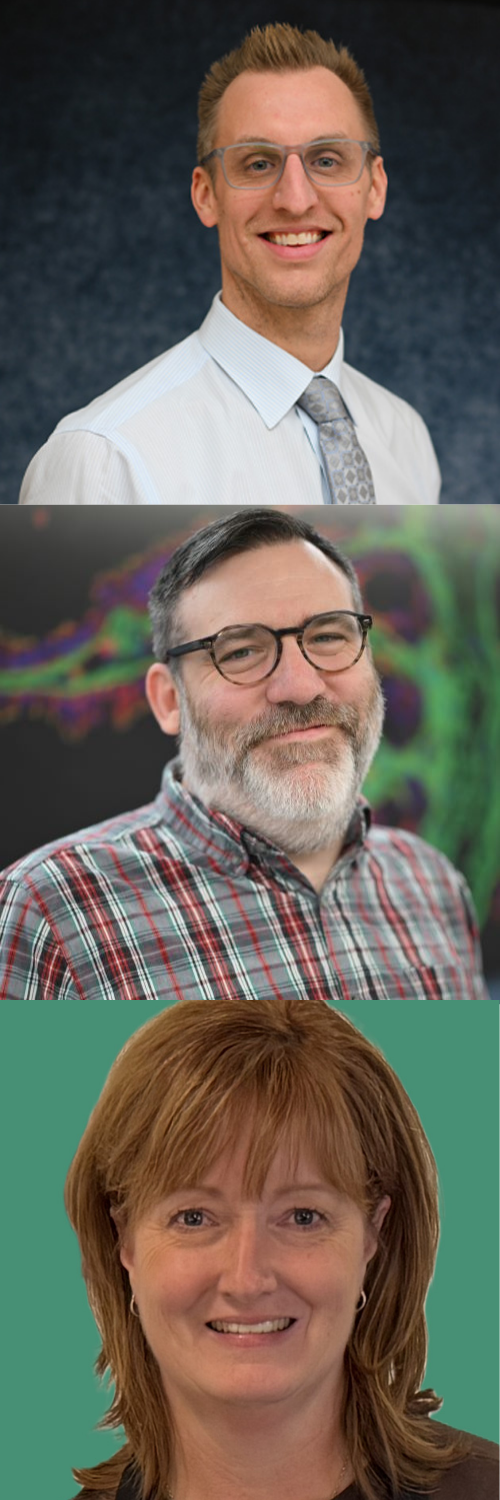
That impact is why Phlebotomy Recognition Week, February 9-13, 2026, holds special meaning for Steve Doerflinger, main campus phlebotomy manager, Brian Tapp, allied health intermediate supervisor for inpatient phlebotomy, and Jane Ferguson, allied health intermediate supervisor over outpatient phlebotomy at Brighton Center for Specialty Care and Brighton Health Center.
“Phlebotomy Week is a chance to highlight the sheer size and scope of our operation,” Doerflinger said. “But more importantly, it’s a chance to recognize the patient care happening thousands of times every single day.”
The Face of the Lab
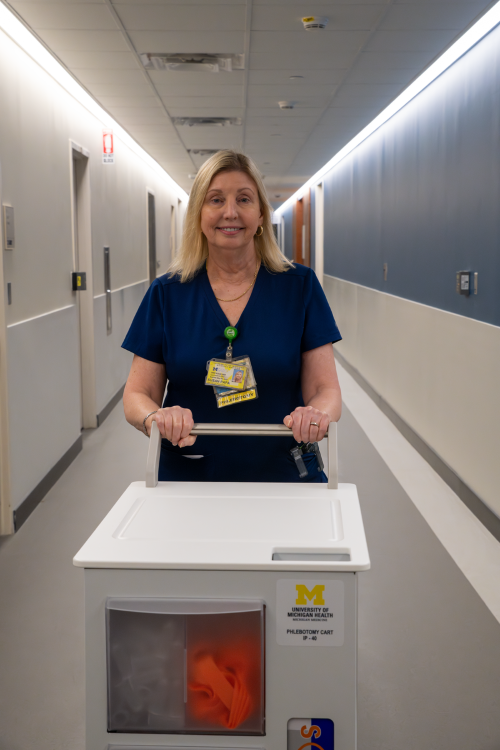 For many patients, phlebotomists are the only laboratory professionals they ever meet.
“Most patients don’t interact with the lab behind the scenes,” Tapp said. “They interact with phlebotomists. We’re often the face of the lab.”
That visibility comes with pressure. Phlebotomists must quickly earn trust during a procedure many patients fear, while caring for everyone from newborns minutes old to patients at the end of life.
“It’s easy to underestimate how hard it is to establish a human connection in such a short amount of time,” Doerflinger said. “We’re in and out, the procedure isn’t something people usually enjoy, and yet we’re expected to bring calm, confidence, and compassion every single time.”
“In the outpatient setting, it is different,” said Ferguson. “We often see the same patients on a regular basis for months or years. We get to know them and build real connections. Sometimes, they come after receiving bad news from their physicians. We understand and are extra patient with them if they are irritable.”
On inpatient units, phlebotomists also face a common misunderstanding: why they must wake patients early.
“We know no one wants to be woken up,” Tapp said. “But those early morning labs are essential for physician rounds, care decisions, and discharge planning.”
What Makes a Great Phlebotomist
 According to Doerflinger and Tapp, technical skill is only one factor in someone's success in the field.
“Compassion and patience are huge,” Tapp said. “You’re often working with anxious patients, children, or critically ill individuals.”
“Empathy is one of the most valuable character traits for phlebotomists,” agreed Ferguson.
Just as important is teamwork. In the early morning hours, hundreds of orders must be completed quickly and accurately, a process that depends on coordination across shifts and units.
Doerflinger also points to attention to detail.
“Venipuncture may look straightforward, but there are countless ways things can deviate,” he said. “Patient identification, specimen handling, vein assessment; those details are critical, and they often go unnoticed.”
Growing, Evolving, and Innovating
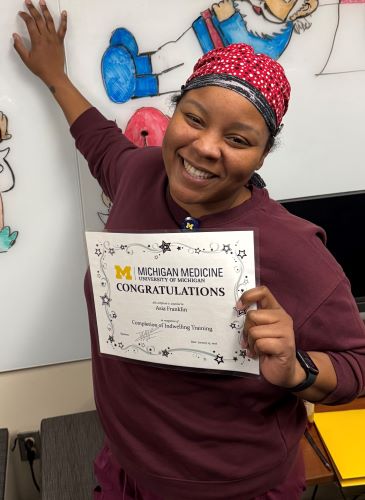 The role of a phlebotomist has continued to evolve at Michigan Medicine.
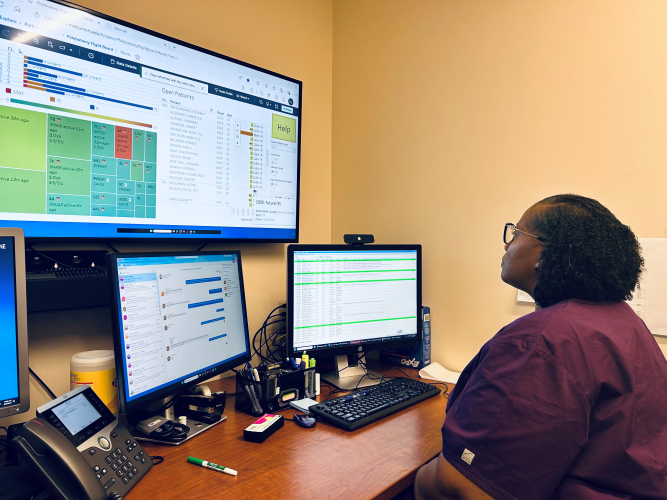
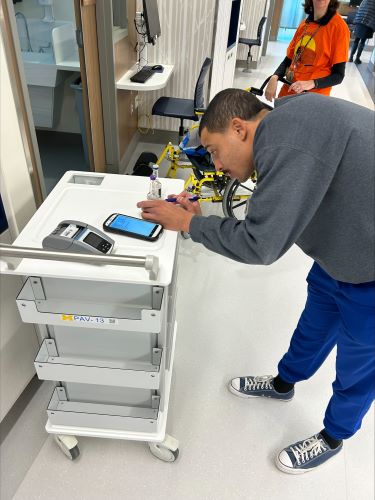
Over the years, the team has transitioned from paper requisitions to handheld devices that allow bedside label printing and real‑time instructions, improving efficiency and patient safety through positive identification. New roles, such as “flightboard administrators,” help coordinate assignments and deploy staff where they’re needed most.
Skill sets have expanded as well, with phlebotomists now trained in specialized collections that are uncommon at many institutions, such as port draws. The outpatient phlebotomists have added responsibilities for point-of-care testing, specimen processing, paperwork, tracking down orders, working with clinicians from multiple locations, and making sure that every sample is properly stored and shipped efficiently.
Looking ahead, leadership continues to explore new possibilities, from outreach education for future health care professionals to long-term ideas such as drive-through phlebotomy services.
Celebrating During Phlebotomy Week
This year’s Phlebotomy Week celebrations focus on connection, creativity, and peer recognition.
“We celebrate our phlebotomists throughout the year, but during Phlebotomy Week, we make sure they feel seen. We provide them with daily treats, like bagels, donuts, and lunch,” added Ferguson.
With limited funding, an inpatient phlebotomy staff-led committee designed activities for each day of the week, including themed dress days, playful competitions, and meaningful team-building exercises. One highlight is a “pen‑pal” style card exchange, allowing phlebotomists to write notes of appreciation to colleagues they may rarely see due to dispersed work locations.
“There are so many of us working in different areas,” Doerflinger said. “This is a way to spread the love across the entire team.”
Impact That Lasts
 The true significance of phlebotomy work is sometimes felt most deeply through patient voices.
Doerflinger shared a handwritten note received by the Children’s and Women’s phlebotomy team from the widow of a longtime patient. Her husband had received blood draws two to three times a week for over a year.
“He was consistently impressed with the efficiency, consistency, and quality of care he received,” she wrote. “Thank you for your hard work and dedication.”
For Doerflinger, messages like that capture the heart of the profession.
“We don’t always realize the impact we’re making while we’re moving from draw to draw,” he said. “But moments like that show how much it truly matters.”
Ferguson recalled a couple of memorable moments when long-time patients needed donors for bone marrow and liver transplants. “Several members of our team were tested to see if they would be matches for them. We became close to these patients.”
A Week of Recognition and Gratitude
During Phlebotomy Week 2026, The Department of Pathology celebrates not just a role, but a calling, one defined by expertise, empathy, and quiet dedication.
Every successful draw supports diagnoses, treatments, and lives. And behind each one stands a phlebotomist, making a difference one patient at a time.
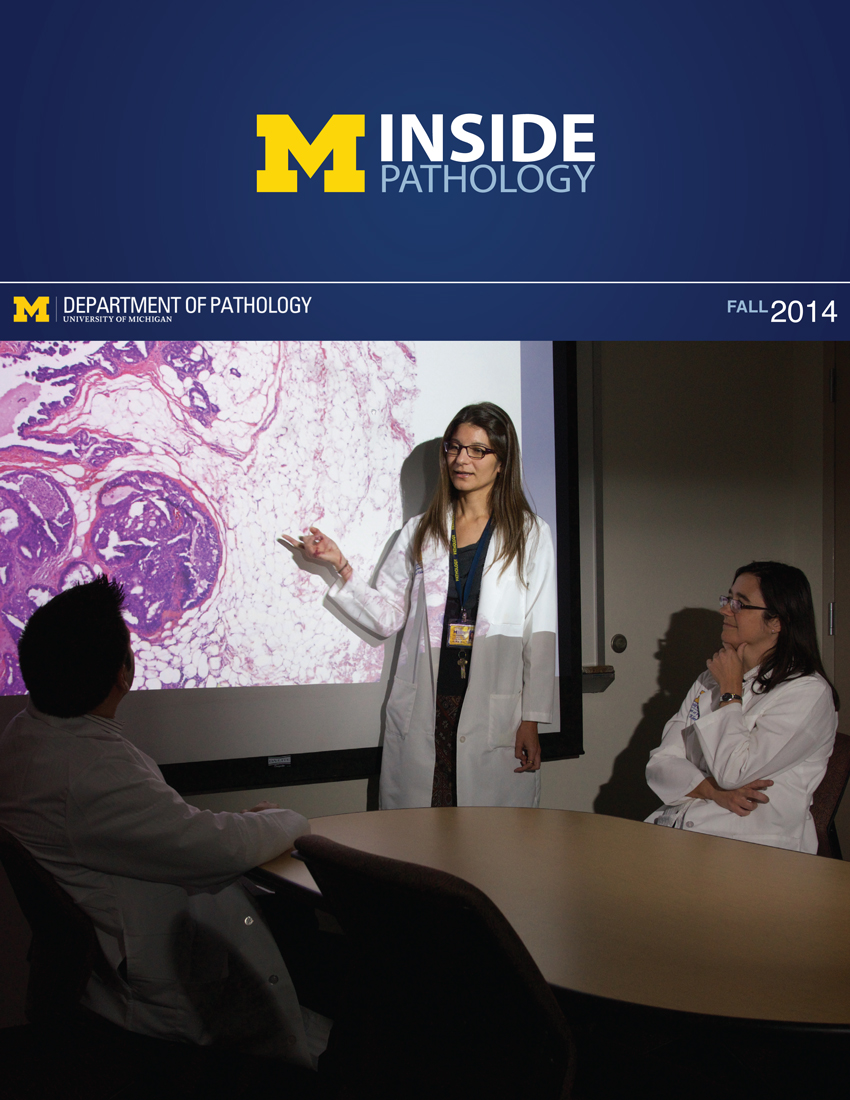 ON THE COVER
Breast team reviewing a patient's slide. (From left to right) Ghassan Allo, Fellow; Laura Walters, Clinical Lecturer; Celina Kleer, Professor. See Article |
newsletter
INSIDE PATHOLOGYAbout Our NewsletterInside Pathology is an newsletter published by the Chairman's Office to bring news and updates from inside the department's research and to become familiar with those leading it. It is our hope that those who read it will enjoy hearing about those new and familiar, and perhaps help in furthering our research. CONTENTS
|
 ON THE COVER
Autopsy Technician draws blood while working in the Wayne County morgue. See Article |
newsletter
INSIDE PATHOLOGYAbout Our NewsletterInside Pathology is an newsletter published by the Chairman's Office to bring news and updates from inside the department's research and to become familiar with those leading it. It is our hope that those who read it will enjoy hearing about those new and familiar, and perhaps help in furthering our research. CONTENTS
|
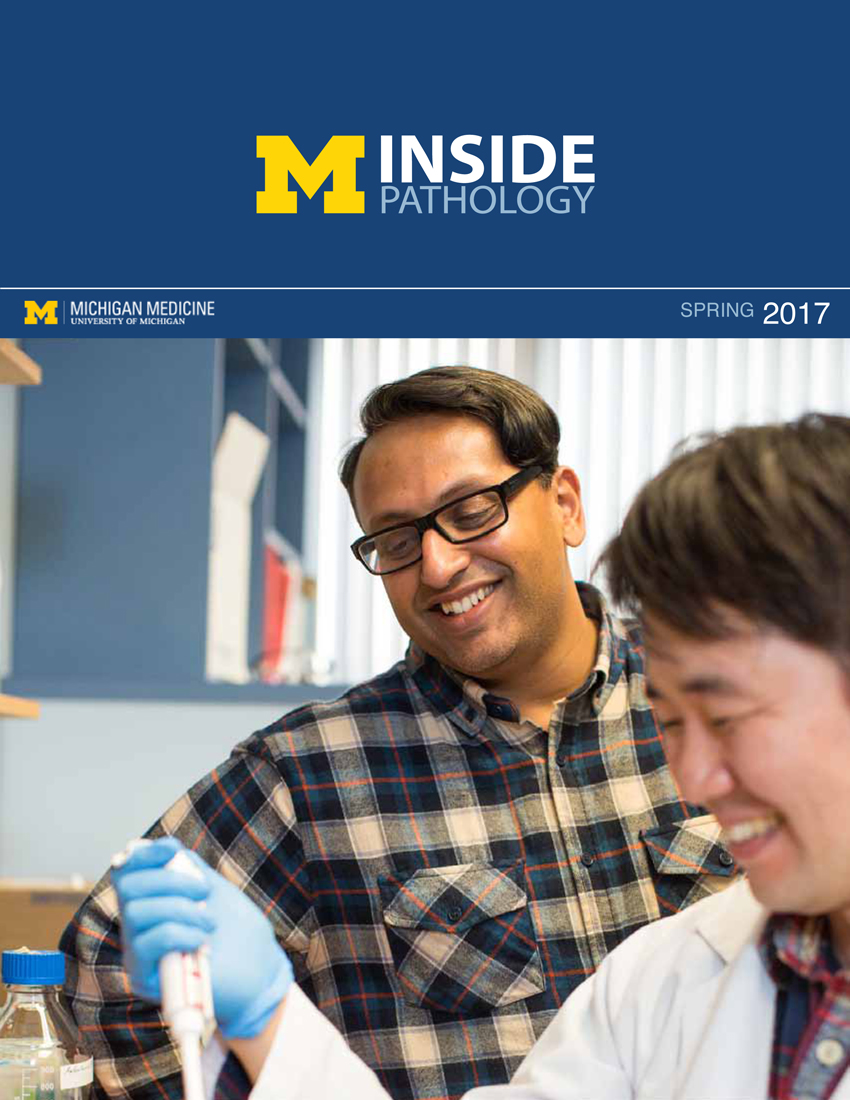 ON THE COVER
Dr. Sriram Venneti, MD, PhD and Postdoctoral Fellow, Chan Chung, PhD investigate pediatric brain cancer. See Article |
newsletter
INSIDE PATHOLOGYAbout Our NewsletterInside Pathology is an newsletter published by the Chairman's Office to bring news and updates from inside the department's research and to become familiar with those leading it. It is our hope that those who read it will enjoy hearing about those new and familiar, and perhaps help in furthering our research. CONTENTS
|
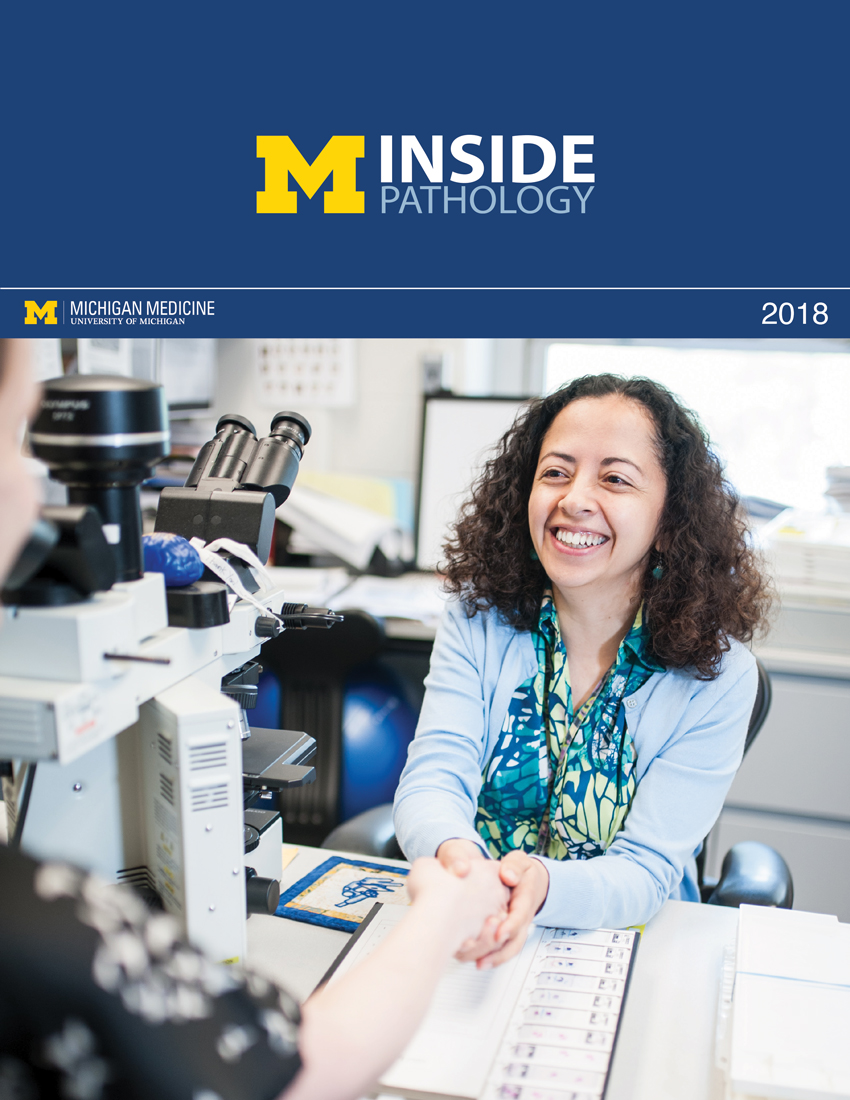 ON THE COVER
Director of the Neuropathology Fellowship, Dr. Sandra Camelo-Piragua serves on the Patient and Family Advisory Council. |
newsletter
INSIDE PATHOLOGYAbout Our NewsletterInside Pathology is an newsletter published by the Chairman's Office to bring news and updates from inside the department's research and to become familiar with those leading it. It is our hope that those who read it will enjoy hearing about those new and familiar, and perhaps help in furthering our research. CONTENTS
|
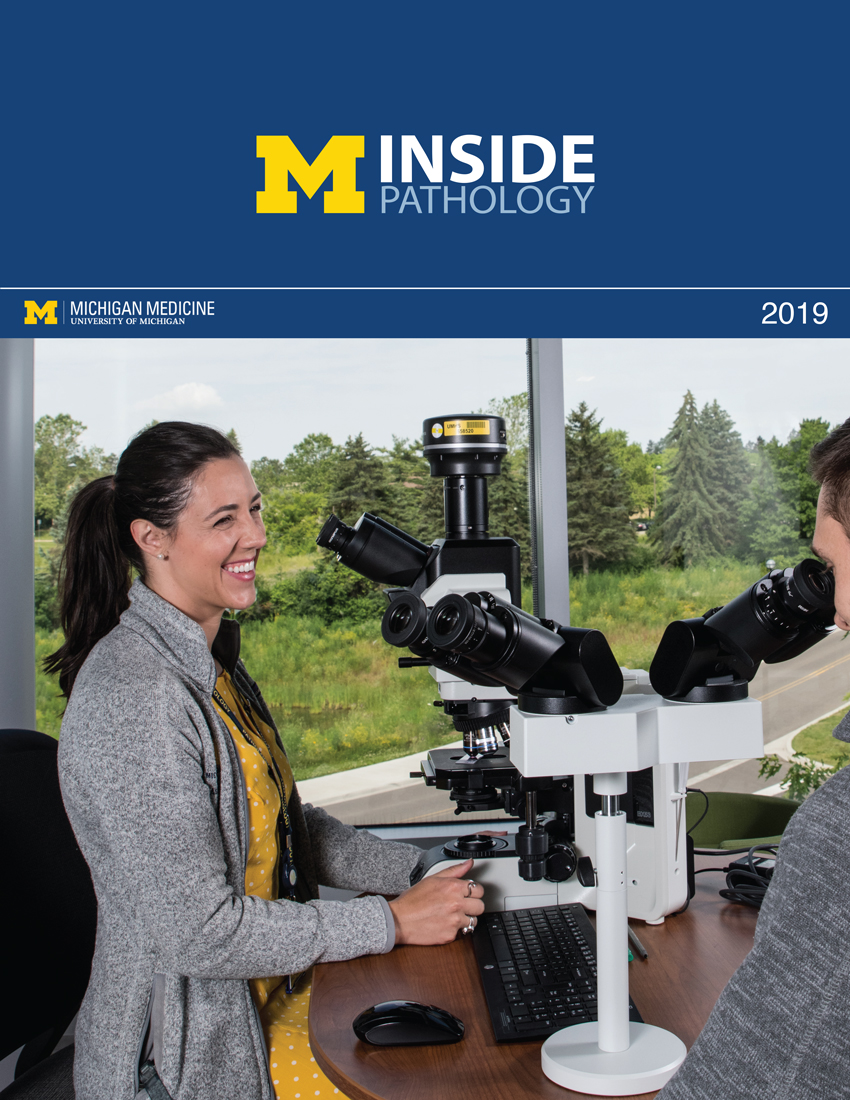 ON THE COVER
Residents Ashley Bradt (left) and William Perry work at a multi-headed scope in our new facility. |
newsletter
INSIDE PATHOLOGYAbout Our NewsletterInside Pathology is an newsletter published by the Chairman's Office to bring news and updates from inside the department's research and to become familiar with those leading it. It is our hope that those who read it will enjoy hearing about those new and familiar, and perhaps help in furthering our research. CONTENTS
|
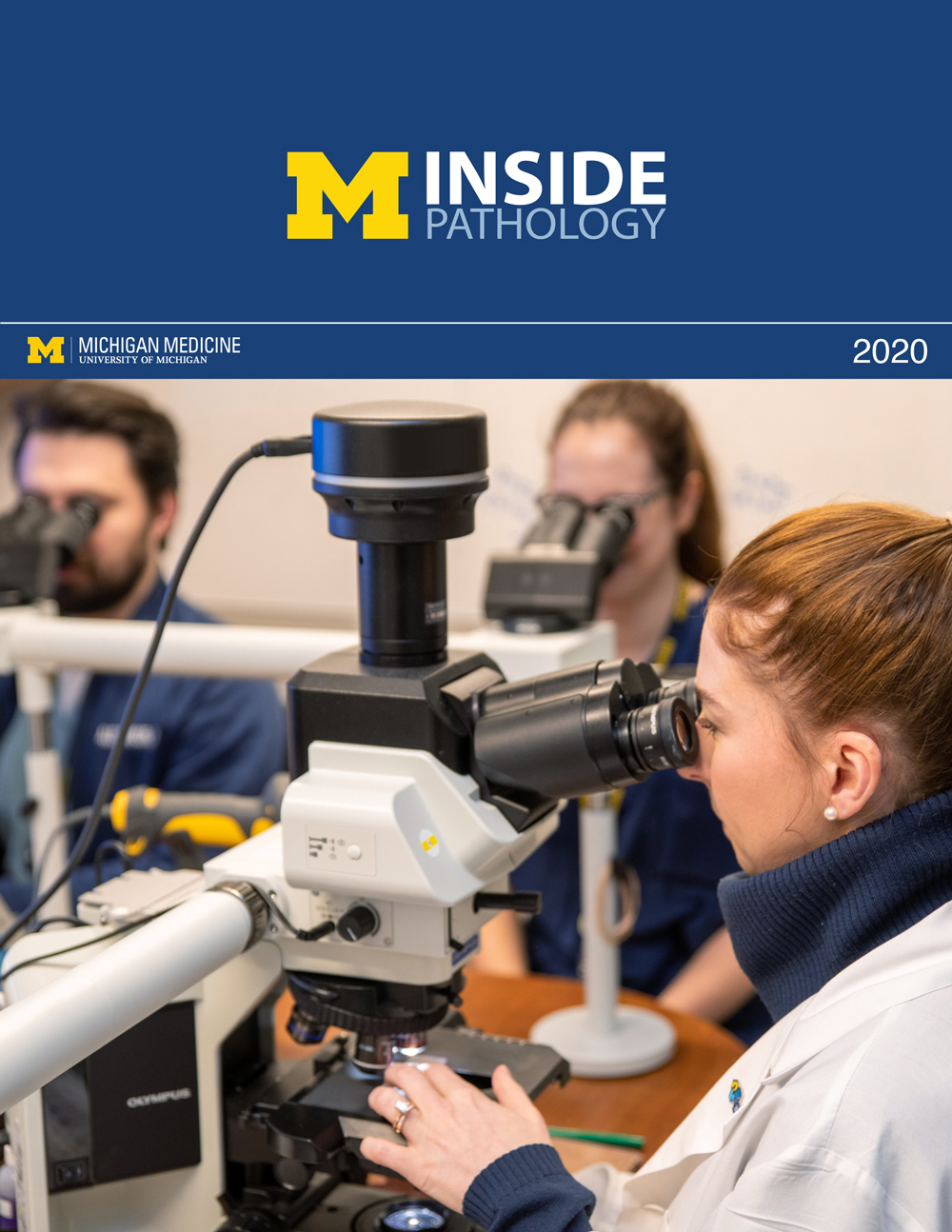 ON THE COVER
Dr. Kristine Konopka (right) instructing residents while using a multi-headed microscope. |
newsletter
INSIDE PATHOLOGYAbout Our NewsletterInside Pathology is an newsletter published by the Chairman's Office to bring news and updates from inside the department's research and to become familiar with those leading it. It is our hope that those who read it will enjoy hearing about those new and familiar, and perhaps help in furthering our research. CONTENTS
|
 ON THE COVER
Patient specimens poised for COVID-19 PCR testing. |
newsletter
INSIDE PATHOLOGYAbout Our NewsletterInside Pathology is an newsletter published by the Chairman's Office to bring news and updates from inside the department's research and to become familiar with those leading it. It is our hope that those who read it will enjoy hearing about those new and familiar, and perhaps help in furthering our research. CONTENTS
|
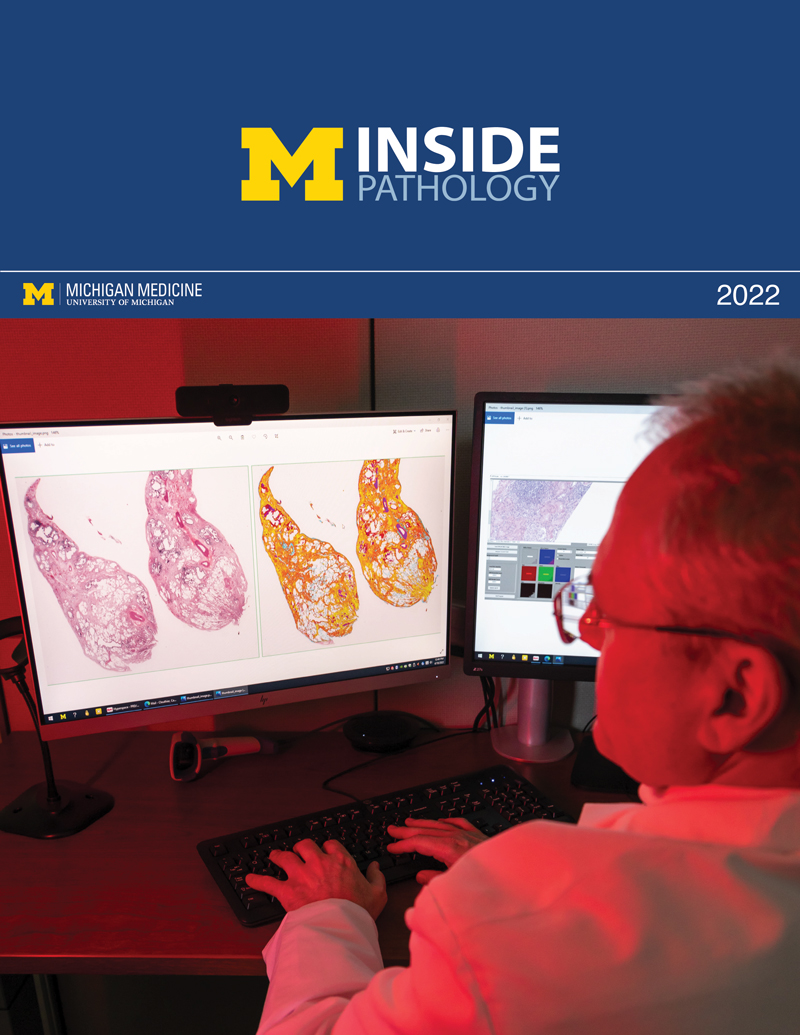 ON THE COVER
Dr. Pantanowitz demonstrates using machine learning in analyzing slides. |
newsletter
INSIDE PATHOLOGYAbout Our NewsletterInside Pathology is an newsletter published by the Chairman's Office to bring news and updates from inside the department's research and to become familiar with those leading it. It is our hope that those who read it will enjoy hearing about those new and familiar, and perhaps help in furthering our research. CONTENTS
|
 ON THE COVER
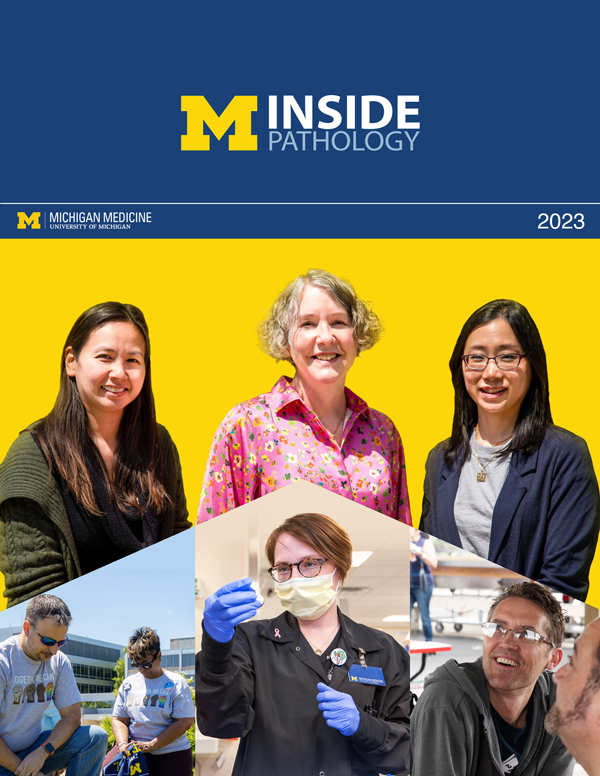
(Left to Right) Drs. Angela Wu, Laura Lamps, and Maria Westerhoff. |
newsletter
INSIDE PATHOLOGYAbout Our NewsletterInside Pathology is an newsletter published by the Chairman's Office to bring news and updates from inside the department's research and to become familiar with those leading it. It is our hope that those who read it will enjoy hearing about those new and familiar, and perhaps help in furthering our research. CONTENTS
|
 ON THE COVER
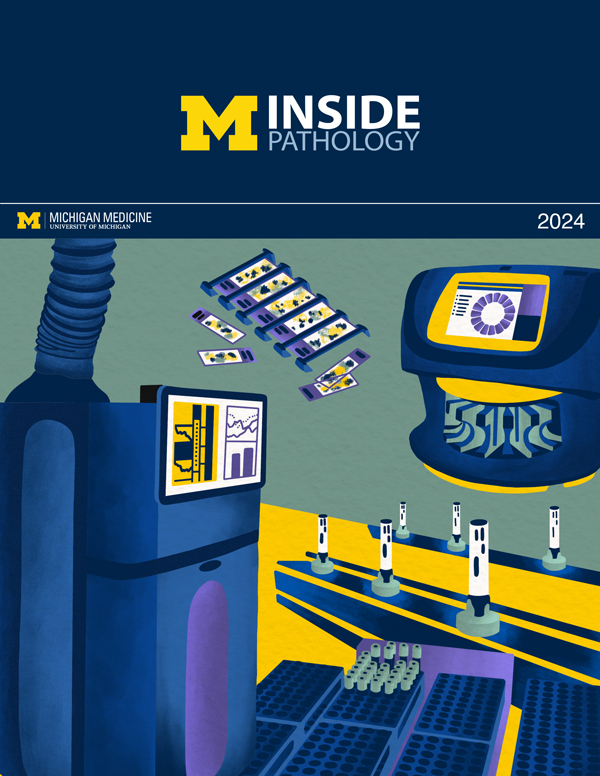
Illustration representing the various machines and processing used within our labs. |
newsletter
INSIDE PATHOLOGYAbout Our NewsletterInside Pathology is an newsletter published by the Chairman's Office to bring news and updates from inside the department's research and to become familiar with those leading it. It is our hope that those who read it will enjoy hearing about those new and familiar, and perhaps help in furthering our research. CONTENTS
|
 ON THE COVER
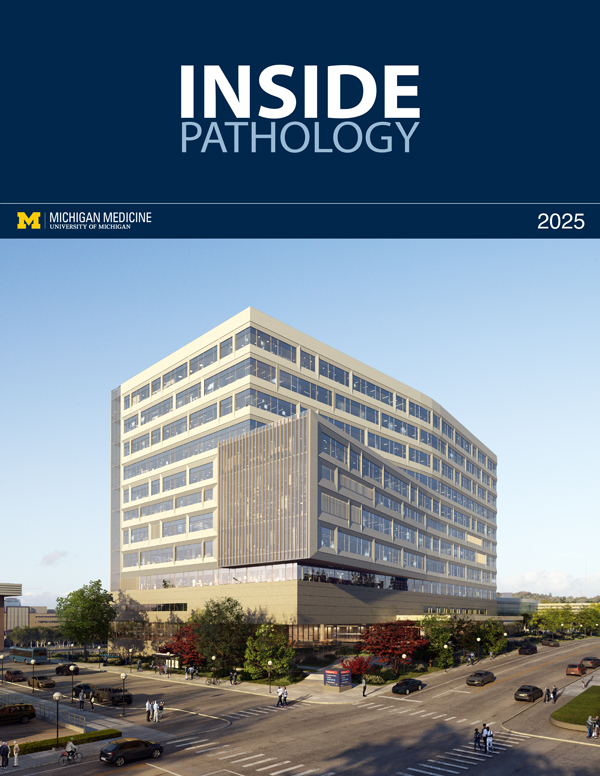
Rendering of the D. Dan and Betty Khn Health Care Pavilion. Credit: HOK |
newsletter
INSIDE PATHOLOGYAbout Our NewsletterInside Pathology is an newsletter published by the Chairman's Office to bring news and updates from inside the department's research and to become familiar with those leading it. It is our hope that those who read it will enjoy hearing about those new and familiar, and perhaps help in furthering our research. CONTENTS
|
MLabs, established in 1985, functions as a portal to provide pathologists, hospitals. and other reference laboratories access to the faculty, staff and laboratories of the University of Michigan Health System’s Department of Pathology. MLabs is a recognized leader for advanced molecular diagnostic testing, helpful consultants and exceptional customer service.