
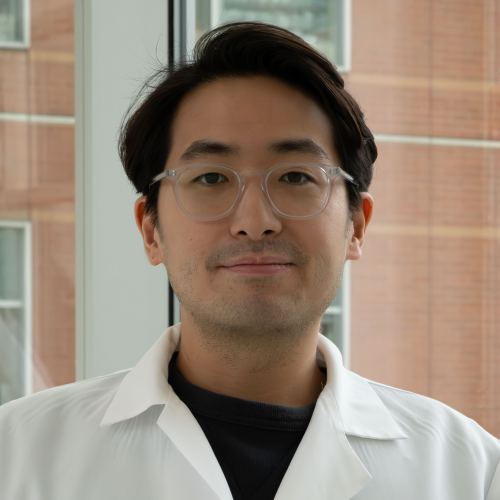
 Dr. Bernard Lo, PhD, Research Investigator, did not set out to study gut immunity, nor did he anticipate that his work would one day intersect with some of the most pressing questions in cancer immunotherapy. Growing up in Vancouver, British Columbia, Lo’s early academic life was rooted close to home. He completed both his undergraduate and doctoral training at the University of British Columbia, where he discovered his interest in immunology almost by accident.
As Lo recalls, the spark began during a fourth-year undergraduate immunology course taught by Professor Ken Harder. Harder’s compelling lectures, paired with a foundational immunology textbook, opened a door Lo hadn’t known he was searching for. That initial spark deepened into a passion under the mentorship of his PhD advisor, Dr. Kelly McNagny, a scientist Lo credits with tremendous creativity, generosity, and a rare talent for nurturing developing researchers. Lo’s thesis research centered on uncovering the cellular and molecular pathways that drive intestinal fibrosis in Crohn ’s-like disease. As a PhD candidate, Lo discovered a novel fibrosis-promoting pathway mediated by group 3 innate lymphoid cells (ILC3s) and regulated by the nuclear receptor RORα. His work used a model of chronic gut inflammation to demonstrate that ILC3s, and specifically RORα-dependent signaling, are essential for the development of intestinal fibrosis. This research identified RORα as a potential therapeutic target for preventing fibrotic complications in inflammatory bowel disease. His research was published in Science Immunology. The significance of Lo’s thesis was recognized for its potential to inform future anti-fibrotic therapies that could reduce the need for surgical interventions in Crohn’s disease. By the time Lo completed his PhD and a short postdoctoral stretch in the same lab, he had developed a strong foundation in both immunology and microbe–host interactions.
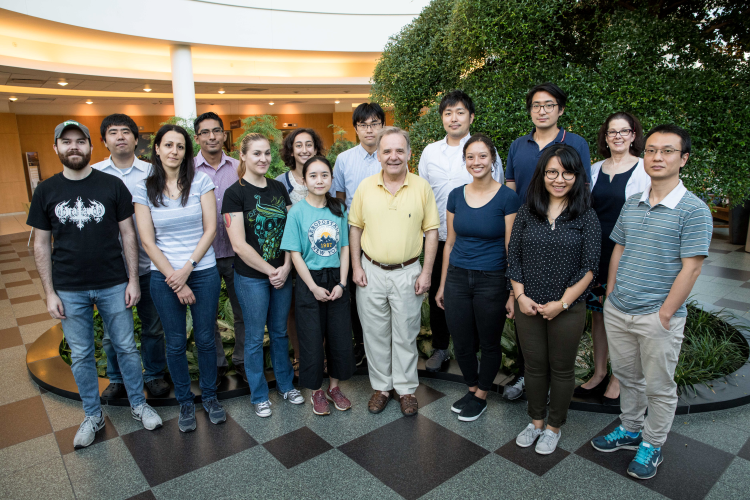 The path to Michigan began with a lecture. Early in Lo’s graduate training, Gabriel Núñez, MD, visited UBC to deliver a talk on gut immunology and microbial pathogenesis. Lo remembers being struck by the clarity and impact of Núñez’s data—clean, powerful, and rooted in questions that resonated with his own developing interests. Lo continued to follow Núñez’s work and, after completing his PhD, contacted Núñez. The timing was aligned, and in 2018, Lo arrived in Ann Arbor as a postdoctoral fellow, just one year before the COVID-19 pandemic would disrupt laboratories worldwide.
In the Núñez Lab, Lo found not only a mentor but a culture of scientific intensity and focus. Senior colleagues such as Roberta Caruso, MD, PhD, and Naohiro Inohara, PhD, contributed microbiota expertise that complemented Lo’s immunological background, thereby shaping his approach to complex research problems.
Much of Lo’s recent work centers on understanding colitis triggered by immune checkpoint blockade; therapies designed to unleash the immune system against cancer, but which can produce severe gastrointestinal side effects. Conventional laboratory mouse models had failed to replicate these toxicities, largely because their highly sanitized, pathogen-free environments do not reflect the microbial diversity that shapes human immunity. Lo and his colleagues instead turned to mice colonized with wild microbiota, an approach that elicited more physiologically relevant immune responses. For the first time, this model reliably replicated colitis observed in patients receiving CTLA-4 inhibitors.
This finding opened a new research frontier. Lo’s work now focuses on identifying the specific gut bacteria that drive this colitis. Using T cell receptors (TCRs) specific for these bacteria, he and his colleagues essentially “fish out” the microbes responsible for the disease from the complex gut community. The long-term goal is ambitious: to identify not only the bacteria but also the specific antigens that trigger harmful immune responses.
Despite the sophistication of his work, Lo speaks modestly about his accomplishments. He acknowledges the inherent grind of research, the months of ambiguous data, the dead‑ends, the uncertainty. But he also describes the thrill of the moment when an experiment finally reveals something new, something strong enough to sharpen the direction of a project. Those are the moments that make the work feel meaningful.
Outside the lab, Lo has discovered joy in exploring the eastern and midwestern United States, regions that felt worlds apart from the Pacific Northwest, where he grew up. From South Carolina’s coastal cities to long drives through Michigan’s Upper Peninsula and into Wisconsin, he has found the cultural and geographic contrasts fascinating. A stop at Lambeau Field in Green Bay stands out as a memorable moment, especially for someone who casually followed the Packers during the Mike Holmgren era.
Closer to home, tennis has become his sport of choice, a hobby revived during the pandemic. Having played during his youth, Lo now appreciates the game as something he can continue throughout life, with its constant opportunities for technical improvement, which suit him better than the Amore physically demanding sports he enjoyed when younger.
Lo’s story reflects the quiet persistence, curiosity, and commitment that drive scientific discovery. From Vancouver classrooms to Michigan research labs, from microbial ecosystems to cancer immunotherapies, his career continues to evolve, guided by strong mentors, shaped by scientific puzzles, and grounded in a deep fascination with how microbes and the immune system shape human health.
****
Citations:
Lo, BC, et al. (2016). The orphan nuclear receptor RORα and group 3 innate lymphoid cells drive fibrosis in a mouse model of Crohn’s disease. Science Immunology, 1(3), eaaf8864.
Lo BC, Kryczek I, Yu J, Vatan L, Caruso R, Matsumoto M, Sato Y, Shaw MH, Inohara N, Xie Y, Lei YL, Zou W, Núñez G. Microbiota-dependent activation of CD4+ T cells induces CTLA-4 blockade-associated colitis via Fcγ receptors. Science. 2024 Jan 5;383(6678):62-70. doi: 10.1126/science.adh8342. Epub 2024 Jan 4. PMID: 38175892; PMCID: PMC12091338.
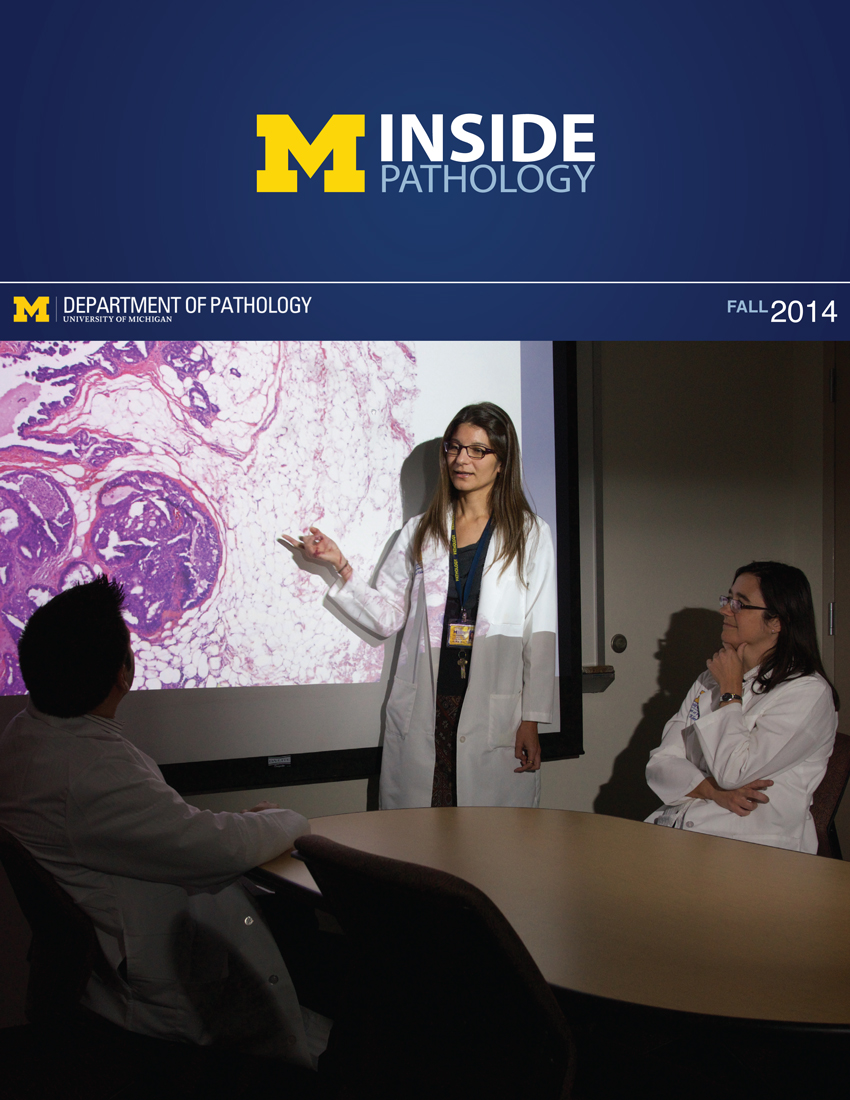 ON THE COVER
Breast team reviewing a patient's slide. (From left to right) Ghassan Allo, Fellow; Laura Walters, Clinical Lecturer; Celina Kleer, Professor. See Article |
newsletter
INSIDE PATHOLOGYAbout Our NewsletterInside Pathology is an newsletter published by the Chairman's Office to bring news and updates from inside the department's research and to become familiar with those leading it. It is our hope that those who read it will enjoy hearing about those new and familiar, and perhaps help in furthering our research. CONTENTS
|
 ON THE COVER
Autopsy Technician draws blood while working in the Wayne County morgue. See Article |
newsletter
INSIDE PATHOLOGYAbout Our NewsletterInside Pathology is an newsletter published by the Chairman's Office to bring news and updates from inside the department's research and to become familiar with those leading it. It is our hope that those who read it will enjoy hearing about those new and familiar, and perhaps help in furthering our research. CONTENTS
|
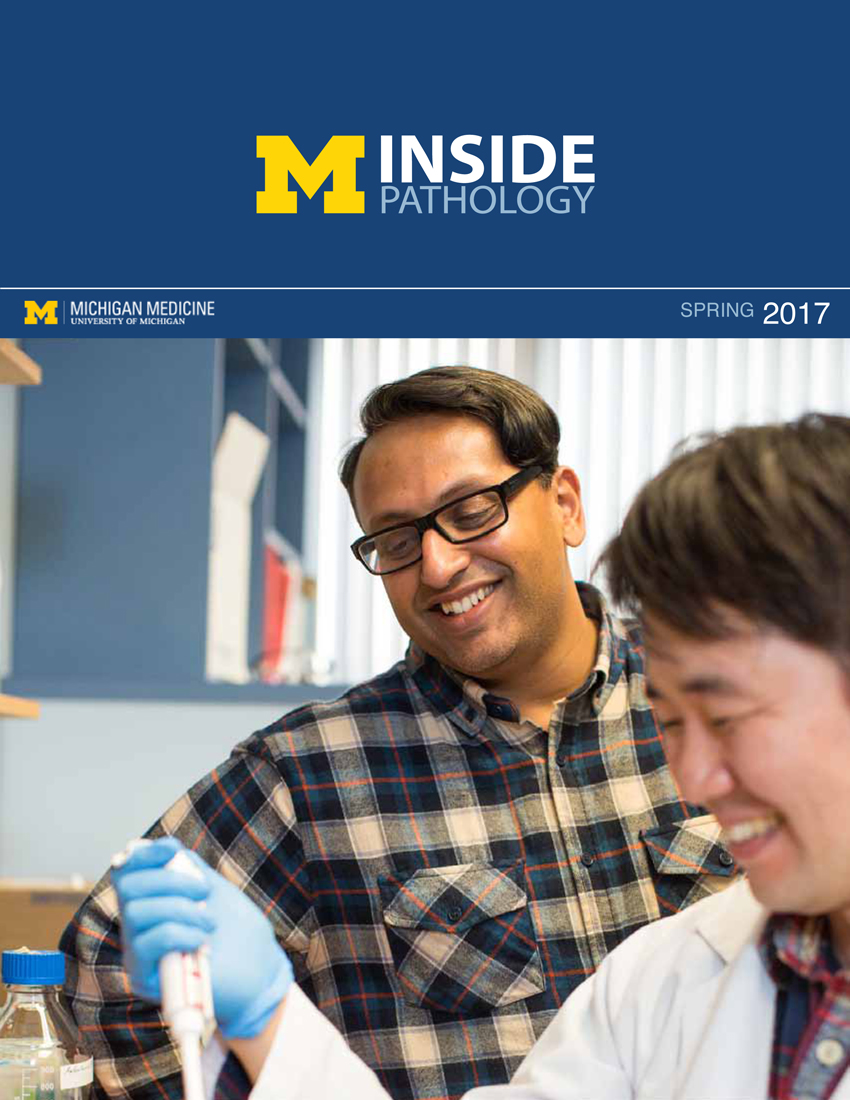 ON THE COVER
Dr. Sriram Venneti, MD, PhD and Postdoctoral Fellow, Chan Chung, PhD investigate pediatric brain cancer. See Article |
newsletter
INSIDE PATHOLOGYAbout Our NewsletterInside Pathology is an newsletter published by the Chairman's Office to bring news and updates from inside the department's research and to become familiar with those leading it. It is our hope that those who read it will enjoy hearing about those new and familiar, and perhaps help in furthering our research. CONTENTS
|
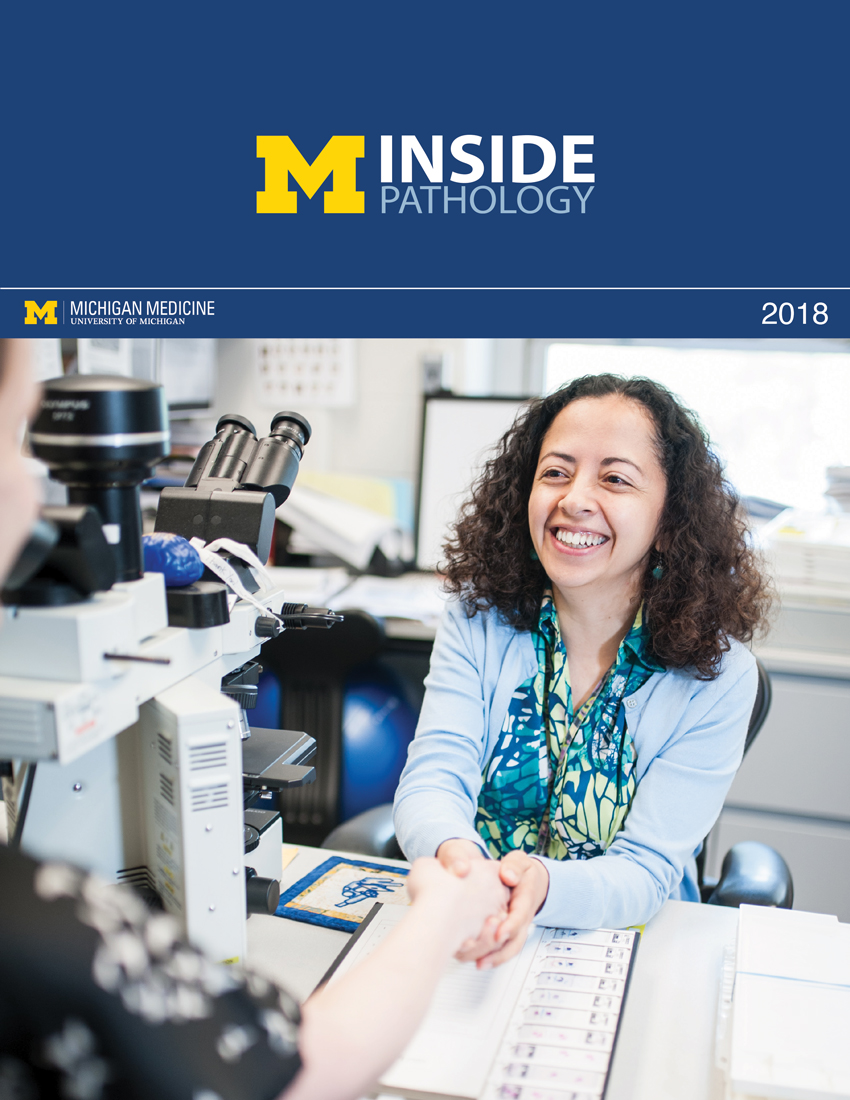 ON THE COVER
Director of the Neuropathology Fellowship, Dr. Sandra Camelo-Piragua serves on the Patient and Family Advisory Council. |
newsletter
INSIDE PATHOLOGYAbout Our NewsletterInside Pathology is an newsletter published by the Chairman's Office to bring news and updates from inside the department's research and to become familiar with those leading it. It is our hope that those who read it will enjoy hearing about those new and familiar, and perhaps help in furthering our research. CONTENTS
|
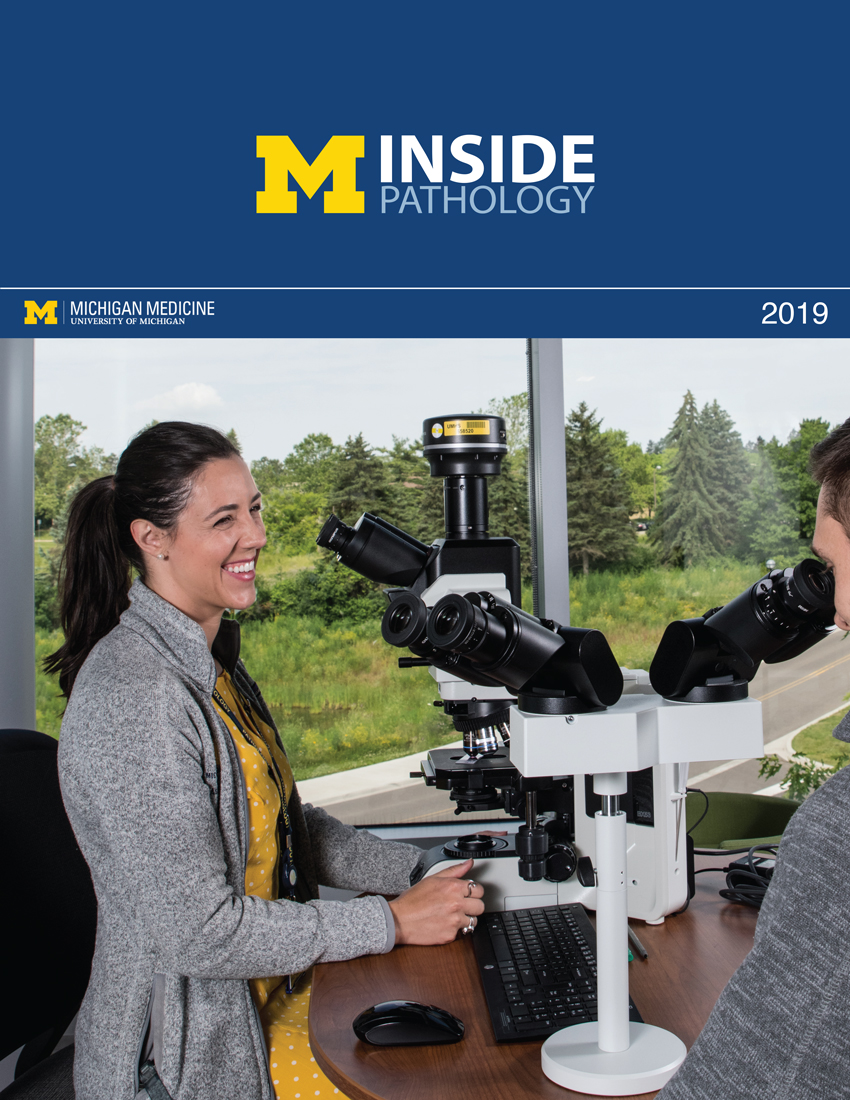 ON THE COVER
Residents Ashley Bradt (left) and William Perry work at a multi-headed scope in our new facility. |
newsletter
INSIDE PATHOLOGYAbout Our NewsletterInside Pathology is an newsletter published by the Chairman's Office to bring news and updates from inside the department's research and to become familiar with those leading it. It is our hope that those who read it will enjoy hearing about those new and familiar, and perhaps help in furthering our research. CONTENTS
|
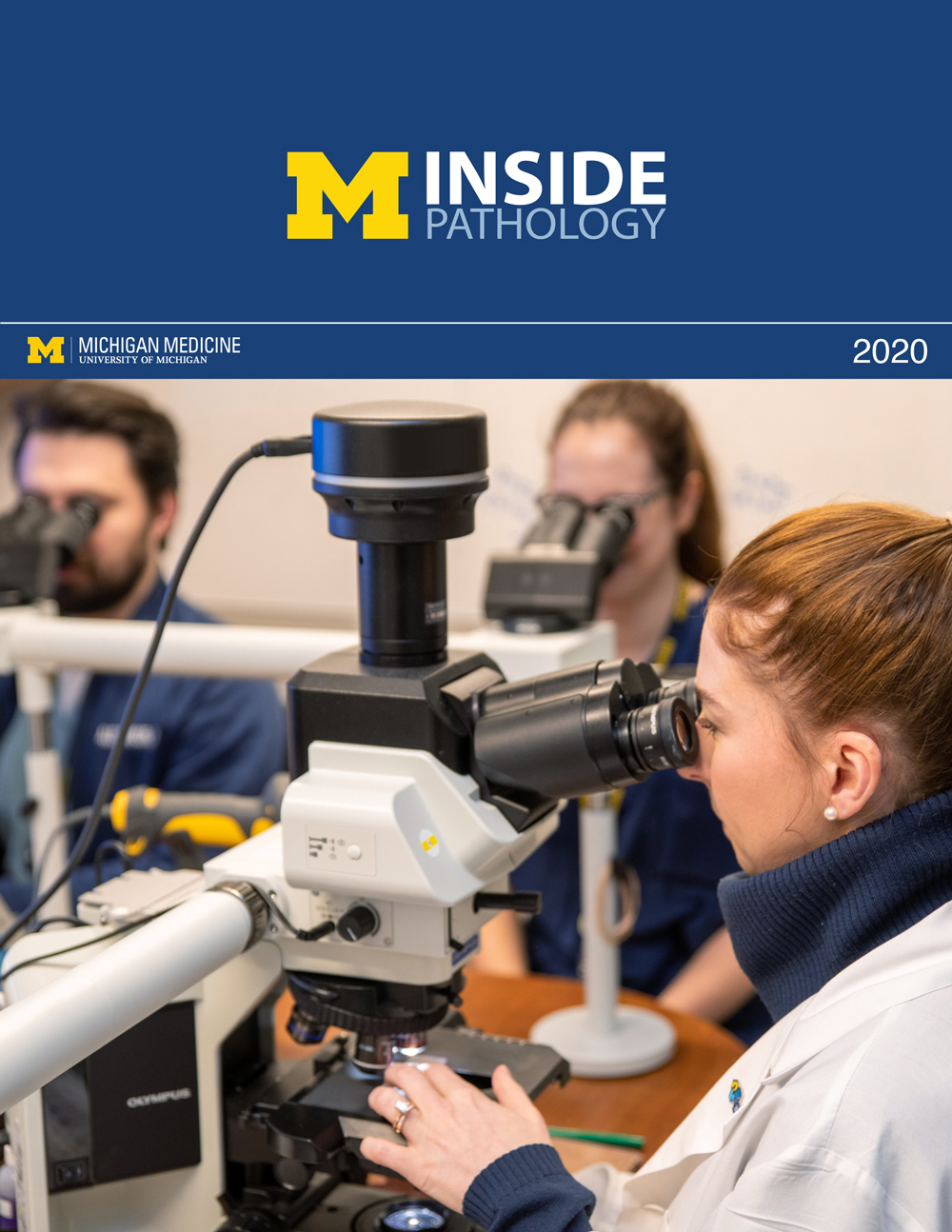 ON THE COVER
Dr. Kristine Konopka (right) instructing residents while using a multi-headed microscope. |
newsletter
INSIDE PATHOLOGYAbout Our NewsletterInside Pathology is an newsletter published by the Chairman's Office to bring news and updates from inside the department's research and to become familiar with those leading it. It is our hope that those who read it will enjoy hearing about those new and familiar, and perhaps help in furthering our research. CONTENTS
|
 ON THE COVER
Patient specimens poised for COVID-19 PCR testing. |
newsletter
INSIDE PATHOLOGYAbout Our NewsletterInside Pathology is an newsletter published by the Chairman's Office to bring news and updates from inside the department's research and to become familiar with those leading it. It is our hope that those who read it will enjoy hearing about those new and familiar, and perhaps help in furthering our research. CONTENTS
|
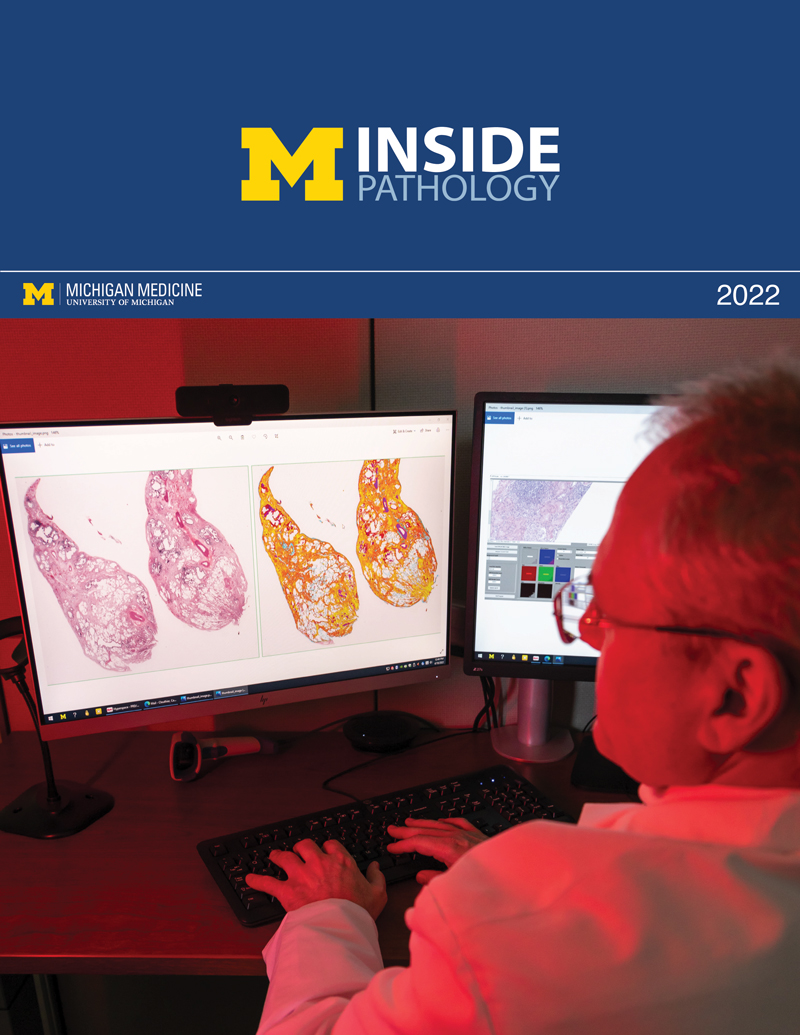 ON THE COVER
Dr. Pantanowitz demonstrates using machine learning in analyzing slides. |
newsletter
INSIDE PATHOLOGYAbout Our NewsletterInside Pathology is an newsletter published by the Chairman's Office to bring news and updates from inside the department's research and to become familiar with those leading it. It is our hope that those who read it will enjoy hearing about those new and familiar, and perhaps help in furthering our research. CONTENTS
|
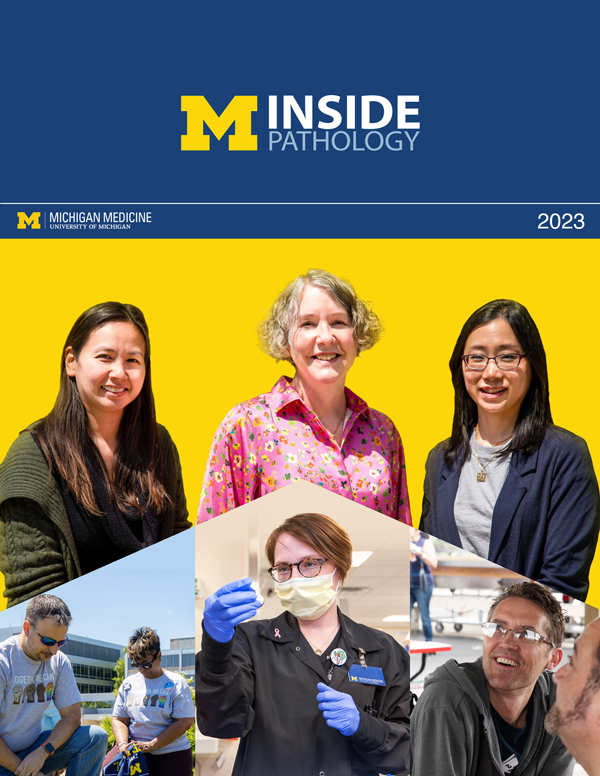 ON THE COVER
(Left to Right) Drs. Angela Wu, Laura Lamps, and Maria Westerhoff. |
newsletter
INSIDE PATHOLOGYAbout Our NewsletterInside Pathology is an newsletter published by the Chairman's Office to bring news and updates from inside the department's research and to become familiar with those leading it. It is our hope that those who read it will enjoy hearing about those new and familiar, and perhaps help in furthering our research. CONTENTS
|
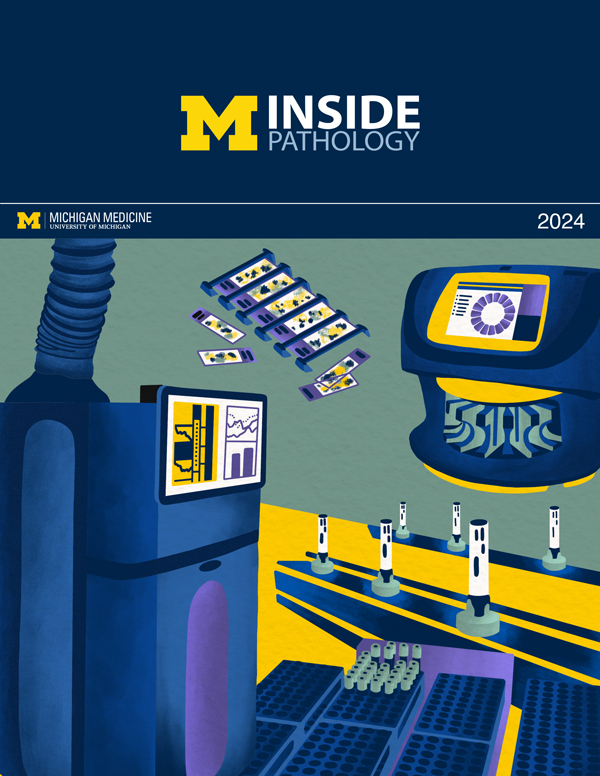 ON THE COVER
Illustration representing the various machines and processing used within our labs. |
newsletter
INSIDE PATHOLOGYAbout Our NewsletterInside Pathology is an newsletter published by the Chairman's Office to bring news and updates from inside the department's research and to become familiar with those leading it. It is our hope that those who read it will enjoy hearing about those new and familiar, and perhaps help in furthering our research. CONTENTS
|
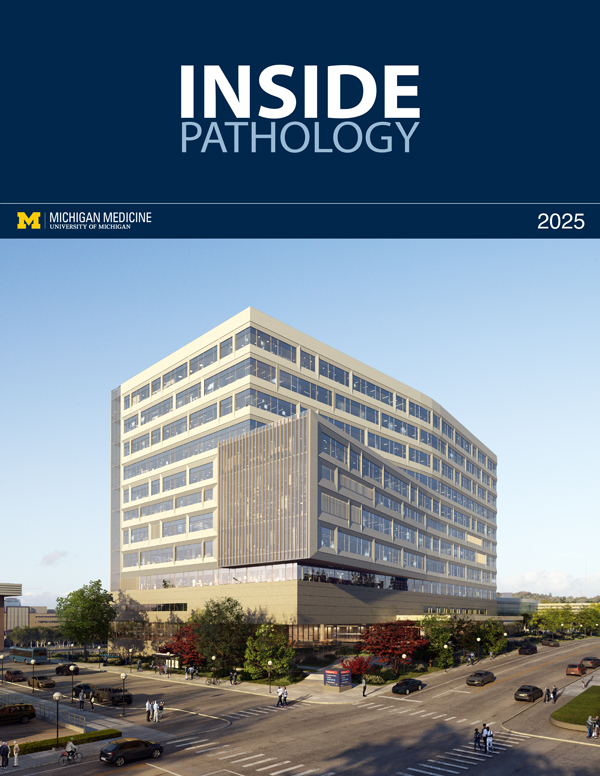 ON THE COVER
Rendering of the D. Dan and Betty Khn Health Care Pavilion. Credit: HOK |
newsletter
INSIDE PATHOLOGYAbout Our NewsletterInside Pathology is an newsletter published by the Chairman's Office to bring news and updates from inside the department's research and to become familiar with those leading it. It is our hope that those who read it will enjoy hearing about those new and familiar, and perhaps help in furthering our research. CONTENTS
|

MLabs, established in 1985, functions as a portal to provide pathologists, hospitals. and other reference laboratories access to the faculty, staff and laboratories of the University of Michigan Health System’s Department of Pathology. MLabs is a recognized leader for advanced molecular diagnostic testing, helpful consultants and exceptional customer service.