A New Genome-Wide Tool for Detecting Cancer-Causing Rearrangements in Routine Lymphoma Biopsies
By Anastazia Hartman | February 20A collaborative team of researchers from the University of Michigan, New York University, and Arima Genomics has developed a new method that improves the detection of genomic rearrangements in lymphomas and multiple myeloma.
The research, published this week in the journal Cell Genomics, was led by Russell Ryan, MD, of the University of Michigan Department of Pathology, and Matija Snuderl, MD, of the New York University Department of Pathology, in collaboration with Anthony Schmitt and colleagues at Arima Genomics, a biotechnology company that developed the assay, called FFPE Hi-C. The assay is designed to operate on standard formalin-fixed, paraffin-embedded (FFPE) pathology specimens, which are commonly used for lymphoma diagnosis. 
“Clinical use of high-throughput molecular testing in lymphomas and myelomas has lagged behind other cancers because the key genetic lesions used for classification and treatment selection are genomic rearrangements, which are difficult to detect by standard targeted next-generation sequencing approaches,” said Dr. Ryan. “FFPE Hi-C offers an opportunity to overcome those limitations for routinely fixed pathology specimens.”
The current standard diagnostic approach for detecting rearrangements in lymphoma, fluorescence in situ hybridization (FISH), interrogates only one or two pre-defined genomic locations per assay. This restricts its ability to uncover unexpected or rare alterations that may nonetheless have important diagnostic or therapeutic implications. In the new research, FFPE Hi-C identified several biopsies with rearrangements that had clear diagnostic or therapeutic implications but were missed by routine clinical FISH.
“FISH can fail in many ways”, said Dr. Snuderl, who directs the Molecular Diagnostics lab at NYU. “You can overcome some limitations by running a greater number of FISH assays to cover rare variant rearrangements, but the assay is so low-throughput that it becomes costly and impractical. With FFPE Hi-C, we can cover the whole genome in a single assay.”
The new study puts particular emphasis on the ability of FFPE Hi-C to detect “enhancer-hijacking rearrangements”, which activate cancer-causing genes by linking them to distant gene-activating elements rather than altering the sequence of the genes themselves.
“Hi-C was originally developed to detect interactions between distant parts of the genome in normal cells”, says Dr. Ryan. “Here we have adapted it to find rearrangements, but often you can directly see the new interactions between cancer-causing genes and the enhancers that activate them, further confirming the function of that rearrangement. You don’t get that information from other methods, like whole-genome sequencing.”
Because the study covered a number of different cancer types and was enriched for cases already known to have rearrangements, the authors emphasize that additional research is needed to determine when the clinical diagnostic use of FFPE Hi-C would provide a clear benefit to patients.
“It’s been exciting to collaborate with our academic partners at the University of Michigan and NYU,” said Dr. Schmitt. “Studies like this play a key role in our effort to make this assay available to the research and clinical community, and to ultimately improve patient care.”
 ON THE COVER
 ON THE COVER
 ON THE COVER
 ON THE COVER
 ON THE COVER
 ON THE COVER
 ON THE COVER
 ON THE COVER
 ON THE COVER
 ON THE COVER
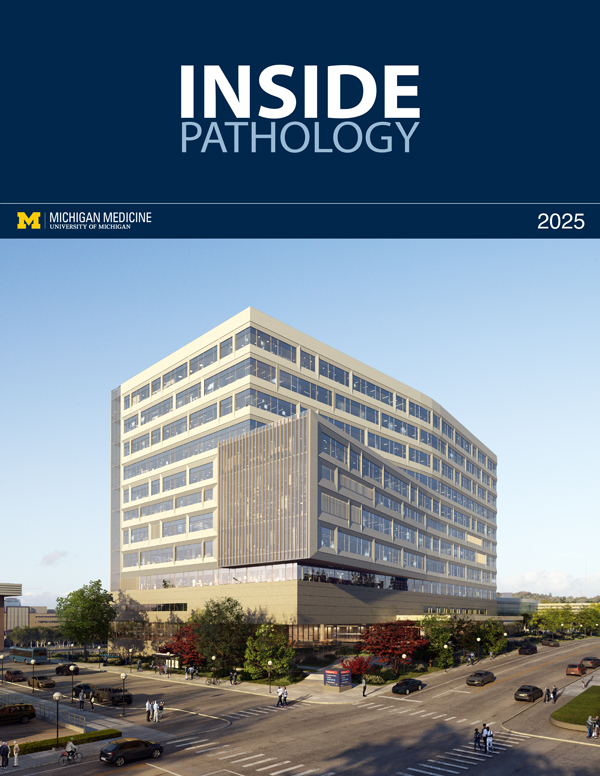 ON THE COVER