Targeting two separate pathways that control lipid synthesis led to longer survival in mouse models
By Ananya Sen

Neuroendocrine cells are unique in their ability to act both as nerve cells and hormone-making cells.
They're scattered throughout the body, including the stomach, intestines, pancreas and lungs.
Tumors that arise from these cells are called neuroendocrine tumors and are often rare and slow growing.
Around 70% of all neuroendocrine tumors arise in the pancreas or gastrointestinal tract and are known as gastroenteropancreatic neuroendocrine tumors, or GEP-NETs.
Targeting these tumors is often challenging because cells become resistant to treatment.
In a recent study, University of Michigan researchers have identified a new target that can suppress tumor growth.
Their findings may lead to new treatment methods for GEP-NETs.
The typical treatment for GEP-NETs involves targeting mTOR, which controls protein and lipid synthesis.
Inhibiting mTOR, through the medication everolimus, slows down tumor growth but does not kill the cells.
Therefore, patients respond to treatment only for a short period of time before developing resistance.
In the present study, the team screened for cell pathways that can target GEP-NETs.
They found that PIKfyve, a therapeutic target in prostate, pancreatic and breast cancer, is also important in GEP-NETs.
“PIKfyve was present in higher levels in GEP-NETs compared to the normal surrounding tissues,” said Yuanyuan Qiao, Ph.D., Research Assistant Professor of Translational Pathology.
“That suggested PIKfyve has a role in either promoting GEP-NET survival or growth.”
Using tumor models, the researchers confirmed that inhibiting PIKfyve reduced tumor volume and weight compared to the control.
They found that PIKfyve controls the cell’s ‘cleanup’ process, called autophagy, where cellular components are recycled to help cells survive.
As a result, PIKfyve also influenced lipid synthesis, but through a different pathway when compared to mTOR.
The researchers found that when both PIKfyve and mTOR were targeted in pancreatic neuroendocrine tumor models, the mice had fewer tumors and survived longer compared to the controls or targeting only one of the pathways.
Although PIKfyve has been identified as a target in other tumors, there are no FDA-approved PIKfyve inhibitors.
The researchers are hoping that ESK981, a PIKfyve inhibitor that is currently being as a phase 2 drug in the Rogel Cancer Center, can eventually be used in combination with mTOR inhibitors.
“By co-targeting these complementary mechanisms, we can transform a largely growth-suppressive therapy into one that more effectively drives tumor cell death, offering a promising new strategy to overcome treatment resistance,” said Arul Chinnaiyan, M.D., Ph.D., S. P. Hicks Endowed Professor of Pathology.
“The next step, of course, will be to evaluate this approach in patients with gastroenteropancreatic neuroendocrine tumors."
Additional authors: Yizhi Cao, Caleb Cheng, Yitong Yin, Sarah N. Yee, Yang Zheng, Somnath Mahapatra, Radha Paturu, Andrej Coleski, Shannon VanAken, Fan Yang, Rüya Pakkan, Yi Zhao, Rupam Bhattacharyya, Stephanie J. Miner, Xuhong Cao, Rahul Mannan, Chungen Li, Vaibhav Sahai, Ke Ding and Costas A. Lyssiotis.
Funding/disclosures: This work was supported by the National Cancer Institute Outstanding Investigator Award R35-CA231996, Department of Defense Idea Development Award HT9425-23-1-0084, the Neuroendocrine Tumor Research Foundation Investigator Award, the NCI (R37-CA237421, R01-CA248160, R01-CA244931), an NCI F30 fellowship (F30CA288093) and NIH T32 training grants (CMB:5T32-GM145470, MSTP: T32GM00786). Chinnaiyan is a Howard Hughes Medical Institute Investigator, A. Alfred Taubman Scholar, and American Cancer Society Professor.
Tech transfer(s)/Conflict(s) of interest: Chinnaiyan is a co-founder and serves on the Scientific Advisory Board of Esanik Therapeutics, Inc., which owns proprietary rights to the clinical development of ESK981. He is a co-founder and serves on the SAB of Medsyn Bio, Lynx Dx and NuLynx Therapeutics and serves as an advisor to Tempus AI, Proteovant, Aurigene Oncology, and Ascentage Pharmaceuticals. Chinnaiyan, Qiao, Lyssiotis, Cheng, Ding and Li are listed as inventors on the following patents pertaining to development of methodologies and compounds targeting PIKfyve in diseases: PCT: PCT/US2021/057022; PCT: PCT/US2024/017088; PCT: PCT/CN2024/087809, US Patent No: 63/537,996, US Patent No: 63/841,641, US Patent No: PCT/CN2024/078381
Paper cited: “Targeting the Ferritinophagy-Lysosome Axis as a Therapeutic Vulnerability in Gastroenteropancreatic Neuroendocrine Tumors,” Cell Reports Medicine. DOI: 10.1016/j.xcrm.2026.102695
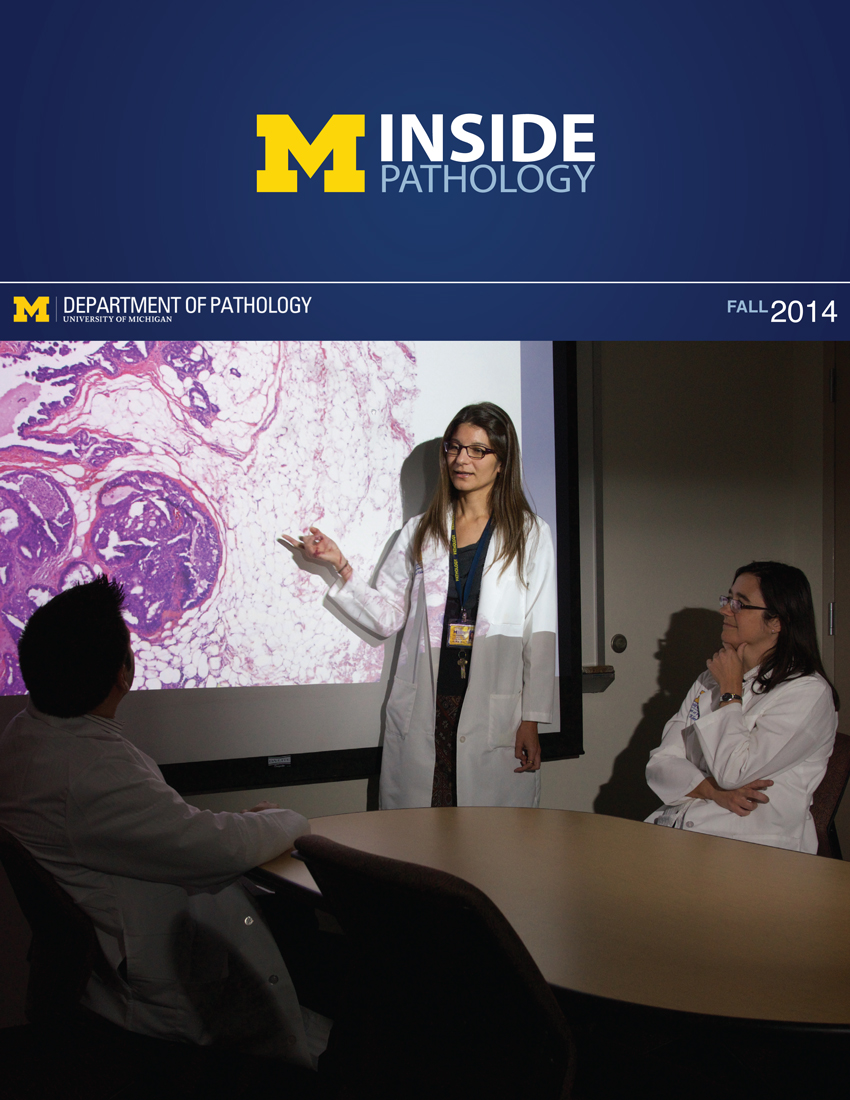
ON THE COVER
Breast team reviewing a patient's slide. (From left to right) Ghassan Allo, Fellow; Laura Walters, Clinical Lecturer; Celina Kleer, Professor. See Article 2014Department Chair |
newsletter
INSIDE PATHOLOGYAbout Our NewsletterInside Pathology is an newsletter published by the Chairman's Office to bring news and updates from inside the department's research and to become familiar with those leading it. It is our hope that those who read it will enjoy hearing about those new and familiar, and perhaps help in furthering our research. CONTENTS
|
ON THE COVER
Autopsy Technician draws blood while working in the Wayne County morgue. See Article 2016Department Chair |
newsletter
INSIDE PATHOLOGYAbout Our NewsletterInside Pathology is an newsletter published by the Chairman's Office to bring news and updates from inside the department's research and to become familiar with those leading it. It is our hope that those who read it will enjoy hearing about those new and familiar, and perhaps help in furthering our research. CONTENTS
|
ON THE COVER
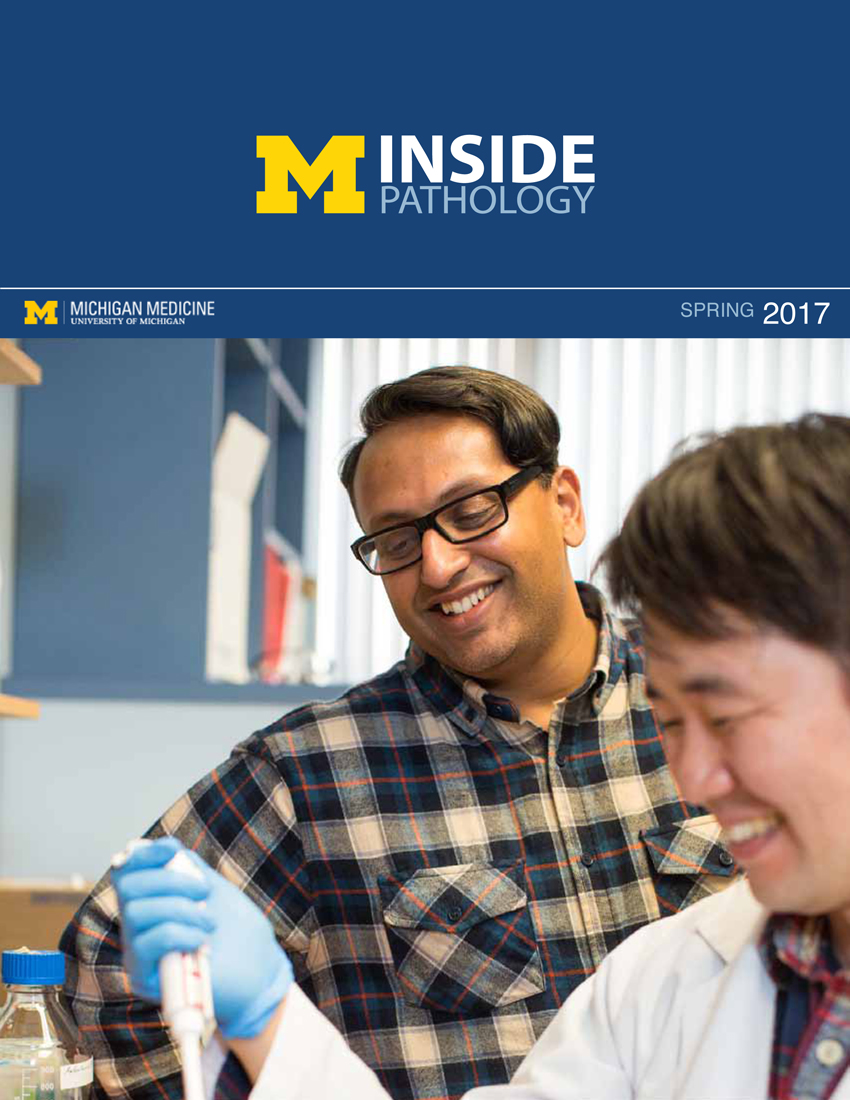
Dr. Sriram Venneti, MD, PhD and Postdoctoral Fellow, Chan Chung, PhD investigate pediatric brain cancer. See Article 2017Department Chair |
newsletter
INSIDE PATHOLOGYAbout Our NewsletterInside Pathology is an newsletter published by the Chairman's Office to bring news and updates from inside the department's research and to become familiar with those leading it. It is our hope that those who read it will enjoy hearing about those new and familiar, and perhaps help in furthering our research. CONTENTS
|
ON THE COVER
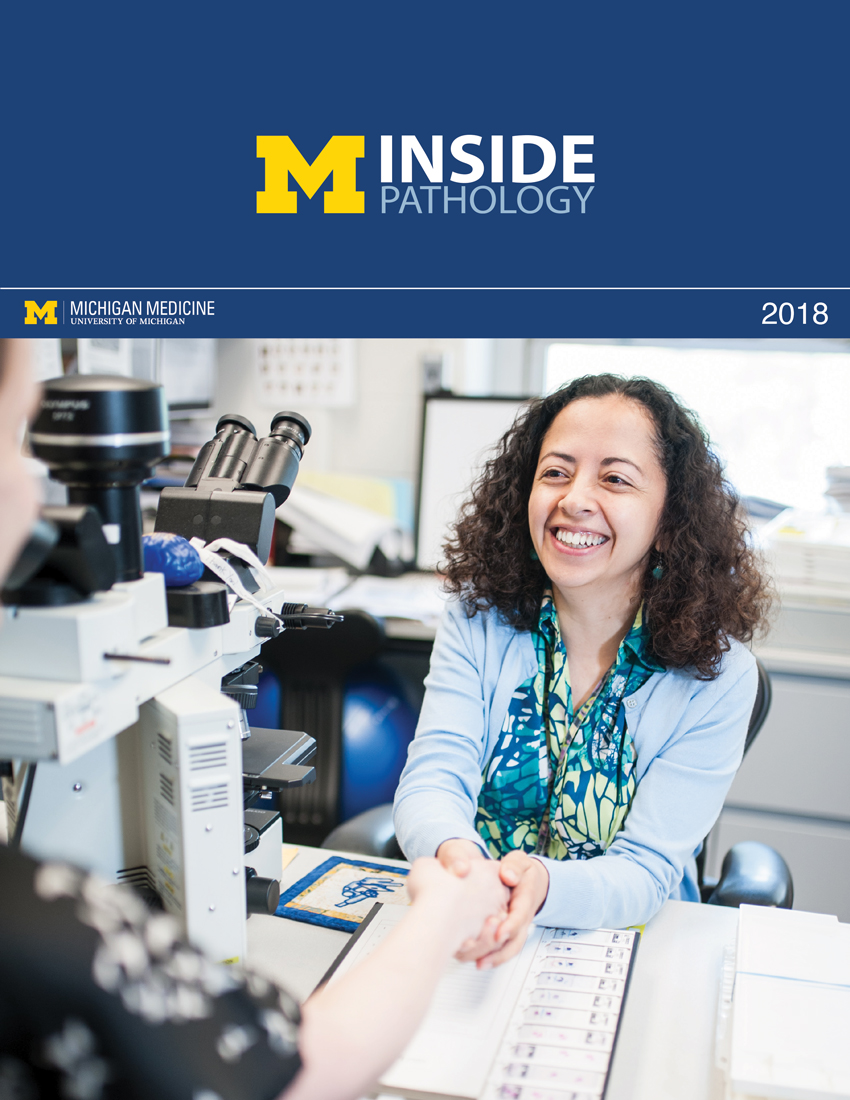
Director of the Neuropathology Fellowship, Dr. Sandra Camelo-Piragua serves on the Patient and Family Advisory Council. 2018Department Chair |
newsletter
INSIDE PATHOLOGYAbout Our NewsletterInside Pathology is an newsletter published by the Chairman's Office to bring news and updates from inside the department's research and to become familiar with those leading it. It is our hope that those who read it will enjoy hearing about those new and familiar, and perhaps help in furthering our research. CONTENTS
|
ON THE COVER
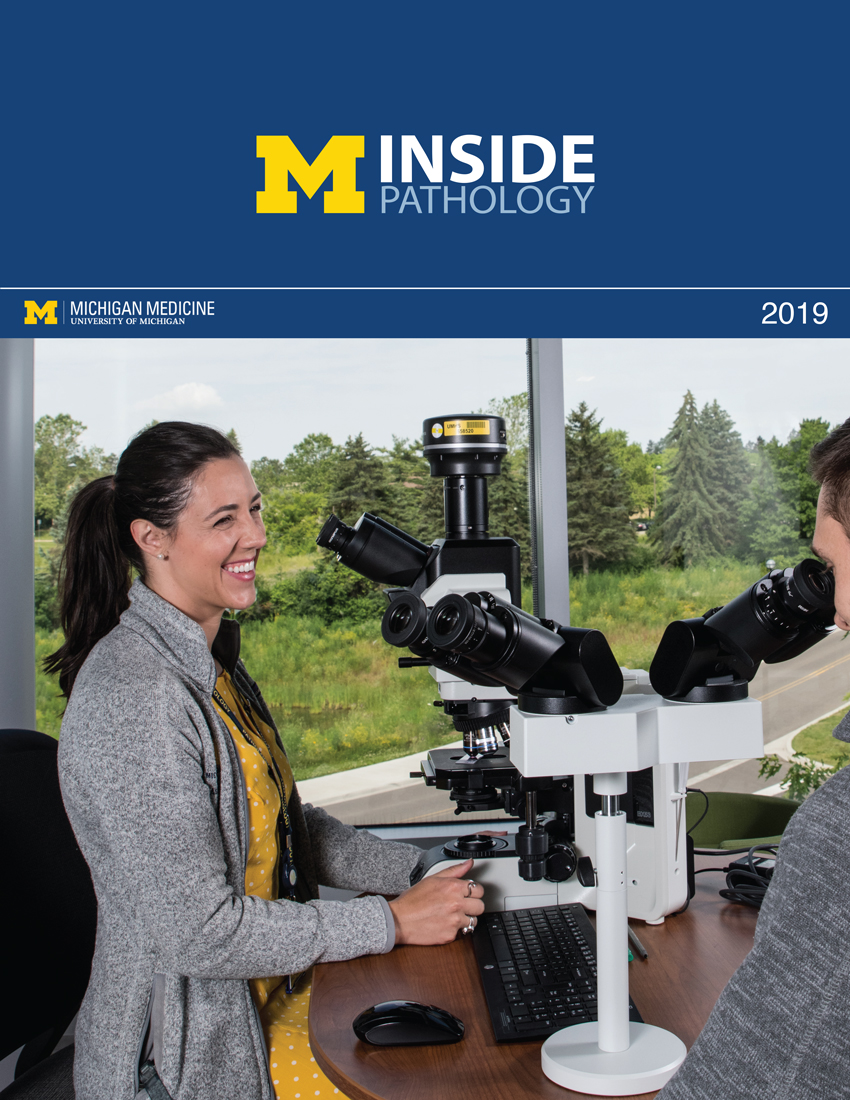
Residents Ashley Bradt (left) and William Perry work at a multi-headed scope in our new facility. 2019Department Chair |
newsletter
INSIDE PATHOLOGYAbout Our NewsletterInside Pathology is an newsletter published by the Chairman's Office to bring news and updates from inside the department's research and to become familiar with those leading it. It is our hope that those who read it will enjoy hearing about those new and familiar, and perhaps help in furthering our research. CONTENTS
|
ON THE COVER
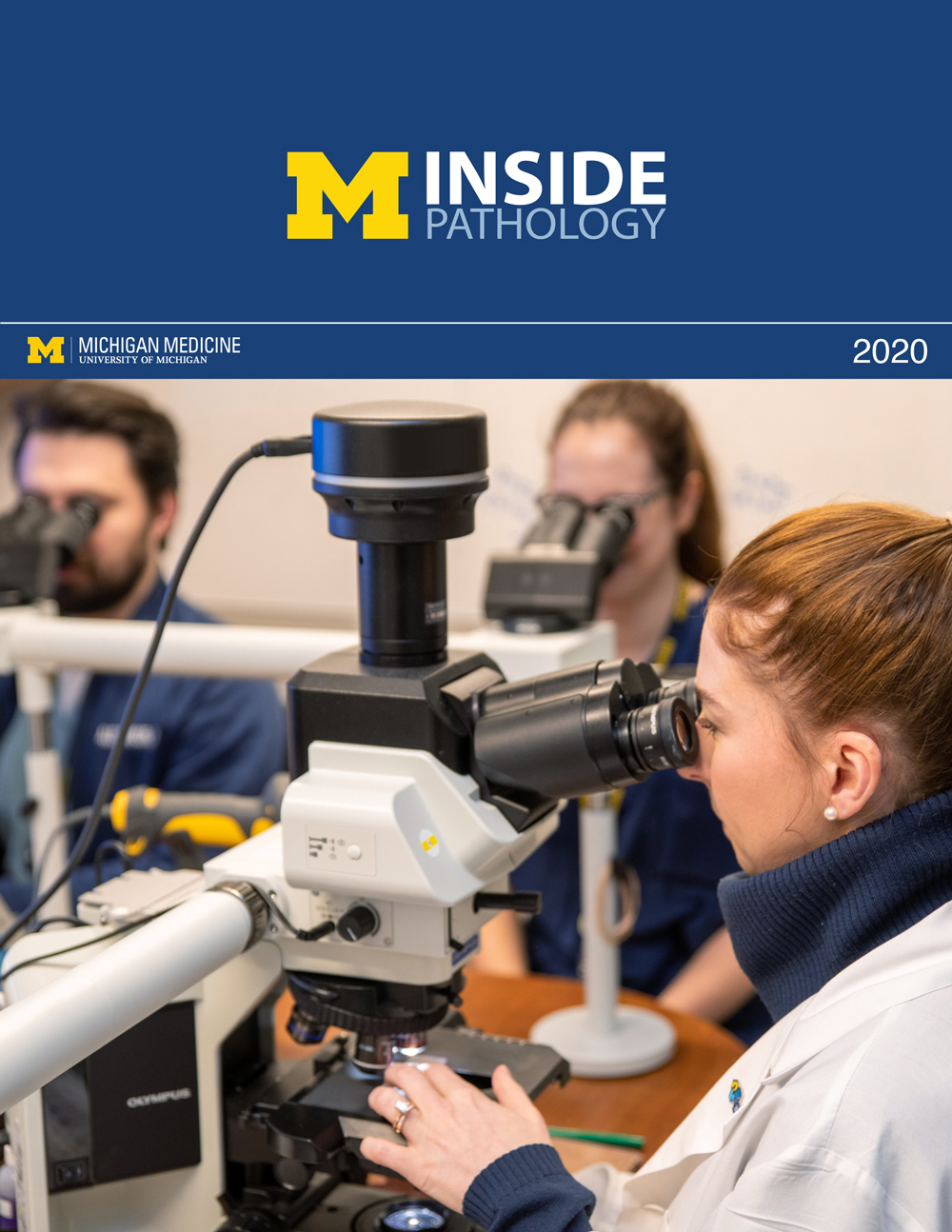
Dr. Kristine Konopka (right) instructing residents while using a multi-headed microscope. 2020Department Chair |
newsletter
INSIDE PATHOLOGYAbout Our NewsletterInside Pathology is an newsletter published by the Chairman's Office to bring news and updates from inside the department's research and to become familiar with those leading it. It is our hope that those who read it will enjoy hearing about those new and familiar, and perhaps help in furthering our research. CONTENTS
|
ON THE COVER
Patient specimens poised for COVID-19 PCR testing. 2021Department Chair |
newsletter
INSIDE PATHOLOGYAbout Our NewsletterInside Pathology is an newsletter published by the Chairman's Office to bring news and updates from inside the department's research and to become familiar with those leading it. It is our hope that those who read it will enjoy hearing about those new and familiar, and perhaps help in furthering our research. CONTENTS
|
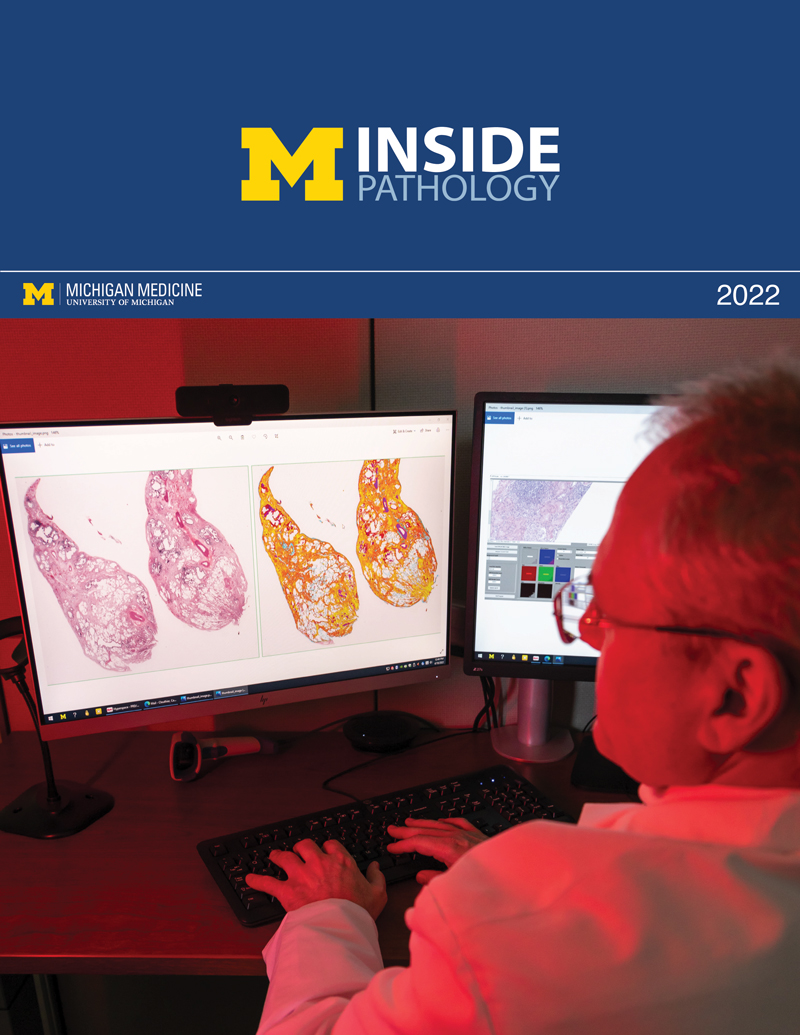
ON THE COVER
Dr. Pantanowitz demonstrates using machine learning in analyzing slides. 2022Department Chair |
newsletter
INSIDE PATHOLOGYAbout Our NewsletterInside Pathology is an newsletter published by the Chairman's Office to bring news and updates from inside the department's research and to become familiar with those leading it. It is our hope that those who read it will enjoy hearing about those new and familiar, and perhaps help in furthering our research. CONTENTS
|
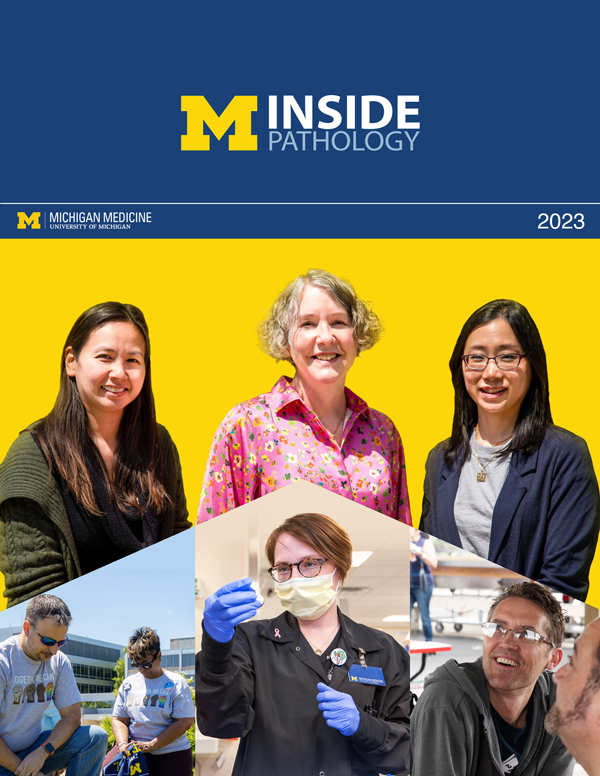
ON THE COVER
(Left to Right) Drs. Angela Wu, Laura Lamps, and Maria Westerhoff. 2023Department Chair |
newsletter
INSIDE PATHOLOGYAbout Our NewsletterInside Pathology is an newsletter published by the Chairman's Office to bring news and updates from inside the department's research and to become familiar with those leading it. It is our hope that those who read it will enjoy hearing about those new and familiar, and perhaps help in furthering our research. CONTENTS
|
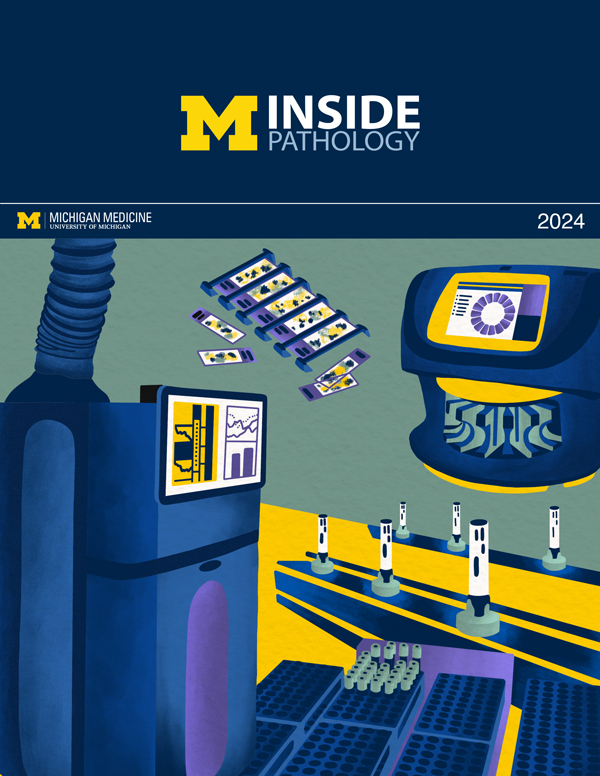
ON THE COVER
Illustration representing the various machines and processing used within our labs. 2024Department Chair |
newsletter
INSIDE PATHOLOGYAbout Our NewsletterInside Pathology is an newsletter published by the Chairman's Office to bring news and updates from inside the department's research and to become familiar with those leading it. It is our hope that those who read it will enjoy hearing about those new and familiar, and perhaps help in furthering our research. CONTENTS
|
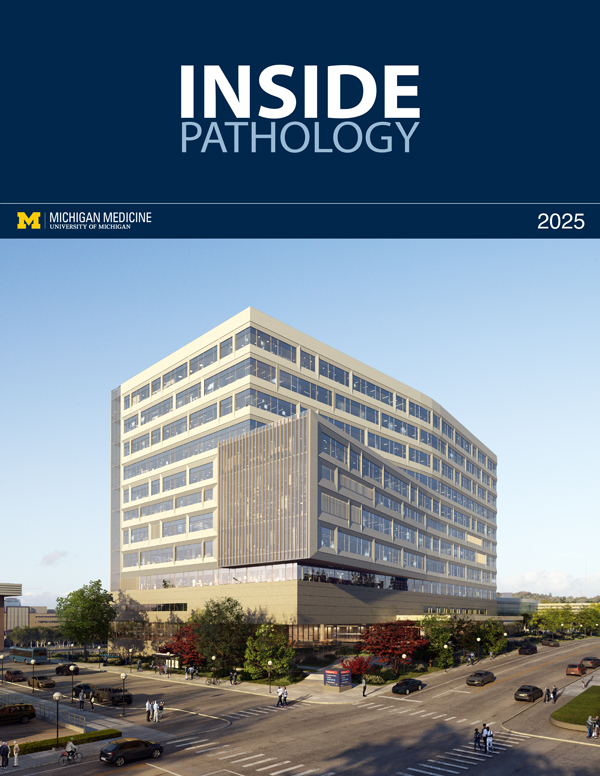
ON THE COVER
Rendering of the D. Dan and Betty Khn Health Care Pavilion. Credit: HOK 2025Department Chair |
newsletter
INSIDE PATHOLOGYAbout Our NewsletterInside Pathology is an newsletter published by the Chairman's Office to bring news and updates from inside the department's research and to become familiar with those leading it. It is our hope that those who read it will enjoy hearing about those new and familiar, and perhaps help in furthering our research. CONTENTS
|
MLabs, established in 1985, functions as a portal to provide pathologists, hospitals. and other reference laboratories access to the faculty, staff and laboratories of the University of Michigan Health System’s Department of Pathology. MLabs is a recognized leader for advanced molecular diagnostic testing, helpful consultants and exceptional customer service.