.png)
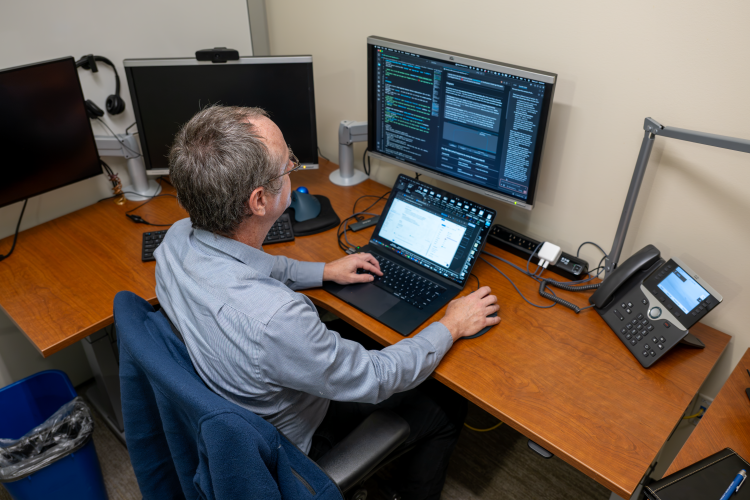
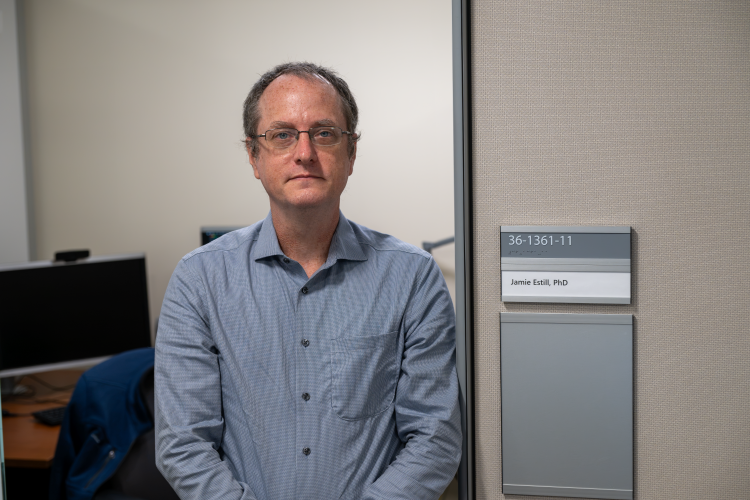
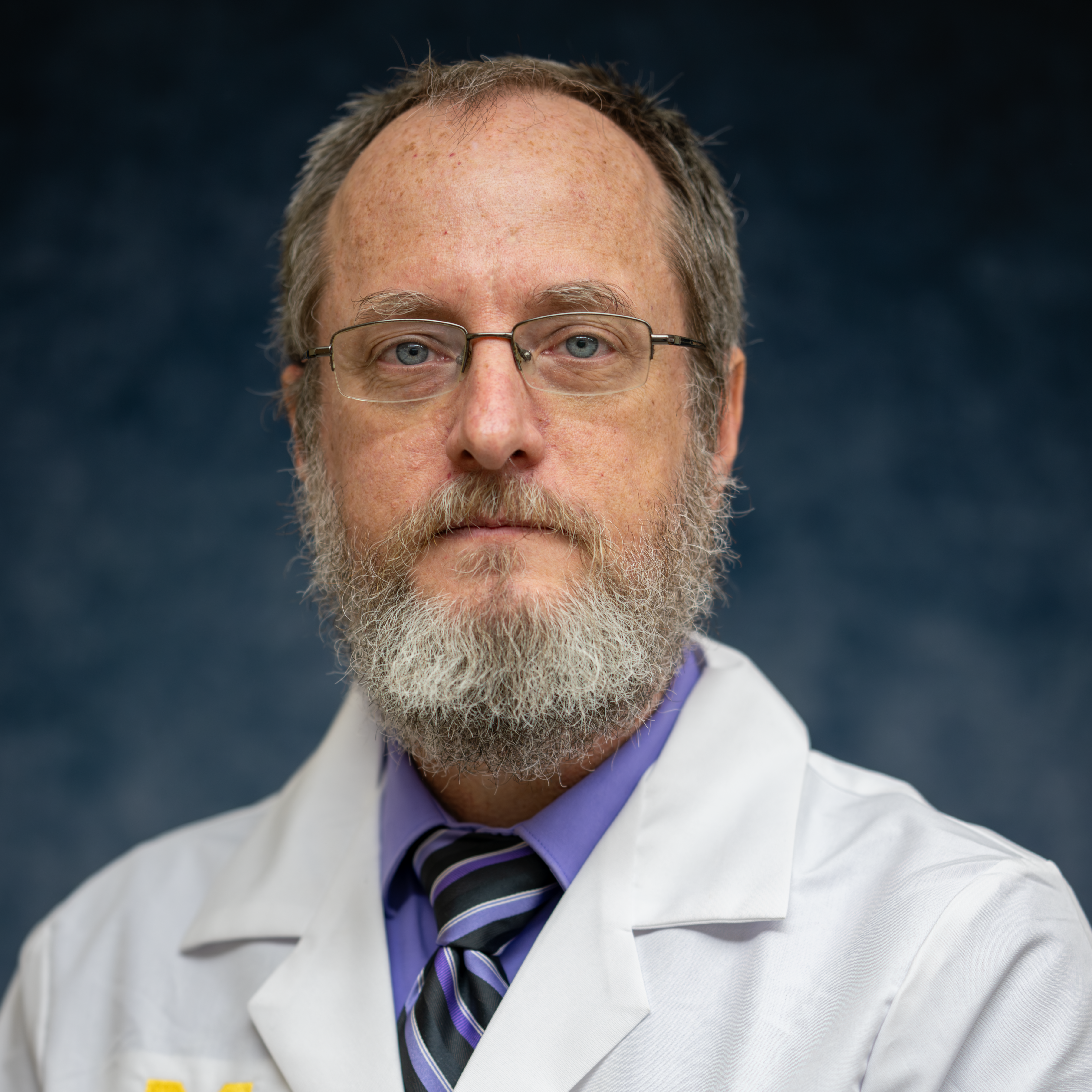 Jamie Estill, PhD, didn’t take a traditional path to pathology, but that’s exactly what makes his work at Michigan Medicine so impactful. Now a Clinical Assistant Professor and Director of Informatics in the Division of Diagnostic Genetics and Genomics (DGG), Estill brings decades of experience at the intersection of biology and computing to help translate complex genomic data into meaningful insights for patient care.
Early Roots in Exploration and Curiosity
Estill grew up in a small town in Kentucky, where curiosity was fueled by both nature and independence. “It was like something out of Stranger Things,” he recalls, “long days spent biking, exploring the woods, and learning from the environment.” That early curiosity quickly expanded in two directions: biology and computers.
After saving money from collecting cans and bottles as a child, Estill purchased his first computer in the 1980s. He taught himself to program and soon realized that computing could become a powerful tool for understanding biology. That dual passion has driven his career ever since.
“I’ve essentially been programming for over 40 years,” he says. “And using software to learn about biology has always been what I love most.”
 Building a Career in Genomics, Before It Had a Name
Estill earned his PhD from the University of Georgia, where he studied plant biology under mentor Jeff Bennetzen. At the time, fields like bioinformatics and genomics were still emerging.
“I started before the human genome had even been sequenced,” he says. “We were building the tools as we went.”
His research focused on transposable elements, segments of DNA that can move within genomes. Using computational methods and graph theory, Estill developed tools to identify and classify these elements and understand how they shape genetic landscapes.
“My dissertation introduced a computational approach to genomics that I call ‘genome cartology.’ It’s a spatially explicit way of mapping not just where mobile DNA elements exist within the genome, but what their distribution reveals about the evolutionary forces that shaped it.”
To make this possible, he designed a suite of software tools capable of annotating and classifying sequence features, not just at the genomic scale, but across species. His work was published in Plant Methods. Applied across genomes from several species, this framework would enable the study of pan-genome dynamics across millions of years (PLoS Genetics). Over the years, he contributed to genomic research across 35–40 crop species, including foundational work on the corn genome, where transposable elements were first discovered. His research was published in Science. “What I’ve always liked is taking complex, messy data and turning it into something understandable,” he says.
Following his PhD, Estill expanded his scope during a postdoctoral fellowship under Dr. Jim Leebens-Mack, also at Georgia, studying the evolutionary histories of plant genomes on a much larger scale.
“I focused on Gene Tree Species Gene Reconciliation, particularly Amborella, which is a plant that is at the base of all flowering plant life, separated from everything else on the planet by 130 million years. This is the most ancient representative that can anchor our understanding of everything we know about flower plant genomics.” His work required new computational models to analyze relationships across species separated by millions of years. This work was published in Science and Genome Biology.
 From Plants to Patients
Estill’s career took an unexpected turn as he transitioned from plant genomics to human health. When his wife took a faculty position at the University of Michigan nearly a decade ago, he and his family relocated to Michigan.
Estill held several staff roles within the university, spanning museum informatics, data integration, and genomics research. Most recently, he worked at the Michigan Center for Translational Pathology (MCTP) under Dr. Arul Chinnaiyan, where he led informatics efforts for projects including MI-ONCOSEQ, a major precision oncology initiative. That experience laid the foundation for his move into DGG, and into a faculty role.
“This transition gave me the opportunity to move from project-based work to broader impact,” he says. “To apply what I’ve learned to helping patients directly.”
Today, Estill focuses on one critical question: how can genomic data be used to improve outcomes for patients now?
Advancing Genomic Medicine in Practice
At DGG, Estill leads efforts to support and expand genomic testing capabilities across Michigan Medicine. His work centers on improving how complex data is processed, interpreted, and delivered to clinicians.
“We can now generate incredibly detailed genomic information from a patient in just a few days,” he explains. “The challenge is making that information actionable.”
His goal is to accelerate access to diagnostic testing, particularly for patients with cancer, while ensuring results are delivered quickly and responsibly.
“We don’t want to wait years for perfect systems,” he says. “We want to help people who need answers today.”
At the same time, he is focused on building systems that support long-term discovery while protecting patient privacy, an increasingly important challenge in genomic medicine.
A Philosophy of Continuous Improvement
Estill’s approach to his work is rooted in a simple philosophy he’s carried since his childhood days in the Boy Scouts.
“As a Boy Scout, you learn to leave things better than you found them,” he says. “That’s something I’ve tried to apply throughout my career.”
Whether working with plant genomes or human data, he has consistently focused on improving systems, building tools, and creating lasting impact.
Life Beyond the Lab
Outside of work, Estill enjoys spending time with his family. His wife, Dr. Gina Baucom, is a faculty member at U-M’s College of Literature, Science, and the Arts. Their two children, Liam, age 20, is preparing to graduate from college, and Neko, age 16, keeps him busy with her high school activities. He has served as a Girl Scout leader for Neko’s troupe since she was a Brownie, and currently helps with Neko’s theater passion, setting up and tearing down sets. He is also active in the community, supporting local initiatives and contributing to the Dexter District Library Board.
During the COVID-19 pandemic, Estill picked up another new pursuit: acoustic fingerstyle guitar. What began as a way to engage a different part of his brain has become a daily practice and a creative outlet.
“I wanted something completely different from my day-to-day work,” he says. “It’s been a great balance.”
Looking Ahead
As genomic medicine continues to evolve, Estill is focused on scaling its impact for individual patients and future discovery. Over the next several years, he hopes to expand Michigan Medicine’s ability to deliver advanced genomic testing while building systems that support both clinical care and research.
“We’re in a position to not only help patients today,” he says, “but to build a foundation of knowledge that will help patients in the future as well.”
***
Citations:
Estill JC, Bennetzen JL. The DAWGPAWS pipeline for the annotation of genes and transposable elements in plant genomes. Plant Methods. 2009;5:8. PMID: 19545381
Baucom RS, Estill JC, Chaparro C, et al. Exceptional diversity, non-random distribution, and rapid evolution of retroelements in the B73 maize genome. PLoS Genet. 2009;5(11):e1000732. PMID: 19936065
Schnable PS, Ware D, Fulton RS, et al. The B73 maize genome: complexity, diversity, and dynamics. Science. 2009;326(5956):1112-1115. PMID: 19965430
Amborella Genome Project. The Amborella genome and the evolution of flowering plants. Science. 2013;342(6165):1241089. PMID: 24357323
Zuccolo A, Bowers JE, Estill JC, et al. A physical map for the Amborella trichopoda genome sheds light on the evolution of angiosperm genome structure. Genome Biol. 2011;12(5):R48. PMID: 21619600
 ON THE COVER
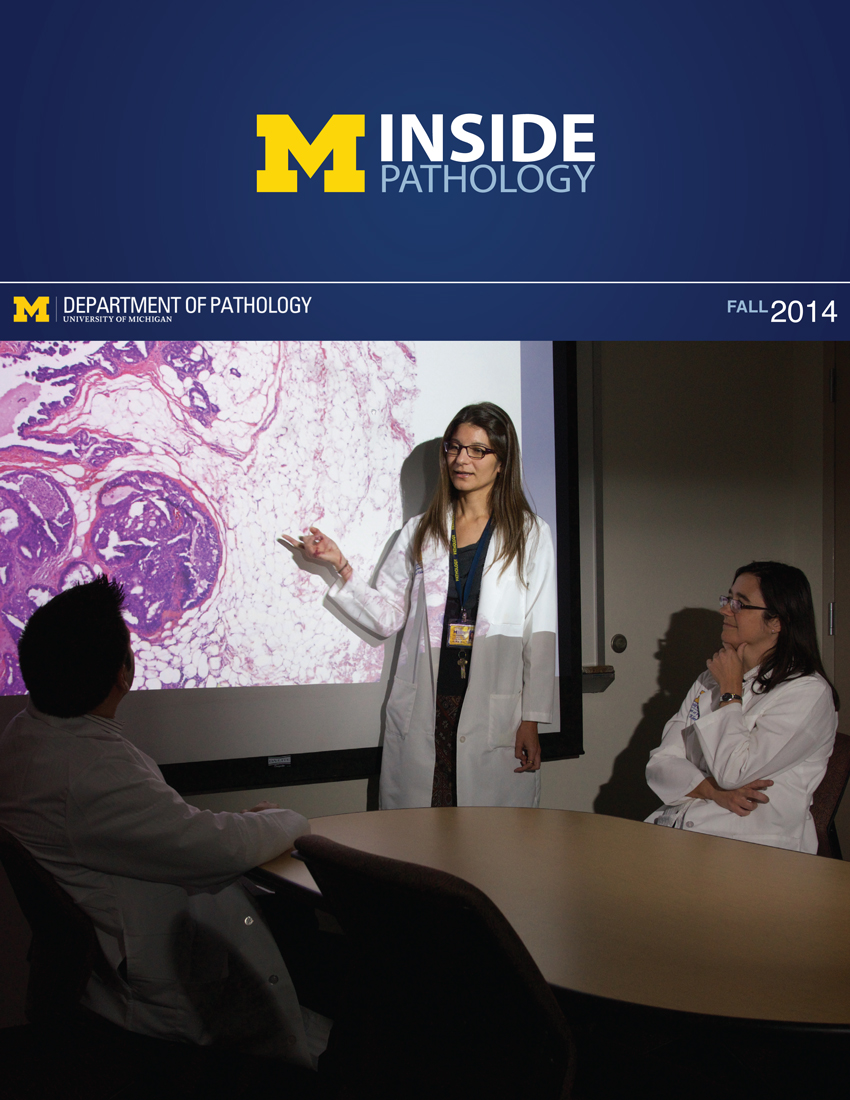
Breast team reviewing a patient's slide. (From left to right) Ghassan Allo, Fellow; Laura Walters, Clinical Lecturer; Celina Kleer, Professor. See Article |
newsletter
INSIDE PATHOLOGYAbout Our NewsletterInside Pathology is an newsletter published by the Chairman's Office to bring news and updates from inside the department's research and to become familiar with those leading it. It is our hope that those who read it will enjoy hearing about those new and familiar, and perhaps help in furthering our research. CONTENTS
|
 ON THE COVER
Autopsy Technician draws blood while working in the Wayne County morgue. See Article |
newsletter
INSIDE PATHOLOGYAbout Our NewsletterInside Pathology is an newsletter published by the Chairman's Office to bring news and updates from inside the department's research and to become familiar with those leading it. It is our hope that those who read it will enjoy hearing about those new and familiar, and perhaps help in furthering our research. CONTENTS
|
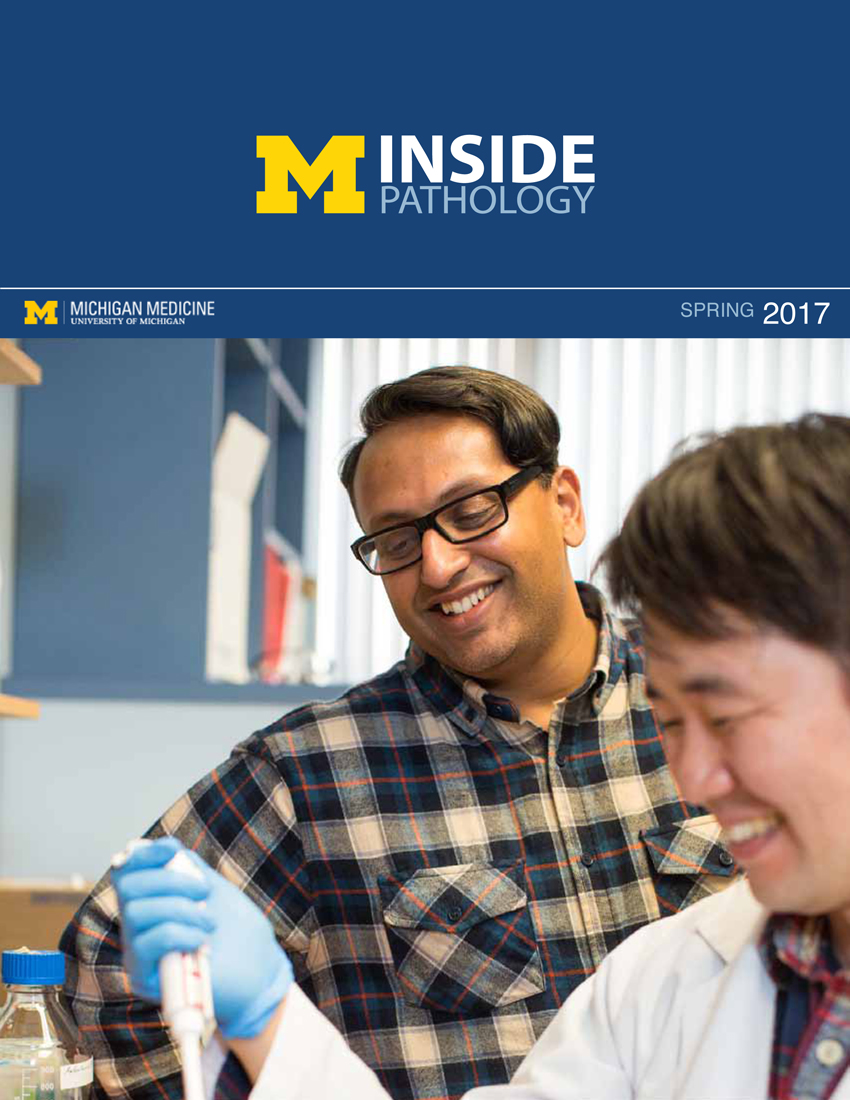 ON THE COVER
Dr. Sriram Venneti, MD, PhD and Postdoctoral Fellow, Chan Chung, PhD investigate pediatric brain cancer. See Article |
newsletter
INSIDE PATHOLOGYAbout Our NewsletterInside Pathology is an newsletter published by the Chairman's Office to bring news and updates from inside the department's research and to become familiar with those leading it. It is our hope that those who read it will enjoy hearing about those new and familiar, and perhaps help in furthering our research. CONTENTS
|
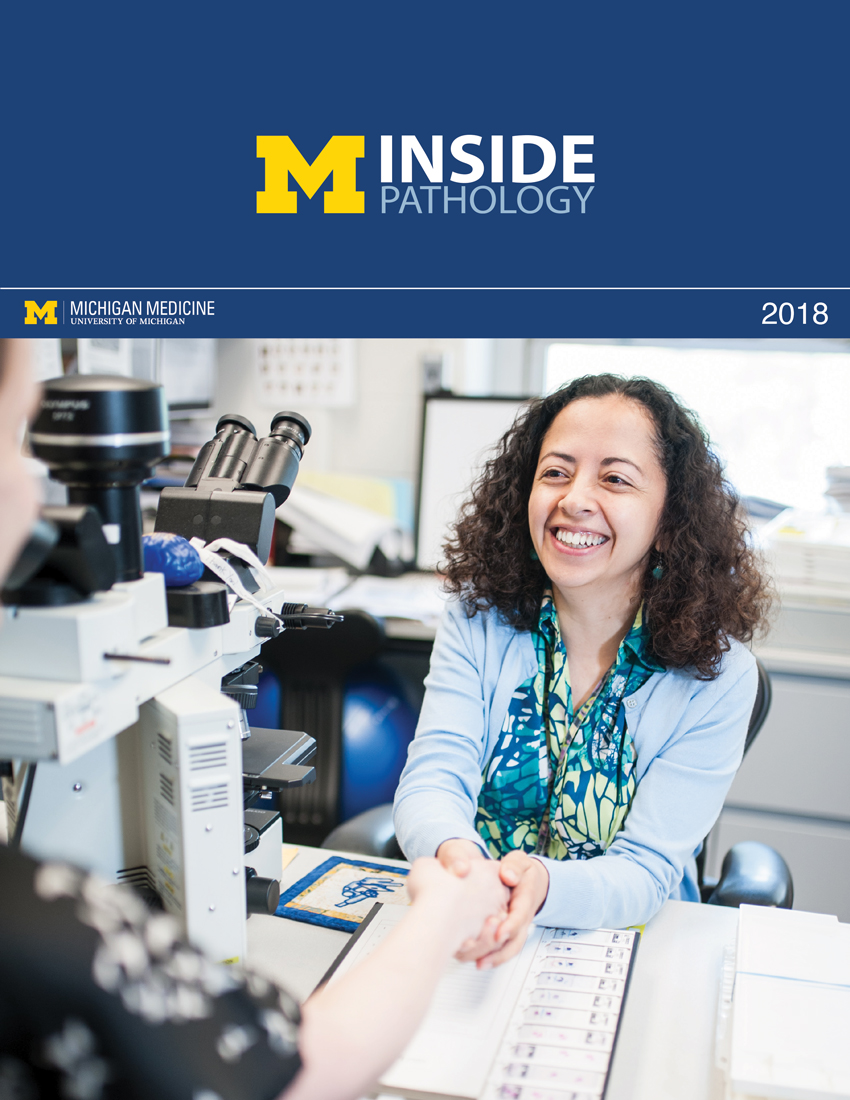 ON THE COVER
Director of the Neuropathology Fellowship, Dr. Sandra Camelo-Piragua serves on the Patient and Family Advisory Council. |
newsletter
INSIDE PATHOLOGYAbout Our NewsletterInside Pathology is an newsletter published by the Chairman's Office to bring news and updates from inside the department's research and to become familiar with those leading it. It is our hope that those who read it will enjoy hearing about those new and familiar, and perhaps help in furthering our research. CONTENTS
|
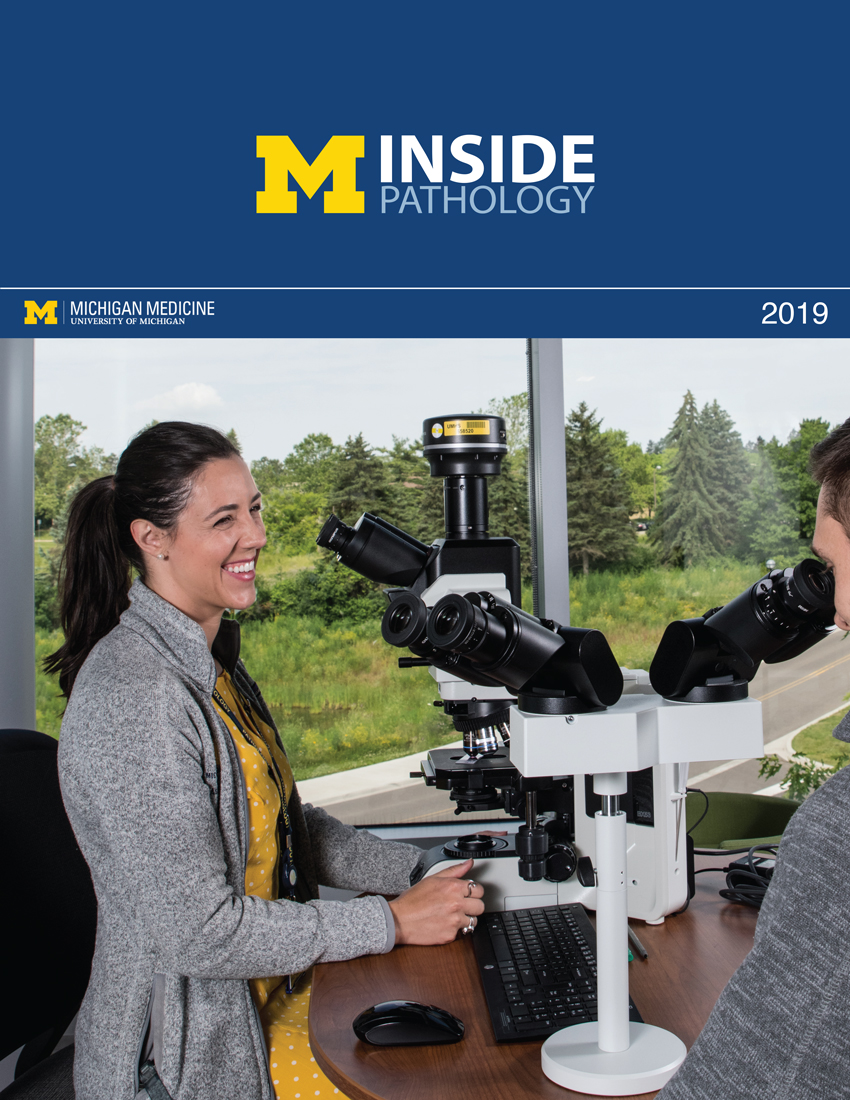 ON THE COVER
Residents Ashley Bradt (left) and William Perry work at a multi-headed scope in our new facility. |
newsletter
INSIDE PATHOLOGYAbout Our NewsletterInside Pathology is an newsletter published by the Chairman's Office to bring news and updates from inside the department's research and to become familiar with those leading it. It is our hope that those who read it will enjoy hearing about those new and familiar, and perhaps help in furthering our research. CONTENTS
|
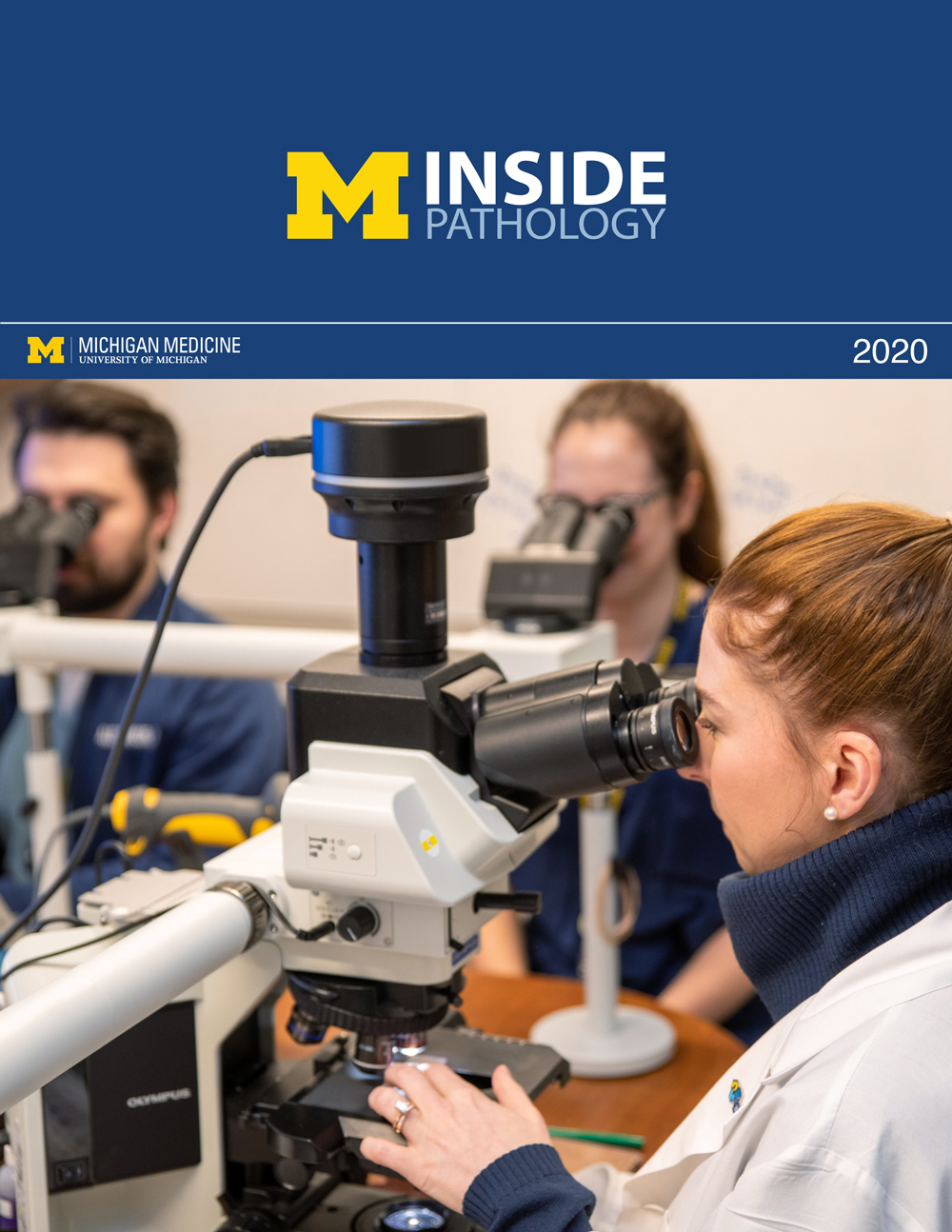 ON THE COVER
Dr. Kristine Konopka (right) instructing residents while using a multi-headed microscope. |
newsletter
INSIDE PATHOLOGYAbout Our NewsletterInside Pathology is an newsletter published by the Chairman's Office to bring news and updates from inside the department's research and to become familiar with those leading it. It is our hope that those who read it will enjoy hearing about those new and familiar, and perhaps help in furthering our research. CONTENTS
|
 ON THE COVER
Patient specimens poised for COVID-19 PCR testing. |
newsletter
INSIDE PATHOLOGYAbout Our NewsletterInside Pathology is an newsletter published by the Chairman's Office to bring news and updates from inside the department's research and to become familiar with those leading it. It is our hope that those who read it will enjoy hearing about those new and familiar, and perhaps help in furthering our research. CONTENTS
|
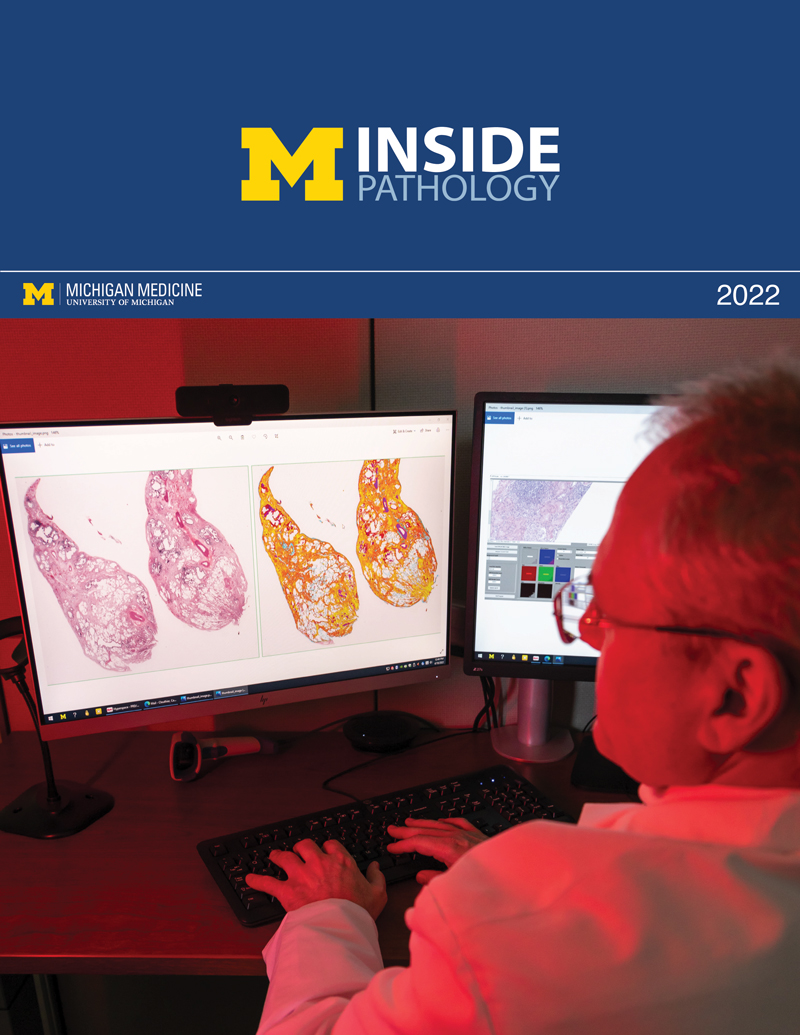 ON THE COVER
Dr. Pantanowitz demonstrates using machine learning in analyzing slides. |
newsletter
INSIDE PATHOLOGYAbout Our NewsletterInside Pathology is an newsletter published by the Chairman's Office to bring news and updates from inside the department's research and to become familiar with those leading it. It is our hope that those who read it will enjoy hearing about those new and familiar, and perhaps help in furthering our research. CONTENTS
|
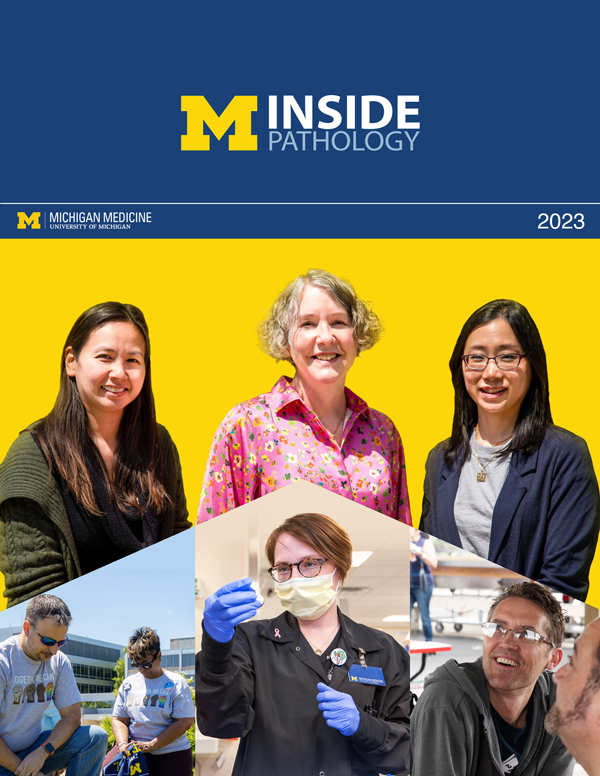 ON THE COVER
(Left to Right) Drs. Angela Wu, Laura Lamps, and Maria Westerhoff. |
newsletter
INSIDE PATHOLOGYAbout Our NewsletterInside Pathology is an newsletter published by the Chairman's Office to bring news and updates from inside the department's research and to become familiar with those leading it. It is our hope that those who read it will enjoy hearing about those new and familiar, and perhaps help in furthering our research. CONTENTS
|
 ON THE COVER
Illustration representing the various machines and processing used within our labs. |
newsletter
INSIDE PATHOLOGYAbout Our NewsletterInside Pathology is an newsletter published by the Chairman's Office to bring news and updates from inside the department's research and to become familiar with those leading it. It is our hope that those who read it will enjoy hearing about those new and familiar, and perhaps help in furthering our research. CONTENTS
|
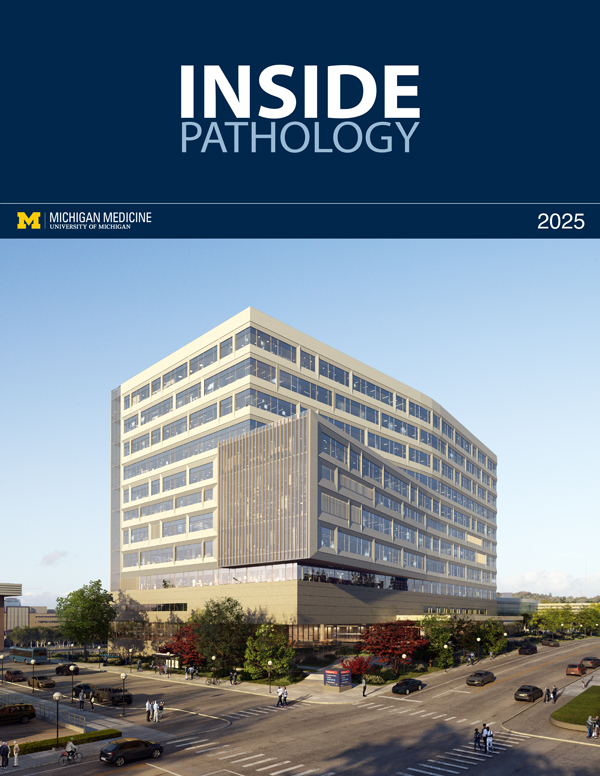 ON THE COVER
Rendering of the D. Dan and Betty Khn Health Care Pavilion. Credit: HOK |
newsletter
INSIDE PATHOLOGYAbout Our NewsletterInside Pathology is an newsletter published by the Chairman's Office to bring news and updates from inside the department's research and to become familiar with those leading it. It is our hope that those who read it will enjoy hearing about those new and familiar, and perhaps help in furthering our research. CONTENTS
|

MLabs, established in 1985, functions as a portal to provide pathologists, hospitals. and other reference laboratories access to the faculty, staff and laboratories of the University of Michigan Health System’s Department of Pathology. MLabs is a recognized leader for advanced molecular diagnostic testing, helpful consultants and exceptional customer service.