U-M Pathology Researcher Sriram Venneti, MD, PhD featured in NYT
By Anastazia Hartman | July 21U-M neuropathologist Sriram Venneti, MD, PhD, was recently featured in The New York Times for his research on diffuse midline glioma (DMG), one of the deadliest pediatric brain cancers. The national feature highlights how his work has helped transform scientists' understanding of the disease and paved the way for new treatment options that are offering hope to children and families worldwide.
 “We are very excited by all the progress made at the University of Michigan’s Chad Carr Pediatric Brain Tumor Center," said Venneti. "We are going to build on our current discoveries and successes to develop more effective cures for DMGs and other childhood high-grade brain tumors.”
Venneti's research has focused on uncovering how a genetic mutation found in most DMG tumors disrupts the normal regulation of DNA, driving cancer growth. His laboratory also helped reveal how the drug dordaviprone (ONC201) works by suppressing the tumor's altered metabolism and epigenetics, providing critical scientific evidence that supported its development as a targeted therapy.
The article also recognizes the collaborative efforts of U-M pediatric neuro-oncologist Carl Koschmann, MD, who helped lead clinical trials evaluating dordaviprone in children with DMG.
Together, the scientific discoveries made in the laboratory and the clinical research conducted with patients contributed to the FDA's first-ever approval of a treatment for recurrent DMG in 2025. A landmark achievement for a disease that had gone decades without an approved therapy.
While there is still more research ahead, the recognition by The New York Times underscores the impact of Dr. Venneti's research and the collaborative efforts at the University of Michigan to advance treatments for one of the most challenging pediatric cancers.
 ON THE COVER
 ON THE COVER
 ON THE COVER
 ON THE COVER
 ON THE COVER
 ON THE COVER
 ON THE COVER
 ON THE COVER
 ON THE COVER
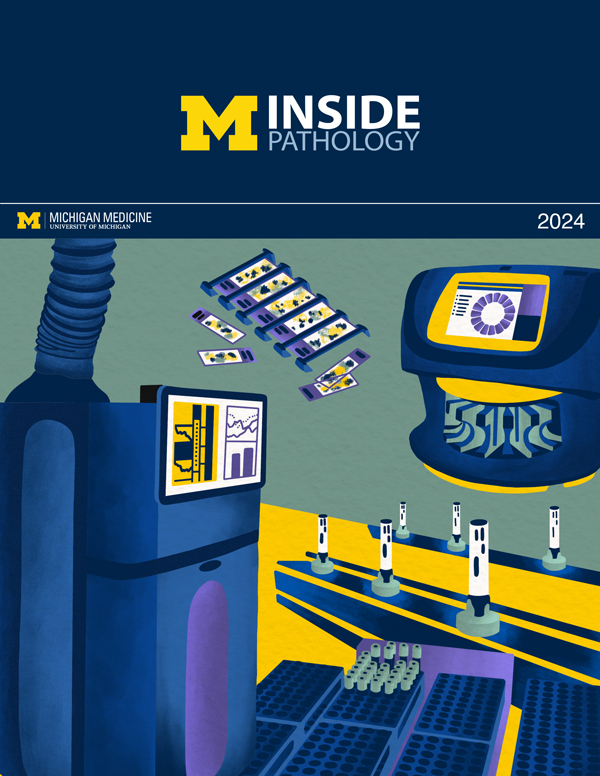 ON THE COVER
 ON THE COVER