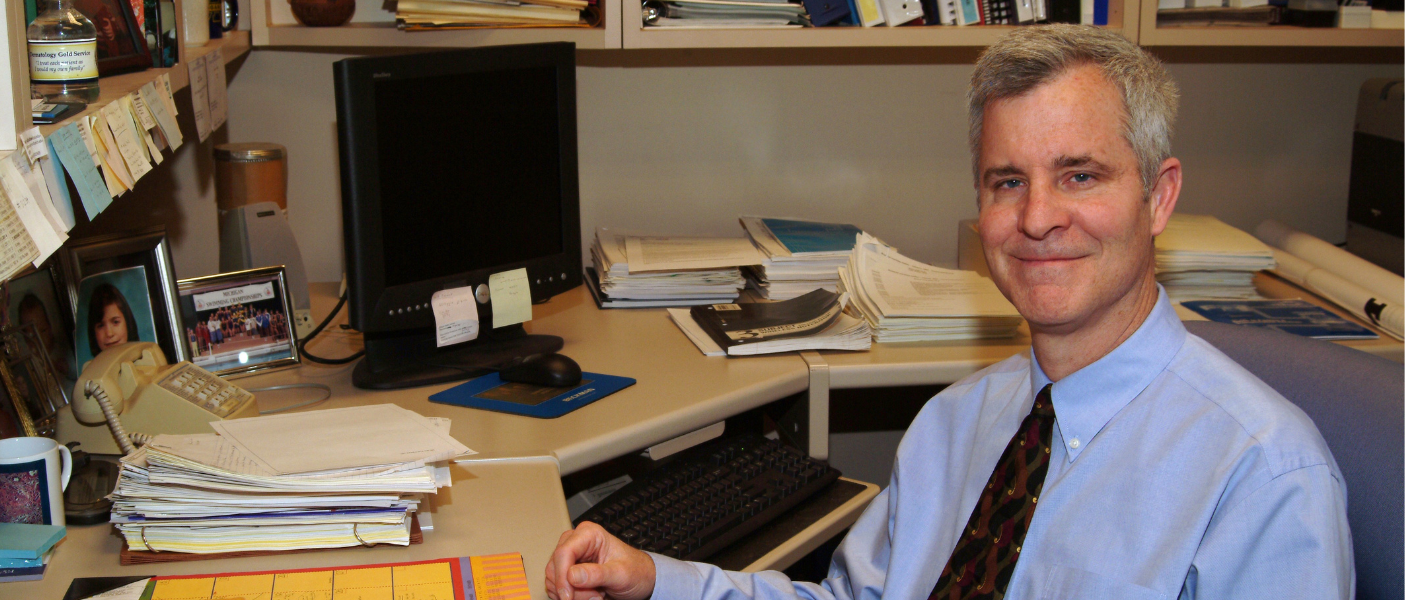
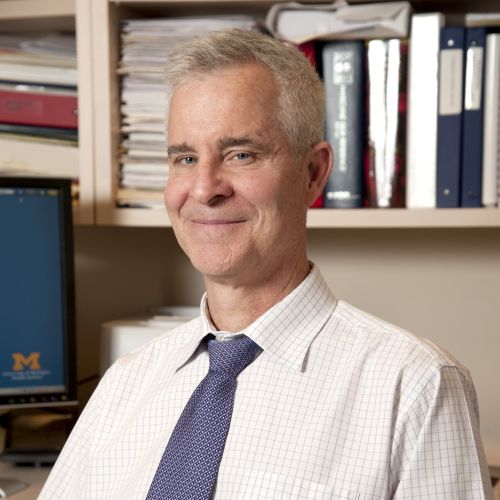
 After more than four decades of service to the University of Michigan, Jeffrey Warren, MD, professor of pathology, will retire on Oct. 31, bringing to a close a remarkable 41-year career that has helped shape the Department of Pathology's clinical laboratory operations while advancing education, patient care, and the practice of laboratory medicine.
Warren's journey to medicine began in the small Appalachian community of West Lafayette, Ohio, a town of about 2,000 people in southeastern Ohio. As the son of a family physician, he grew up with a front-row seat to a different era of healthcare.
"There were about 20 family physicians in the county, one general surgeon, no pediatricians, and no OB-GYNs," Warren recalled. "My father delivered babies, staffed the emergency room, and took care of patients with virtually every type of medical problem."
 The experience exposed him early to medicine's demands and rewards. While only a small fraction of his high school classmates pursued college degrees, education was central to life in the Warren household. His father was a physician and his mother a college graduate, which helped instill the expectation that learning and service would be lifelong pursuits.
After graduating from Miami University in Ohio, Warren earned his medical degree from The Ohio State University College of Medicine. He began his postgraduate training in internal medicine before realizing his interests lay elsewhere.
"I enjoyed the diagnostic process and trying to understand the science behind disease," he said. "I found that I was more interested in understanding why things happen and solving medical problems than in the broader sociological aspects of medical practice."
That realization led him to pathology, a specialty he describes as the perfect blend of medicine, science, and problem-solving.
Following a year of internal medicine training and residency training in anatomic and clinical pathology at Indiana University Medical Center, Warren arrived in Ann Arbor in 1985 for fellowship training in immunopathology. His wife, Elizabeth "Betsy" Garofalo, MD, who had completed her pediatrics residency at IU, simultaneously began neurology training at Michigan.
The couple quickly found a professional home.
"We liked Ann Arbor, we liked our departments, and we liked our work environment," Warren said. "We both accepted faculty positions and never looked anywhere else."
What began as a fellowship turned into a career spanning more than four decades.
Building a Career in Immunopathology and Laboratory Medicine
 Warren joined the faculty in 1987 after conducting research in the laboratory of Peter Ward, M.D., who was then chair of pathology and one of the field's internationally recognized immunopathologists.
In his early years, he focused heavily on research while also establishing a clinical specialty in immunopathology, concentrating on autoimmune diseases, primary immunodeficiency disorders, and disorders of the complement system.
As opportunities arose, Warren steadily assumed greater leadership responsibilities. After taking over direction of the Immunology Laboratory, he became associate director of the clinical laboratories and, in 1993, director of Clinical Pathology and the clinical laboratories. What followed was a nearly 21-year tenure guiding one of the nation's most complex academic laboratory operations.
"It was a long run," Warren said, laughing. “Few people run academic medical center laboratories for that many years.”
His responsibilities expanded far beyond the laboratory itself. He worked closely with faculty, hospital administrators, technologists, and staff, helping oversee budgets, resources, strategic planning, recruitment efforts, and the ongoing growth of clinical testing services. Throughout those years, Warren remained committed to continuing his own clinical practice.
"I've always really enjoyed medicine," he said. "I was proud that I remained a practicing physician through all of those years and didn't focus solely administrative tasks."
Witnessing a Transformation in Medicine
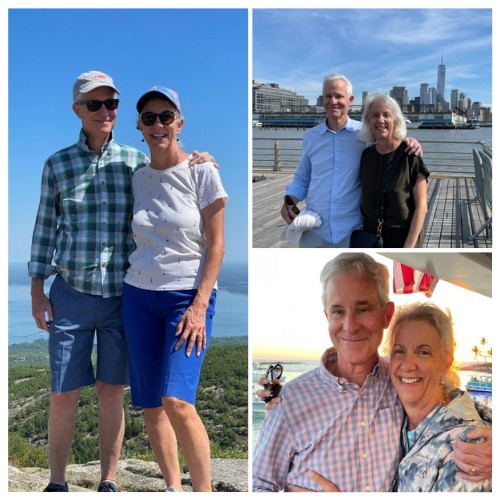 Over his career, Warren has witnessed some of the most dramatic changes in modern medicine. When he arrived at Michigan in 1985, patient records existed entirely on paper. Laboratory information systems were still developing, and many technologies considered essential today had not yet been invented.
"There was literally a department of medical records with shelves and shelves of charts," he said. "Everything was paper."
By the time he retired, healthcare had become increasingly digital, genomic, data-driven, and technologically sophisticated. Among the advances he is most proud to have helped champion was establishing Michigan's Molecular Diagnostics Laboratory.
"There was no such thing as molecular diagnostics when I started," Warren said.
Working with colleagues across the department, Warren helped launch the fledgling program despite having no new budget allocation, redirecting existing resources to create a laboratory that would eventually become a critical component of modern diagnostic medicine.
He also helped create the laboratory formulary process, one of the country's first programs of its kind. Modeled after pharmacy formularies, the initiative brought a systematic, evidence-based approach to evaluating new diagnostic tests before introducing them into clinical care. Two decades later, the process remains an important mechanism for ensuring that testing decisions are grounded in solid scientific evidence and meaningful patient benefit.
Teacher, Mentor, and Department Leader
While operational accomplishments stand out, Warren says some of his most meaningful contributions involved teaching and mentoring. Over more than three decades, he taught generations of pathology residents and fellows, earning the department's Outstanding Teacher of the Year Award three times, honors selected by trainees themselves.
He also mentored junior faculty members, participated in numerous faculty recruitments, and helped cultivate future leaders within pathology and laboratory medicine. One of the greatest rewards, he said, has been watching former trainees and junior colleagues develop into experts and national leaders.
"You remember them as first-year residents," Warren said. "Then you watch them become outstanding physicians, scientists, educators, and leaders in their own right. That's incredibly gratifying."
He credits numerous colleagues and mentors with shaping his career, including Dr. Peter Ward, Dr. David Keren, and longtime department administrator Gene Napolitan, each of whom helped shape different aspects of his development as a physician, scientist, administrator, and educator.
Finding Meaning in the People Behind the Work
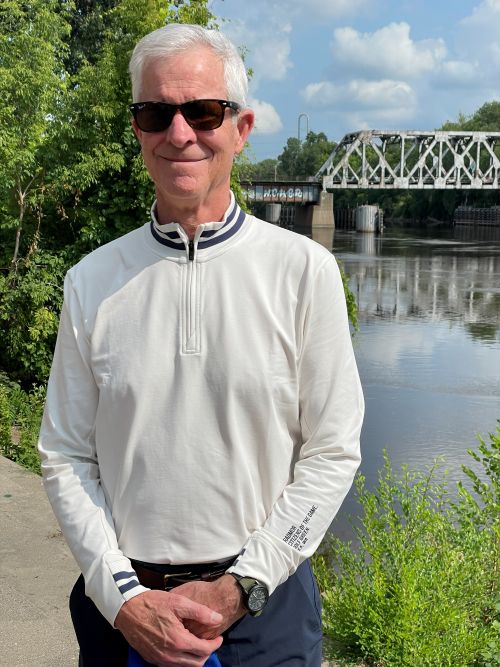 In 2013, Warren stepped down from his administrative leadership role and devoted the next phase of his career to clinical service, overseeing the Immunology Laboratory, managing the laboratory formulary process, and evaluating emerging diagnostic technologies. Much of that work involved carefully reviewing scientific literature and assessing whether new laboratory tests offered meaningful benefits for patient care. Though the responsibilities changed, his commitment to medicine did not. Even now, Warren remains an enthusiastic student of biomedical science.
"I enjoy reading medicine," he said. "I always have, and I will continue doing so after I retire."
As retirement approached, however, he found himself thinking less about individual accomplishments and more about the people who made the work meaningful.
"I've had the privilege of working with incredibly talented and dedicated people," Warren said. "Faculty, staff, laboratory technologists, administrators, trainees. So many people contribute every day to making everything work."
That appreciation extends to pathology itself, a specialty that often operates behind the scenes but plays a central role in patient care.
Warren often describes clinical laboratories as "high-tech factories" that produce the information physicians rely on to diagnose disease and guide treatment decisions.
"Pathology is foundational to medicine," he said. "At some point, you need a diagnosis. Everything depends on having the right information."
Looking Ahead
Retirement will give Warren and his wife more time to pursue the interests they have enjoyed throughout their lives together. Married for 44 years, the couple has two adult children, Anne and Michael, both of whom live in New York City. They plan to continue traveling, reading, exercising, spending time with friends and family, and escaping to warmer weather during Michigan winters.
A lifelong lover of history and an avid reader, Warren expects to remain engaged with science and medicine even after leaving the university. He also plans to maintain another lifelong commitment that has occasionally raised eyebrows in Ann Arbor. Born, raised, educated, and deeply rooted in Ohio, Warren remains a devoted Ohio State football fan despite spending 41 years serving the Wolverines.
"When it comes to sports, I'm still a Buckeye at heart," he said.
As he reflects on a career that began with fellowship training in 1985 and ends with retirement in 2026, Warren sees his legacy not in titles or administrative accomplishments, but in the people, programs, and patients whose lives were improved through the collective efforts of the Department of Pathology.
"The relationships, colleagues, friends, and coworkers," he said. "That's what I think about most."
After 41 years at Michigan, those relationships remain among the most enduring accomplishments of an extraordinary career. Please join us in wishing Dr. Jeff Warren a long and happy retirement.
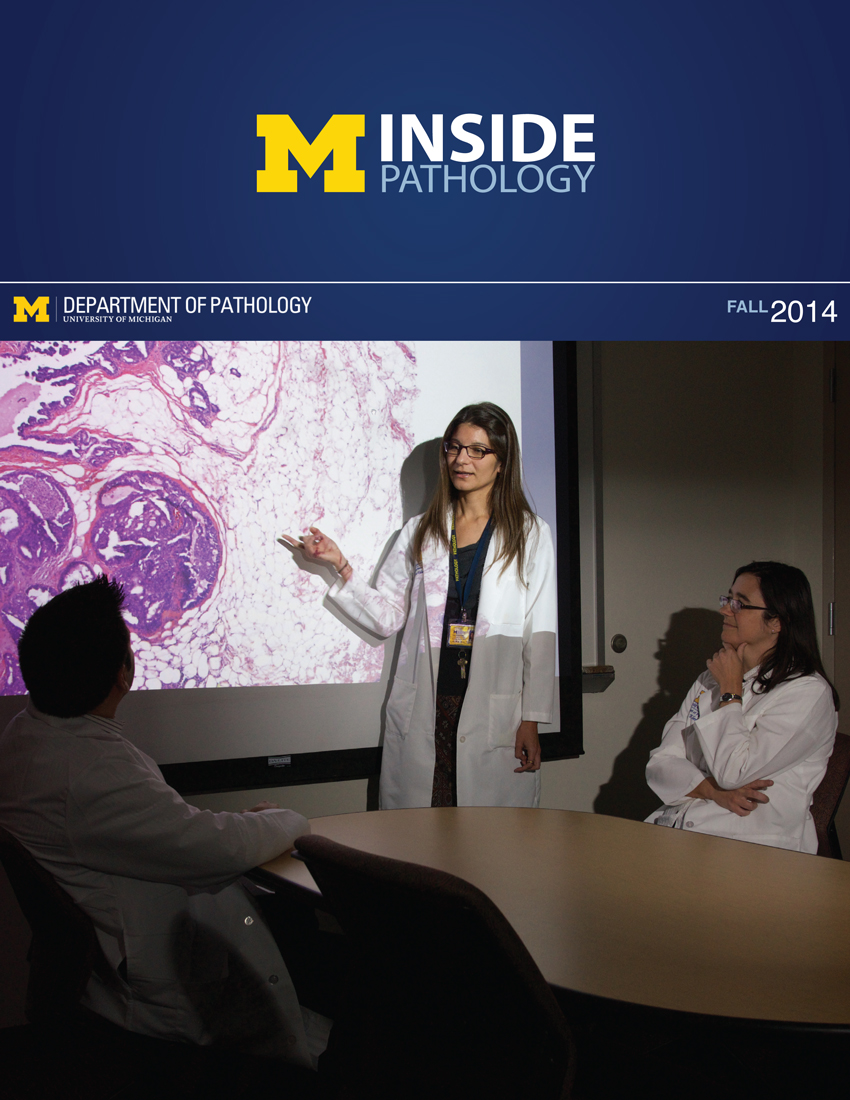 ON THE COVER Breast team reviewing a patient's slide. (From left to right) Ghassan Allo, Fellow; Laura Walters, Clinical Lecturer; Celina Kleer, Professor. See Article |
newsletter
INSIDE PATHOLOGYAbout Our NewsletterInside Pathology is an newsletter published by the Chairman's Office to bring news and updates from inside the department's research and to become familiar with those leading it. It is our hope that those who read it will enjoy hearing about those new and familiar, and perhaps help in furthering our research. CONTENTS
|
 ON THE COVER Autopsy Technician draws blood while working in the Wayne County morgue. See Article |
newsletter
INSIDE PATHOLOGYAbout Our NewsletterInside Pathology is an newsletter published by the Chairman's Office to bring news and updates from inside the department's research and to become familiar with those leading it. It is our hope that those who read it will enjoy hearing about those new and familiar, and perhaps help in furthering our research. CONTENTS
|
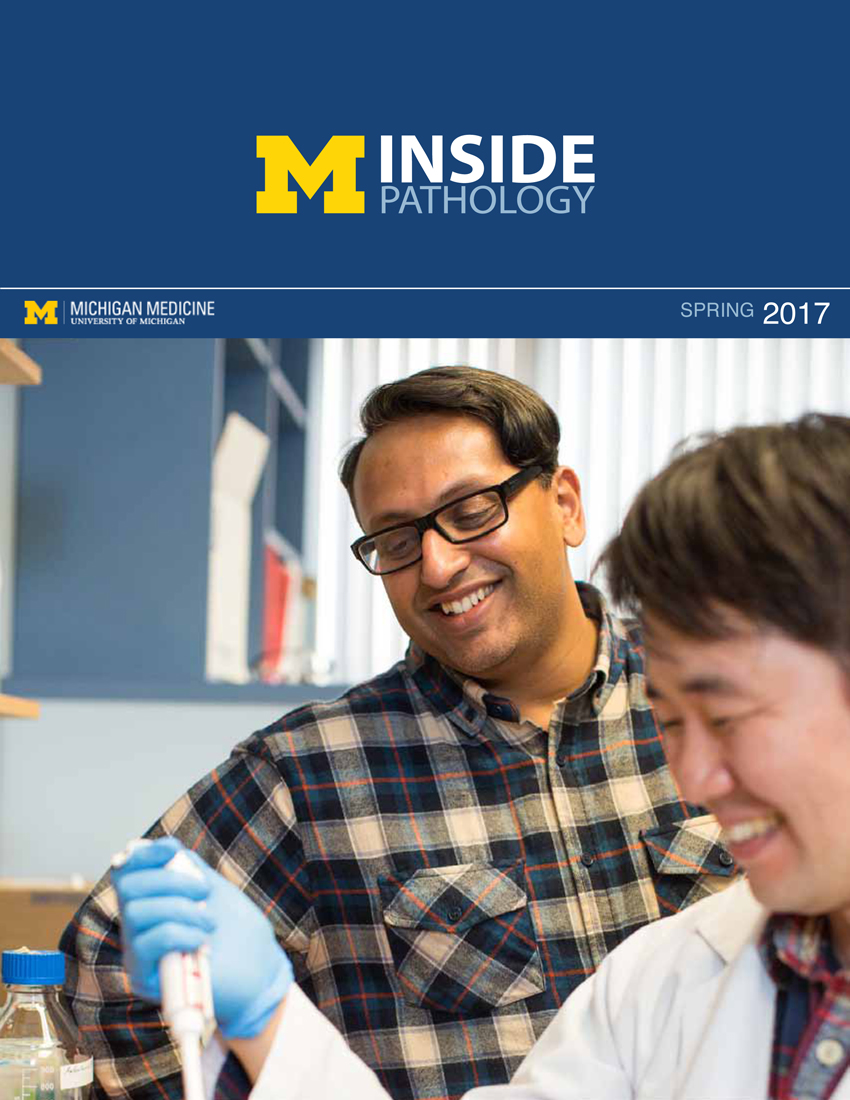 ON THE COVER Dr. Sriram Venneti, MD, PhD and Postdoctoral Fellow, Chan Chung, PhD investigate pediatric brain cancer. See Article |
newsletter
INSIDE PATHOLOGYAbout Our NewsletterInside Pathology is an newsletter published by the Chairman's Office to bring news and updates from inside the department's research and to become familiar with those leading it. It is our hope that those who read it will enjoy hearing about those new and familiar, and perhaps help in furthering our research. CONTENTS
|
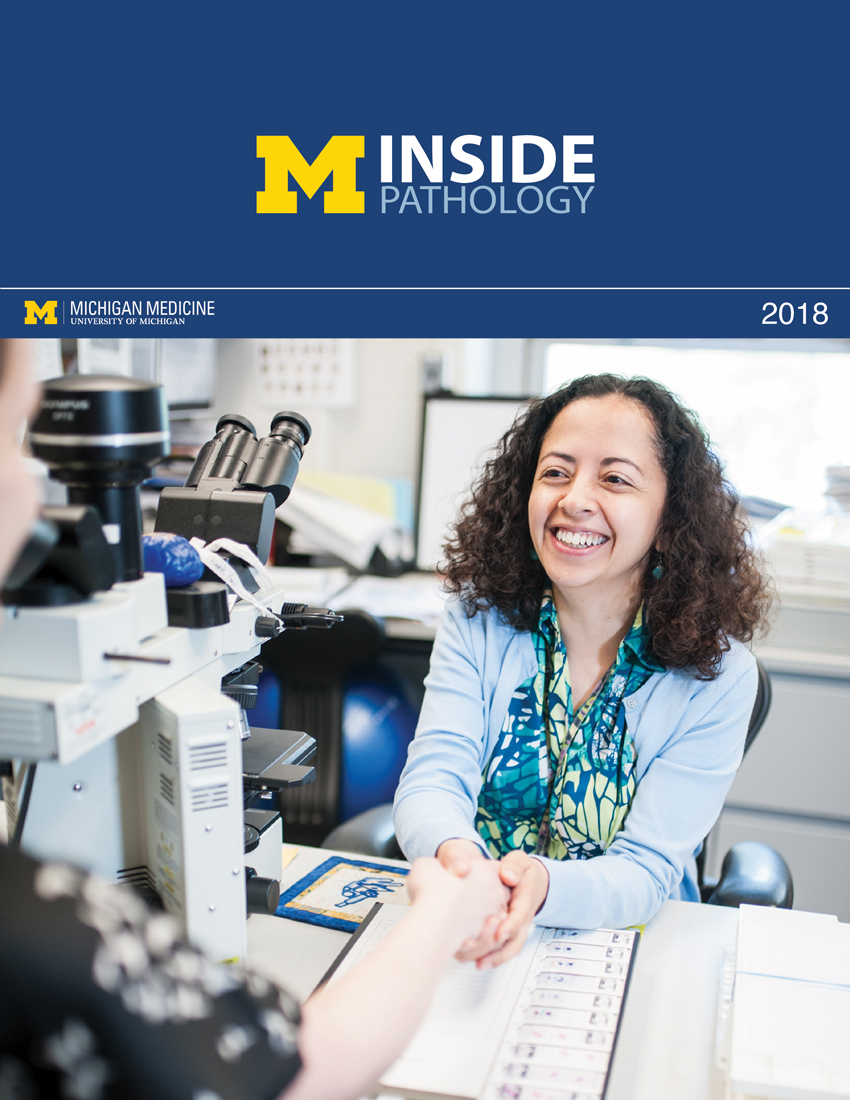 ON THE COVER Director of the Neuropathology Fellowship, Dr. Sandra Camelo-Piragua serves on the Patient and Family Advisory Council. |
newsletter
INSIDE PATHOLOGYAbout Our NewsletterInside Pathology is an newsletter published by the Chairman's Office to bring news and updates from inside the department's research and to become familiar with those leading it. It is our hope that those who read it will enjoy hearing about those new and familiar, and perhaps help in furthering our research. CONTENTS
|
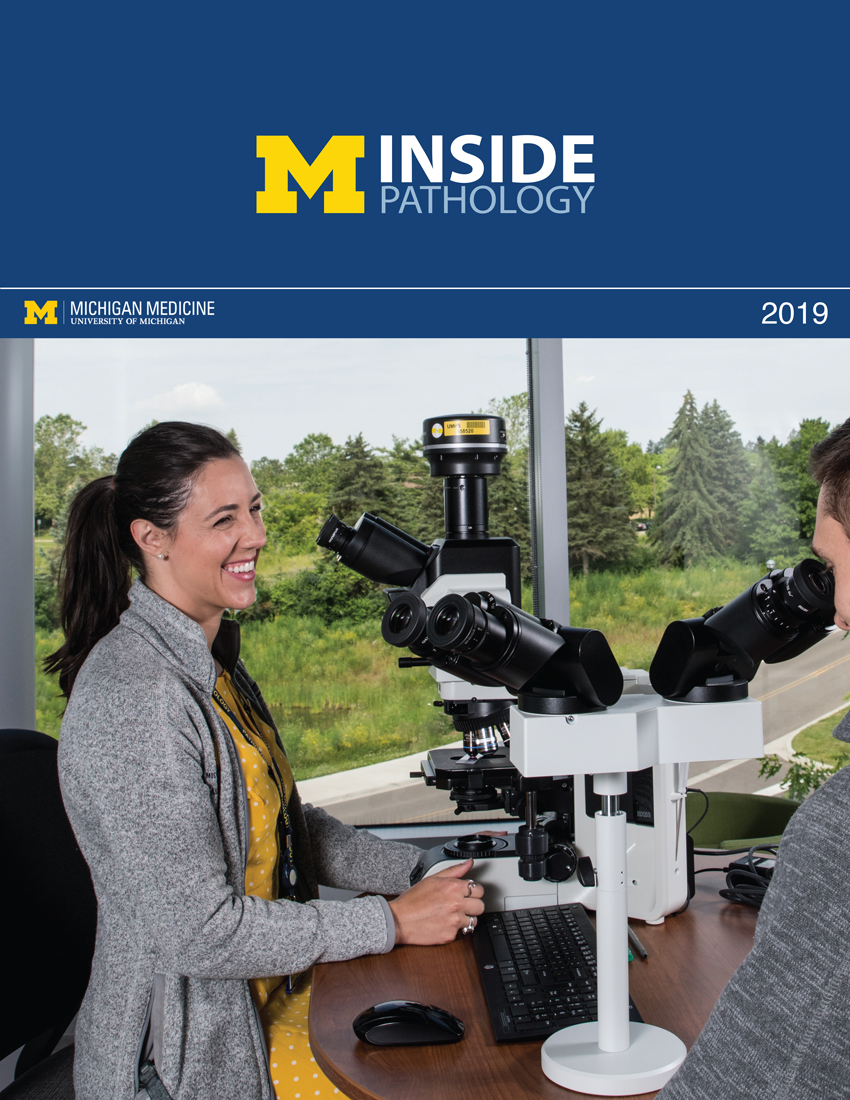 ON THE COVER Residents Ashley Bradt (left) and William Perry work at a multi-headed scope in our new facility. |
newsletter
INSIDE PATHOLOGYAbout Our NewsletterInside Pathology is an newsletter published by the Chairman's Office to bring news and updates from inside the department's research and to become familiar with those leading it. It is our hope that those who read it will enjoy hearing about those new and familiar, and perhaps help in furthering our research. CONTENTS
|
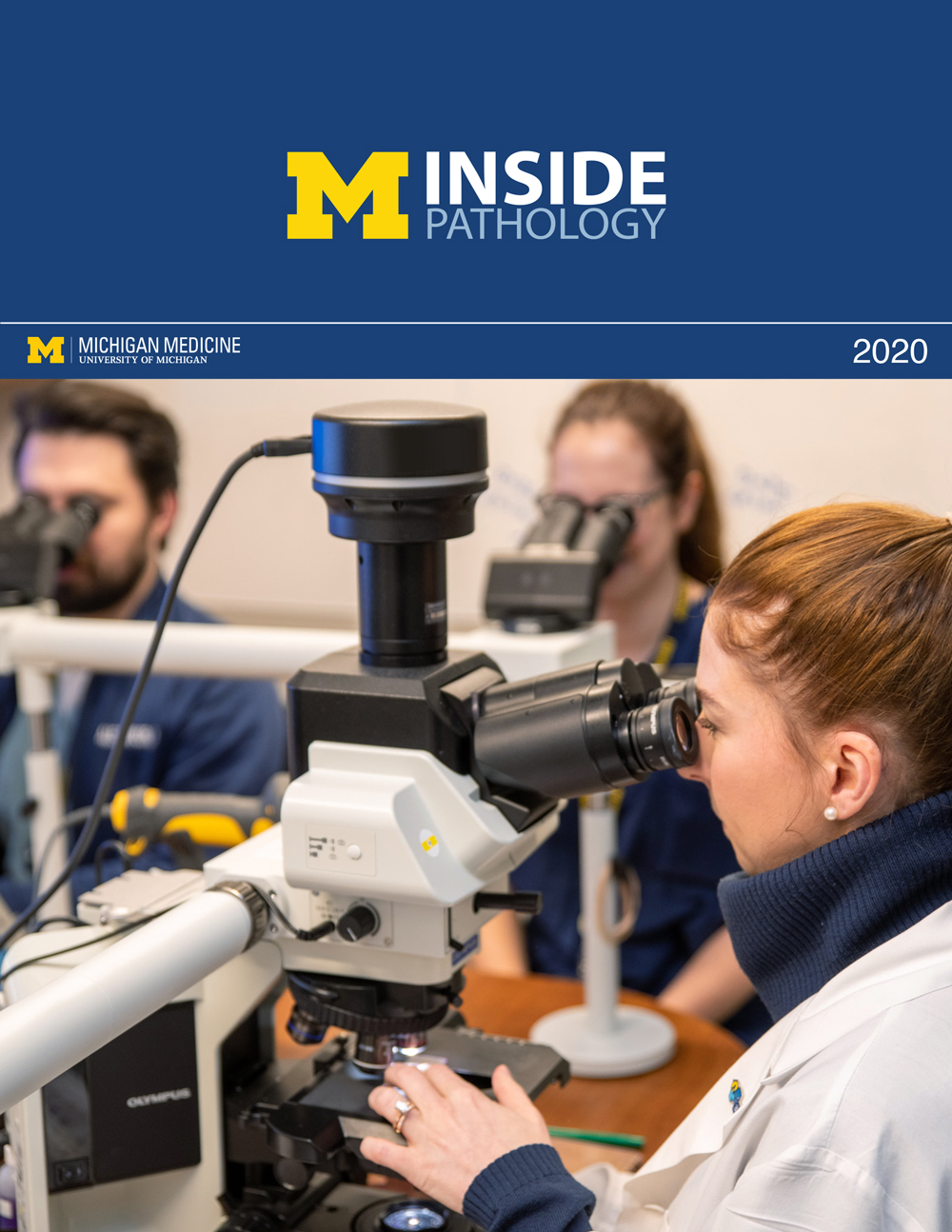 ON THE COVER Dr. Kristine Konopka (right) instructing residents while using a multi-headed microscope. |
newsletter
INSIDE PATHOLOGYAbout Our NewsletterInside Pathology is an newsletter published by the Chairman's Office to bring news and updates from inside the department's research and to become familiar with those leading it. It is our hope that those who read it will enjoy hearing about those new and familiar, and perhaps help in furthering our research. CONTENTS
|
 ON THE COVER Patient specimens poised for COVID-19 PCR testing. |
newsletter
INSIDE PATHOLOGYAbout Our NewsletterInside Pathology is an newsletter published by the Chairman's Office to bring news and updates from inside the department's research and to become familiar with those leading it. It is our hope that those who read it will enjoy hearing about those new and familiar, and perhaps help in furthering our research. CONTENTS
|
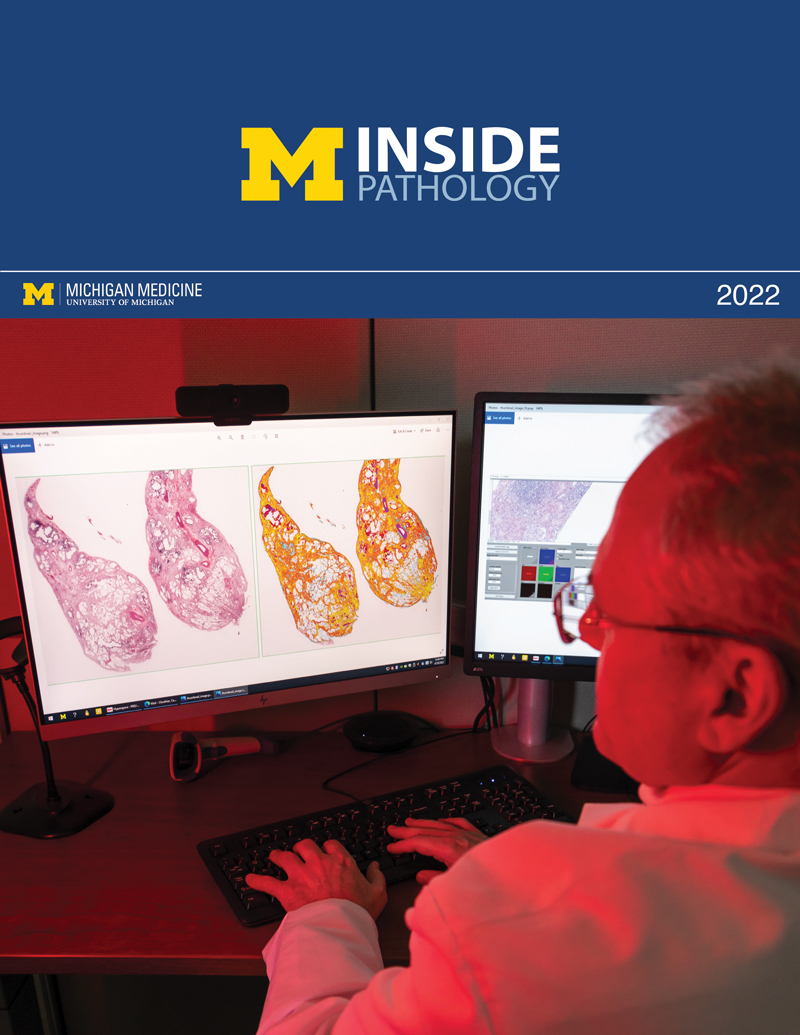 ON THE COVER Dr. Pantanowitz demonstrates using machine learning in analyzing slides. |
newsletter
INSIDE PATHOLOGYAbout Our NewsletterInside Pathology is an newsletter published by the Chairman's Office to bring news and updates from inside the department's research and to become familiar with those leading it. It is our hope that those who read it will enjoy hearing about those new and familiar, and perhaps help in furthering our research. CONTENTS
|
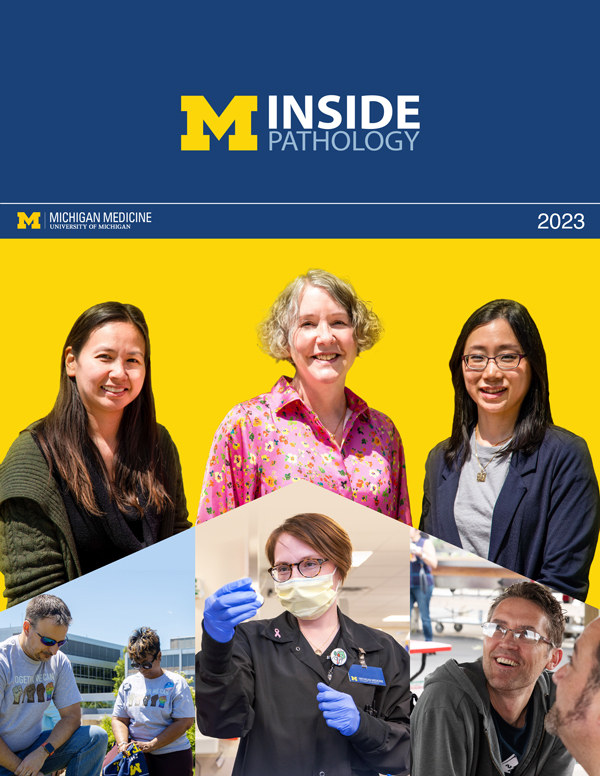 ON THE COVER (Left to Right) Drs. Angela Wu, Laura Lamps, and Maria Westerhoff. |
newsletter
INSIDE PATHOLOGYAbout Our NewsletterInside Pathology is an newsletter published by the Chairman's Office to bring news and updates from inside the department's research and to become familiar with those leading it. It is our hope that those who read it will enjoy hearing about those new and familiar, and perhaps help in furthering our research. CONTENTS
|
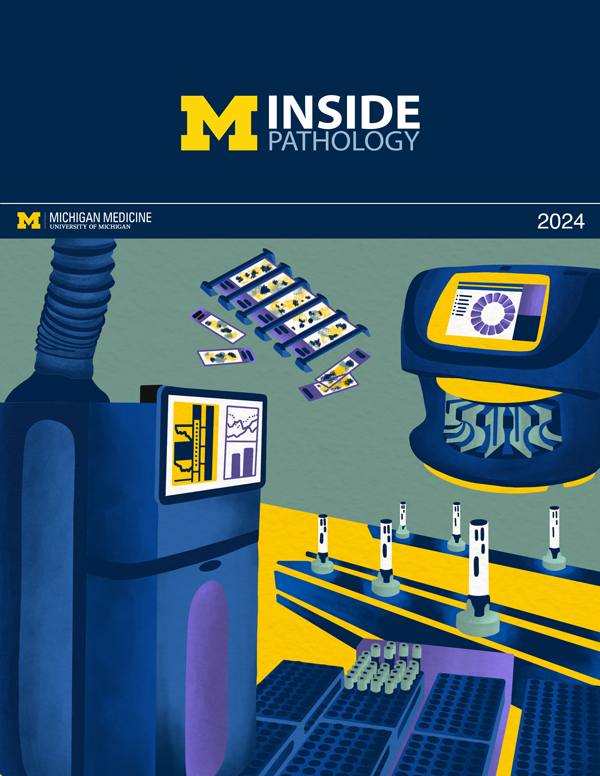 ON THE COVER Illustration representing the various machines and processing used within our labs. |
newsletter
INSIDE PATHOLOGYAbout Our NewsletterInside Pathology is an newsletter published by the Chairman's Office to bring news and updates from inside the department's research and to become familiar with those leading it. It is our hope that those who read it will enjoy hearing about those new and familiar, and perhaps help in furthering our research. CONTENTS
|
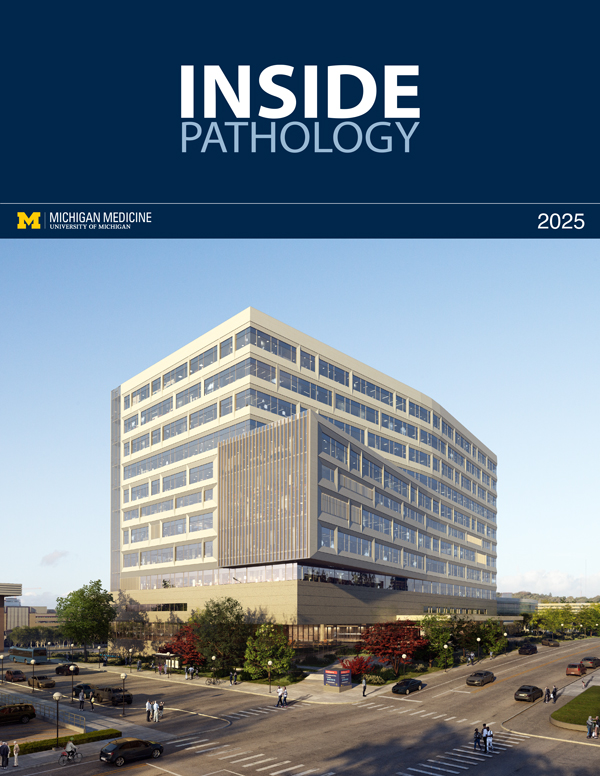 ON THE COVER Rendering of the D. Dan and Betty Khn Health Care Pavilion. Credit: HOK |
newsletter
INSIDE PATHOLOGYAbout Our NewsletterInside Pathology is an newsletter published by the Chairman's Office to bring news and updates from inside the department's research and to become familiar with those leading it. It is our hope that those who read it will enjoy hearing about those new and familiar, and perhaps help in furthering our research. CONTENTS
|

MLabs, established in 1985, functions as a portal to provide pathologists, hospitals. and other reference laboratories access to the faculty, staff and laboratories of the University of Michigan Health System’s Department of Pathology. MLabs is a recognized leader for advanced molecular diagnostic testing, helpful consultants and exceptional customer service.