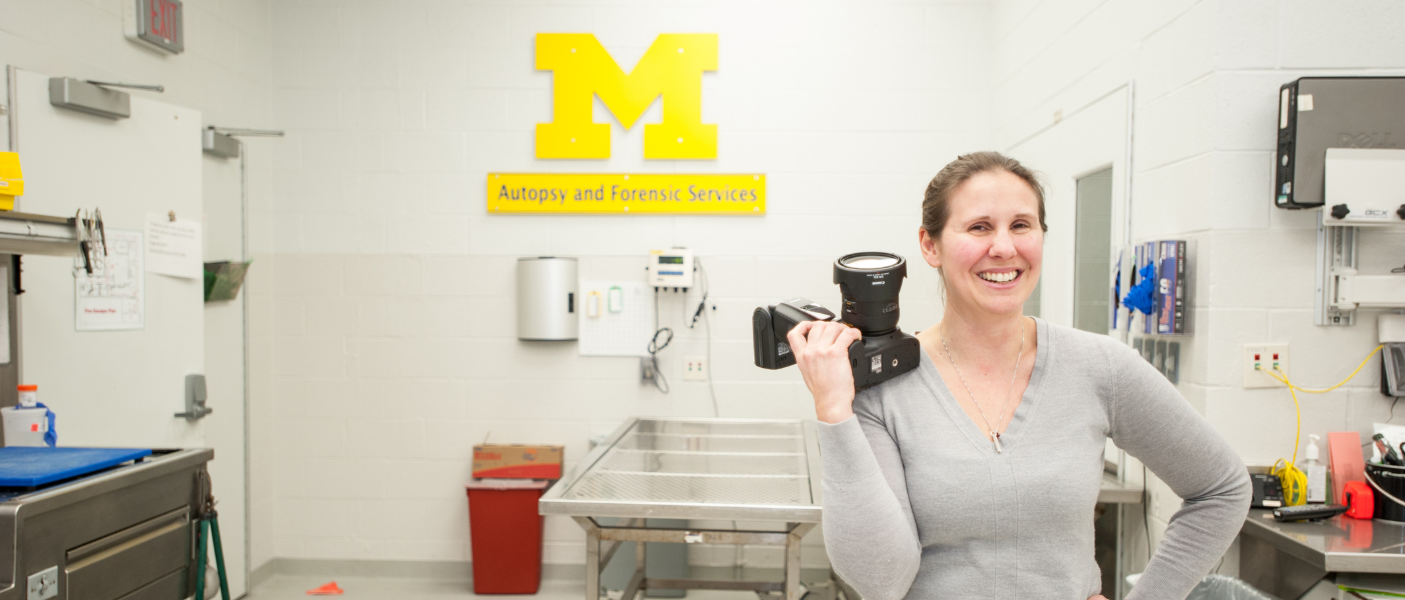
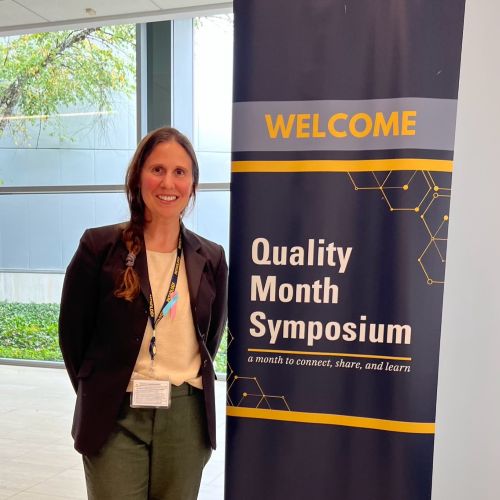
 When a patient dies in a hospital, the focus naturally shifts to supporting grieving families and ensuring respectful postmortem care. But behind the scenes, a complex process begins, involving transport, documentation, family communication, and coordination with funeral homes, medical examiners, and healthcare teams. For Lisa Neal, Autopsy & Forensic Services Manager, that process revealed a critical gap and sparked a quality improvement initiative that is gaining attention across Michigan Medicine.
Neal's project, Decedent Tracking Throughout Michigan Medicine Hospitals, was developed through Michigan Medicine's Patient Safety and Quality Leadership (PASQUAL) program. The effort earned a nomination for the prestigious Jack Billi Award for Inspiring Quality Improvement during Michigan Medicine's 2026 Quality Month Symposium. Her poster was selected from more than 200 submissions for special recognition.
"Initially, our goal was simply to identify a better solution for our internal decedent tracking software," said Neal. "But as we started looking at the process, we realized the larger problem is that there really isn't a system for tracking deceased patients throughout the hospital after death occurs."
Identifying a Critical Gap
The project grew out of concerns surrounding the department's aging decedent tracking system. As key personnel prepared for retirement and the software approached end-of-life status, Neal saw an opportunity to examine the broader process.
She discovered a significant information gap. Once a patient dies, tracking systems used throughout the hospital effectively stop. The Postmortem Care Team often has no visibility into where a deceased patient is located until the decedent arrives at the University Hospital morgue or the Mott Frozen Lab, a process that can take hours or even days.
"As part of continuation of care, families, funeral homes, social workers, and clinical teams still need information after a patient's death," Neal said. "But there can be a period where we don't know where that individual is within the system."
The consequences can be more than administrative. The Postmortem Care Team receives regular calls from funeral homes and families seeking updates about loved ones. Without a centralized tracking process, staff often must make multiple calls to locate them and provide answers.
The issue became especially apparent in the handling of fetal remains, where transportation and documentation requirements are particularly sensitive. A previous incident elsewhere within the health system highlighted the need for stronger tracking processes and reinforced the importance of closing information gaps.
A Simple Change with Significant Results
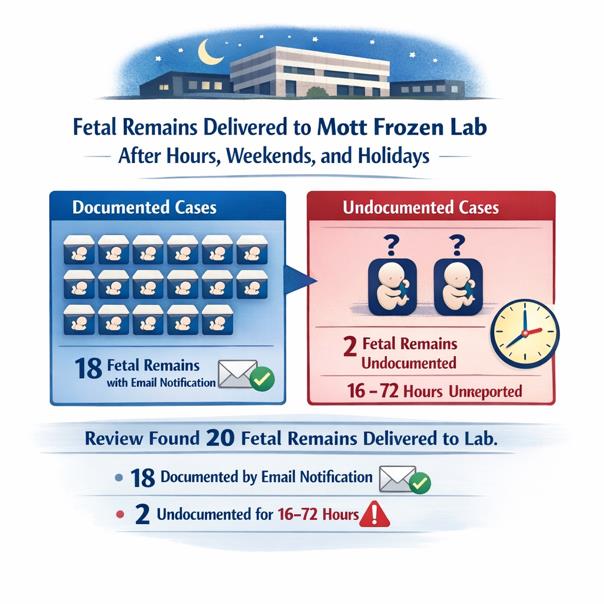 As part of her PASQUAL project, Neal focused first on fetal remains transported to the Mott Frozen Lab after hours, on weekends, and during holidays.
Baseline measurements showed that fetal remains could be unaccounted for within hospital tracking systems for 16 to 72 hours after transport. Working with colleagues in the Office of Decedent Affairs, nursing staff, and the Postmortem Care Team, a simple email alert and communication system was developed, a process that notifies pathology personnel whenever a fetal loss was transported after hours.
The results were dramatic.
The intervention reduced the time fetal remains were unaccounted for by 90%, creating a more reliable communication pathway and improving the team's ability to support families and coordinate care.
"Just enacting that one little email really turned things around," Neal said. "It demonstrated that communication changes alone can have a major impact while we continue working toward larger technology solutions."
Building a Health System-Wide Solution
While the email intervention provided immediate improvements, Neal's long-term vision extends far beyond a single process.
Working with Pathology Informatics, Michigan Medicine leaders, and representatives from the Ann Arbor, West, and Sparrow campuses, she is helping explore the development of a standardized decedent tracking system that could ultimately be integrated into One Epic.
Current discussions include the possibility of creating an Epic-based module capable of tracking decedents from the time of death through release to funeral homes while maintaining appropriate separation of medical examiner information and clinical data. The effort must address the unique needs of Michigan Medicine, which includes both hospital operations and medical examiner functions.
The project has drawn interest because of its potential to improve coordination across multiple hospitals and affiliated sites while supporting families during some of their most difficult moments.
"Everybody is focused on caring for living patients, and appropriately so," Neal said. "But we also have a responsibility to make sure patients continue to be cared for respectfully after death and that their families receive the information and support they need."
Neal also sees opportunities to leverage existing infrastructure, including collaboration with the Michigan Medicine Capacity Command Center (M2C2), which already tracks patients throughout their hospital stay. Extending that visibility beyond the point of death could help close a longstanding gap in the continuum of care.
Leadership Through Quality Improvement
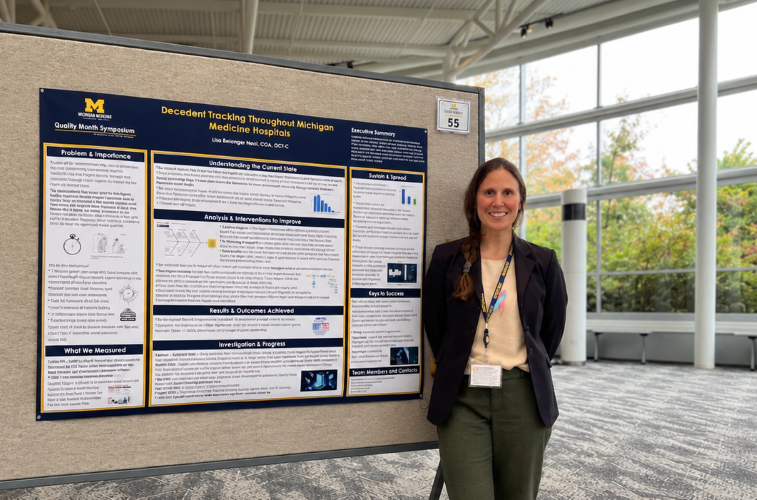 Neal credits the PASQUAL program with helping to shape both the project and her approach to leadership.
Her nominator, Zac Costello, a Continuous Improvement Specialist with Quality-EQIPS and PASQUAL instructor, described her as one of the most engaged members of the 2026 cohort and a passionate advocate for patients and families.
“Lisa’s active participation in PASQUAL led to the entire cohort better appreciating the work that her team conducts and demonstrating the importance of understanding the bigger picture when it comes to improvement. She has shown how every step and role is both a supplier and a customer, and knowing the overall context of everyone’s work is greatly important to building effective and reliable work.”
Several PASQUAL members have mentioned that their awareness of the work that Lisa’s team conducts will lead to adjustments in their own work. The experience also changed Neal's perspective on opportunities for improvement within her own area.
"It was incredibly inspiring," she said. "The program made me look at everything differently. It showed me we can do better, and it gave me the tools to start making those improvements happen."
As discussions continue around One Epic implementation and future tracking solutions, Neal remains committed to advancing the project and ensuring that patients remain visible within the system until their final transition of care is complete.
"It's a little issue on our side in the Postmortem Care Team," she said, "but it's a much larger issue for Michigan Medicine. It feels like something we can solve."
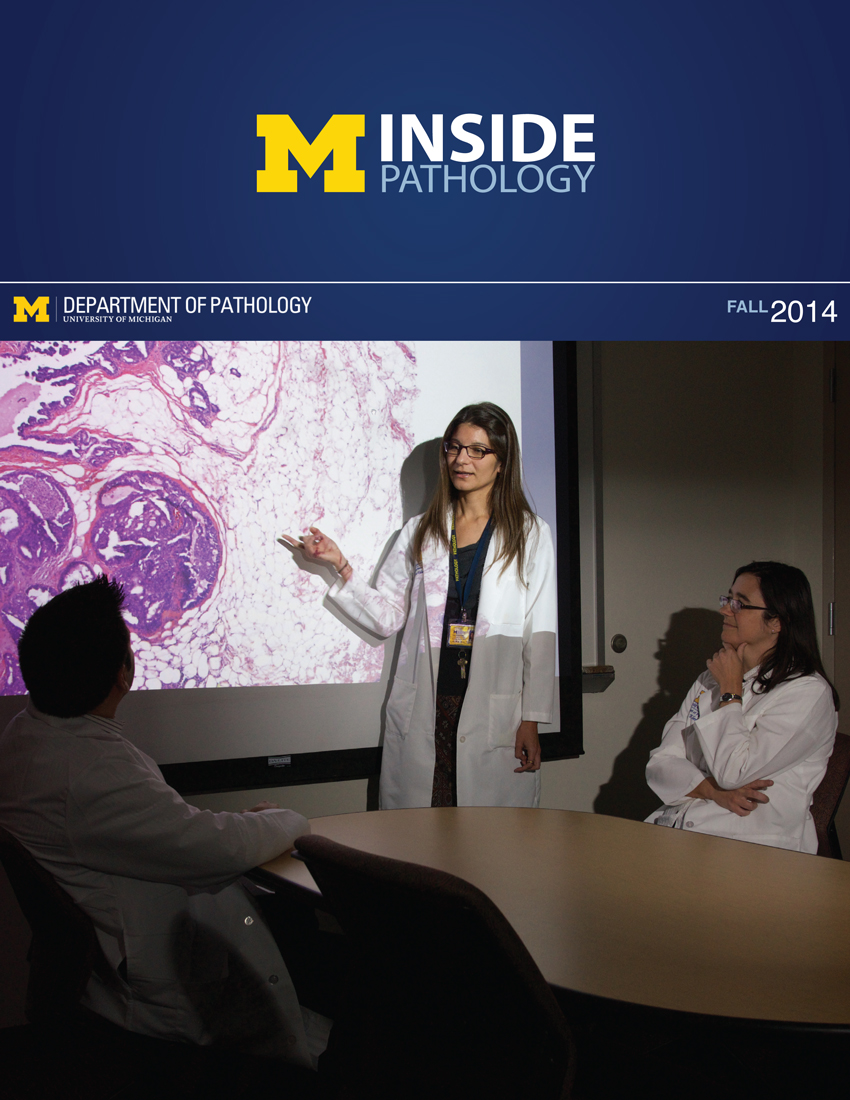 ON THE COVER Breast team reviewing a patient's slide. (From left to right) Ghassan Allo, Fellow; Laura Walters, Clinical Lecturer; Celina Kleer, Professor. See Article |
newsletter
INSIDE PATHOLOGYAbout Our NewsletterInside Pathology is an newsletter published by the Chairman's Office to bring news and updates from inside the department's research and to become familiar with those leading it. It is our hope that those who read it will enjoy hearing about those new and familiar, and perhaps help in furthering our research. CONTENTS
|
 ON THE COVER Autopsy Technician draws blood while working in the Wayne County morgue. See Article |
newsletter
INSIDE PATHOLOGYAbout Our NewsletterInside Pathology is an newsletter published by the Chairman's Office to bring news and updates from inside the department's research and to become familiar with those leading it. It is our hope that those who read it will enjoy hearing about those new and familiar, and perhaps help in furthering our research. CONTENTS
|
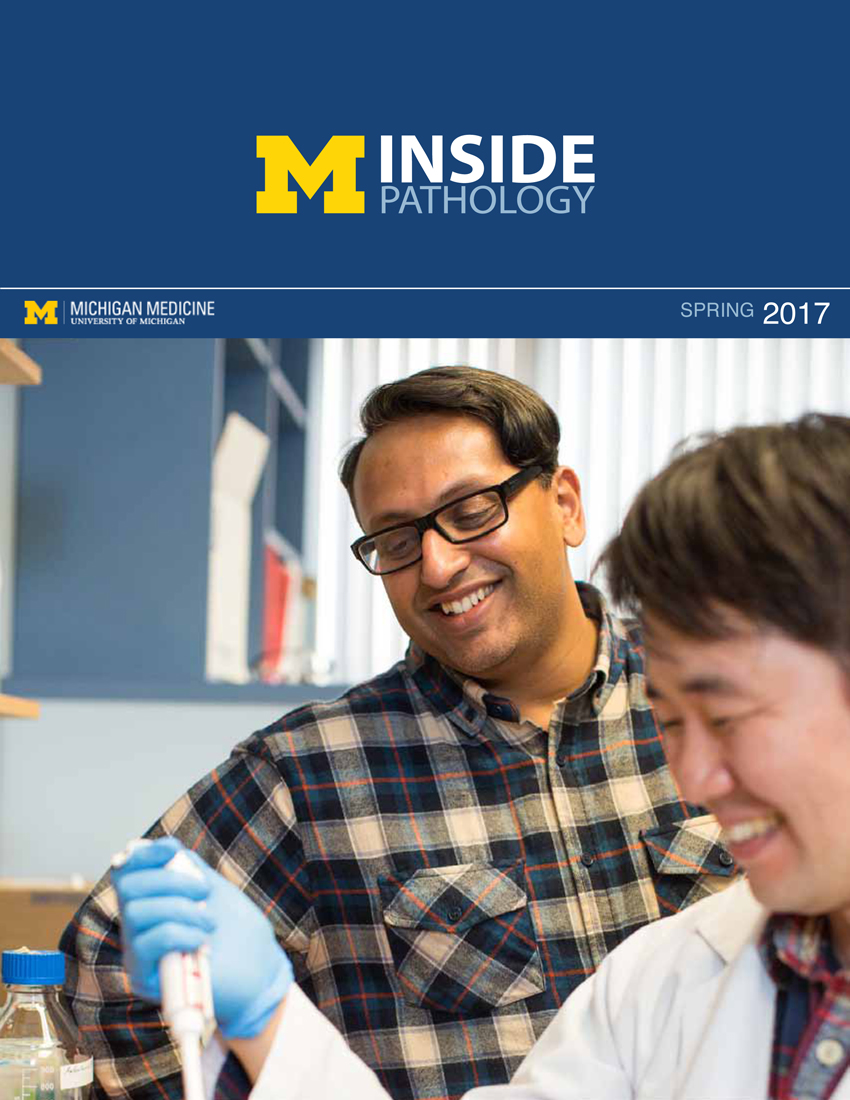 ON THE COVER Dr. Sriram Venneti, MD, PhD and Postdoctoral Fellow, Chan Chung, PhD investigate pediatric brain cancer. See Article |
newsletter
INSIDE PATHOLOGYAbout Our NewsletterInside Pathology is an newsletter published by the Chairman's Office to bring news and updates from inside the department's research and to become familiar with those leading it. It is our hope that those who read it will enjoy hearing about those new and familiar, and perhaps help in furthering our research. CONTENTS
|
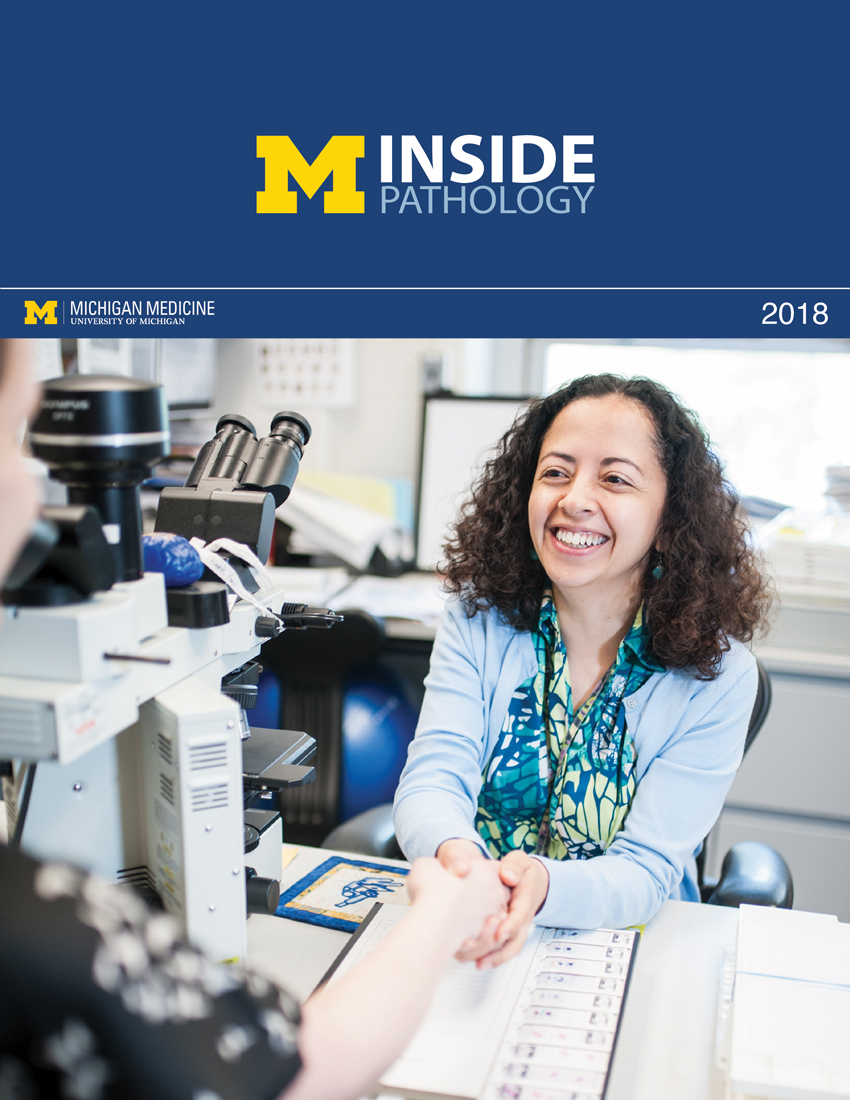 ON THE COVER Director of the Neuropathology Fellowship, Dr. Sandra Camelo-Piragua serves on the Patient and Family Advisory Council. |
newsletter
INSIDE PATHOLOGYAbout Our NewsletterInside Pathology is an newsletter published by the Chairman's Office to bring news and updates from inside the department's research and to become familiar with those leading it. It is our hope that those who read it will enjoy hearing about those new and familiar, and perhaps help in furthering our research. CONTENTS
|
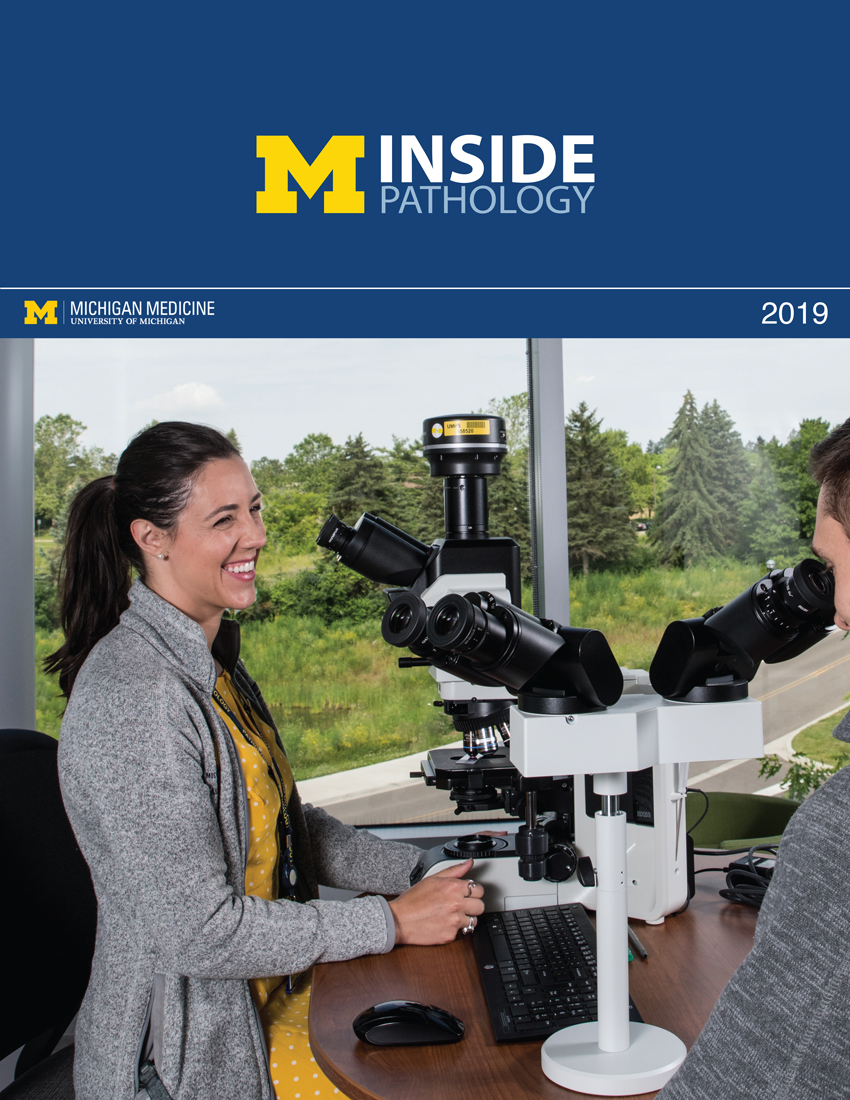 ON THE COVER Residents Ashley Bradt (left) and William Perry work at a multi-headed scope in our new facility. |
newsletter
INSIDE PATHOLOGYAbout Our NewsletterInside Pathology is an newsletter published by the Chairman's Office to bring news and updates from inside the department's research and to become familiar with those leading it. It is our hope that those who read it will enjoy hearing about those new and familiar, and perhaps help in furthering our research. CONTENTS
|
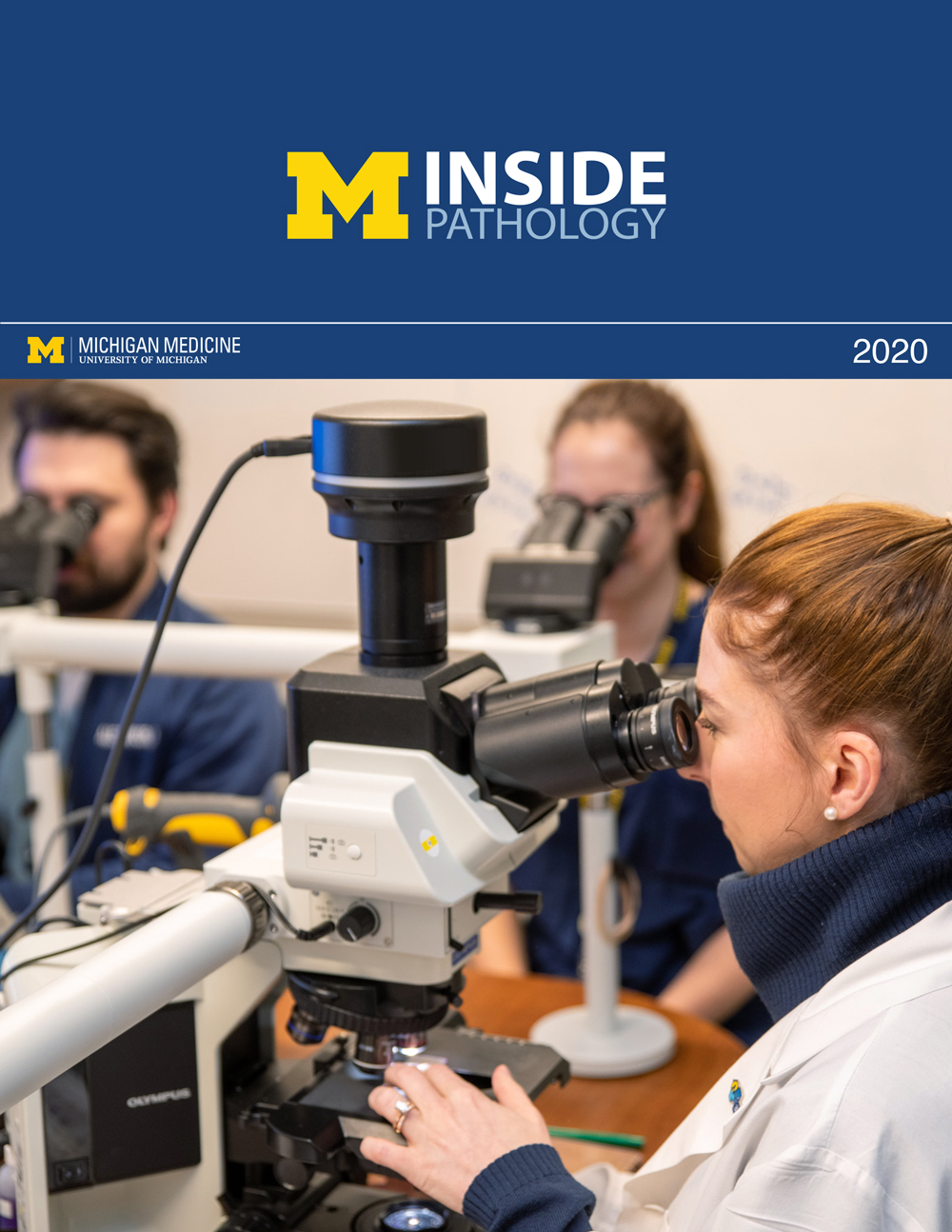 ON THE COVER Dr. Kristine Konopka (right) instructing residents while using a multi-headed microscope. |
newsletter
INSIDE PATHOLOGYAbout Our NewsletterInside Pathology is an newsletter published by the Chairman's Office to bring news and updates from inside the department's research and to become familiar with those leading it. It is our hope that those who read it will enjoy hearing about those new and familiar, and perhaps help in furthering our research. CONTENTS
|
 ON THE COVER Patient specimens poised for COVID-19 PCR testing. |
newsletter
INSIDE PATHOLOGYAbout Our NewsletterInside Pathology is an newsletter published by the Chairman's Office to bring news and updates from inside the department's research and to become familiar with those leading it. It is our hope that those who read it will enjoy hearing about those new and familiar, and perhaps help in furthering our research. CONTENTS
|
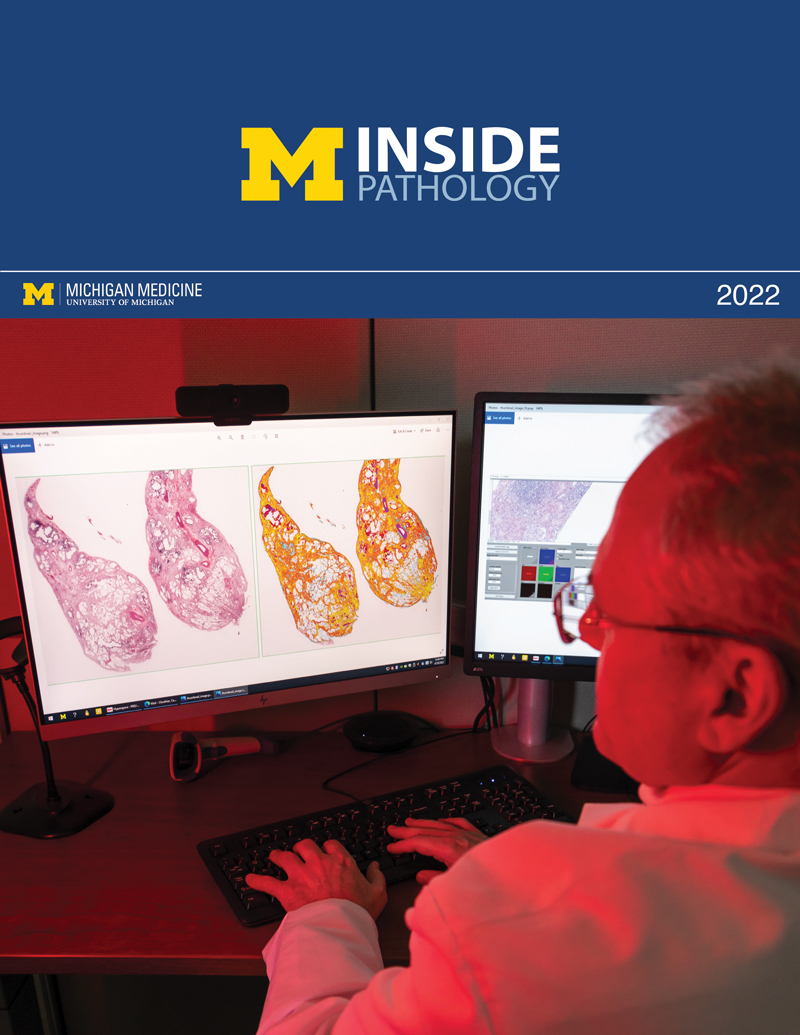 ON THE COVER Dr. Pantanowitz demonstrates using machine learning in analyzing slides. |
newsletter
INSIDE PATHOLOGYAbout Our NewsletterInside Pathology is an newsletter published by the Chairman's Office to bring news and updates from inside the department's research and to become familiar with those leading it. It is our hope that those who read it will enjoy hearing about those new and familiar, and perhaps help in furthering our research. CONTENTS
|
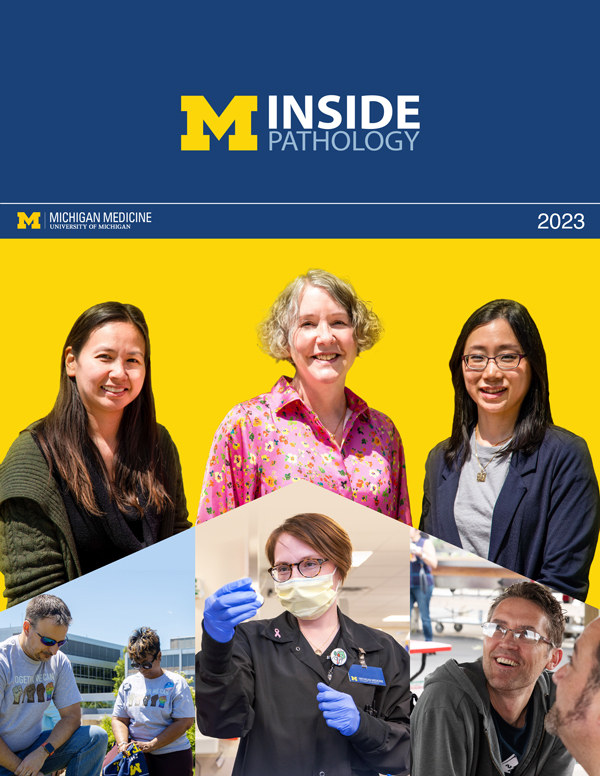 ON THE COVER (Left to Right) Drs. Angela Wu, Laura Lamps, and Maria Westerhoff. |
newsletter
INSIDE PATHOLOGYAbout Our NewsletterInside Pathology is an newsletter published by the Chairman's Office to bring news and updates from inside the department's research and to become familiar with those leading it. It is our hope that those who read it will enjoy hearing about those new and familiar, and perhaps help in furthering our research. CONTENTS
|
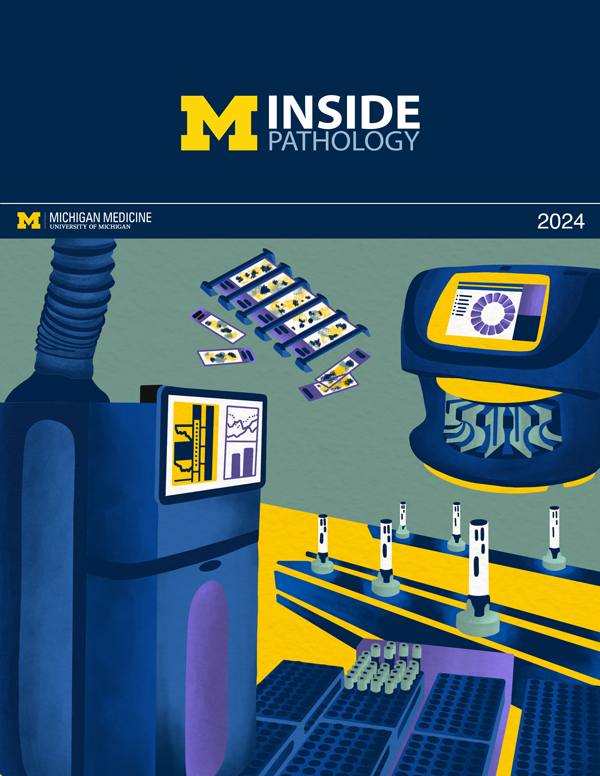 ON THE COVER Illustration representing the various machines and processing used within our labs. |
newsletter
INSIDE PATHOLOGYAbout Our NewsletterInside Pathology is an newsletter published by the Chairman's Office to bring news and updates from inside the department's research and to become familiar with those leading it. It is our hope that those who read it will enjoy hearing about those new and familiar, and perhaps help in furthering our research. CONTENTS
|
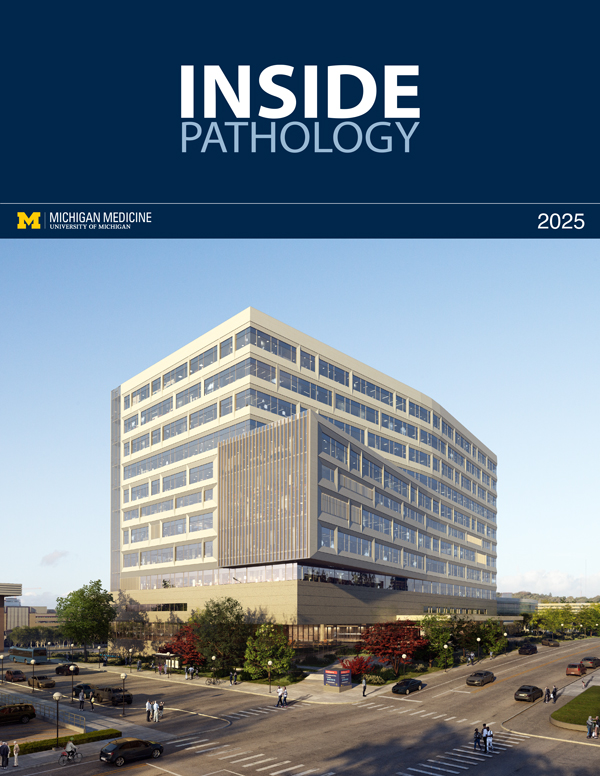 ON THE COVER Rendering of the D. Dan and Betty Khn Health Care Pavilion. Credit: HOK |
newsletter
INSIDE PATHOLOGYAbout Our NewsletterInside Pathology is an newsletter published by the Chairman's Office to bring news and updates from inside the department's research and to become familiar with those leading it. It is our hope that those who read it will enjoy hearing about those new and familiar, and perhaps help in furthering our research. CONTENTS
|

MLabs, established in 1985, functions as a portal to provide pathologists, hospitals. and other reference laboratories access to the faculty, staff and laboratories of the University of Michigan Health System’s Department of Pathology. MLabs is a recognized leader for advanced molecular diagnostic testing, helpful consultants and exceptional customer service.