8 TRANSFUSION AND APHERESIS SERVICES
Link to Apheresis Information on the Nursing At Michigan Innternal Web Page
Apheresis
Apheresis is the removal of whole blood from a patient or donor, separation and collection of a component, such as plasma, granulocytes or red cells, and return of the remainder to the patient or donor.
|
Procedure |
Details |
|
Plasmapheresis (Plasma Exchange) |
Purpose Utilized for treatment of hyperviscosity, Goodpasture's syndrome, myasthenia gravis, Guillain-Barre syndrome, chronic inflammatory demyelinating polyneuropathy, thrombotic thrombocytopenic purpura and coagulation factor inhibitor. The common denominator among these diseases is that a beneficial effect is achieved by removal of an abnormal protein or a circulating antibody. Comments Outpatient therapeutic plasma exchange can be carried out in the Blood Bank Transfusion and Apheresis Services. Inpatients may undergo the procedure on the inpatient unit or, if medically stable, in the Blood Bank. |
|
Cytapheresis |
Purpose To ameliorate the symptoms related to severe leukocytosis or thrombocytosis associated with myeloproliferative diseases. Comments The technique is considered a stopgap measure to allow time for chemotherapeutic agents to take effect. |
|
Procedure |
Details |
|
Red Cells Exchange |
Purpose To increase the amount of hemoglobin A in the patient. Comments Scheduled through consultation with Blood Bank Transfusion and Apheresis Service. Outpatient red cell exchange can be carried out in the Blood Bank Transfusion and Apheresis Services. Inpatients may undergo the procedure on the inpatient unit or, if medically stable, in the Blood Bank |
|
LDL Apheresis |
Purpose To reduce the amount of low density lipoproteins. Comments Performed as an outpatient procedure in the Transfusion and Apheresis Service. |
|
Progenitor Cell Collections |
Purpose To obtain progenitor cells (stem cells) for transplantation Comments Procedures are scheduled through the Human Progenitor Cell Section of the Blood Bank. Progenitor cells collected, as well as cord blood cells and marrow harvested for transplantation, become the property of the University of Michigan Health System and, if not used for the transplant proximate to the time of collection, will be stored for up to five years |
Coordination of Autologous and Directed Donations
|
Donation Type |
Definition |
Advantages |
Risks |
|
Autologous Donations |
Autologous transfusion is the transfusion of a patient with his/her own blood. Candidates for predeposit autologous transfusion are most often relatively healthy adults or adolescents who will undergo elective or semi-elective surgical procedures with a predictable blood loss. |
|
|
|
Directed Donations |
When a patient selects donors to provide blood for his or her subsequent elective transfusion. The patient should know his or her blood type to expedite selection of compatible donors. |
There are no studies that conclusively indicate blood from directed donors is any safer than that from other volunteer donors. Directed donors must meet donor screening criteria comparable to volunteer blood donors; therefore, infectious disease testing must be completed before release of the blood. |
|
Therapeutic Phlebotomy
|
Procedure |
Purpose |
Comments |
|
Therapeutic Phlebotomy |
Useful in the management of polycythemia vera, idiopathic hemochromatosis, hemosiderosis, Wilson's disease and porphyria cutanea tarda. |
Performed for outpatients by the Blood Bank or equipment can be provided for performance of the procedure on patient units. |
Outpatient, Off-Site and Home Transfusion
|
Procedure |
Purpose |
Comments |
|
Outpatient, Off-Site and Home Transfusion |
Outpatient transfusion services are provided by the Cancer Center, 8th Floor Infusion Room and the Transplant Ambulatory Care Unit. Under certain circumstances, transfusion of blood components may be performed off-site, such as in a nursing home or at a patient's residence. |
Off-site transfusion services are provided by visiting nurse groups.
|
Version July 2004
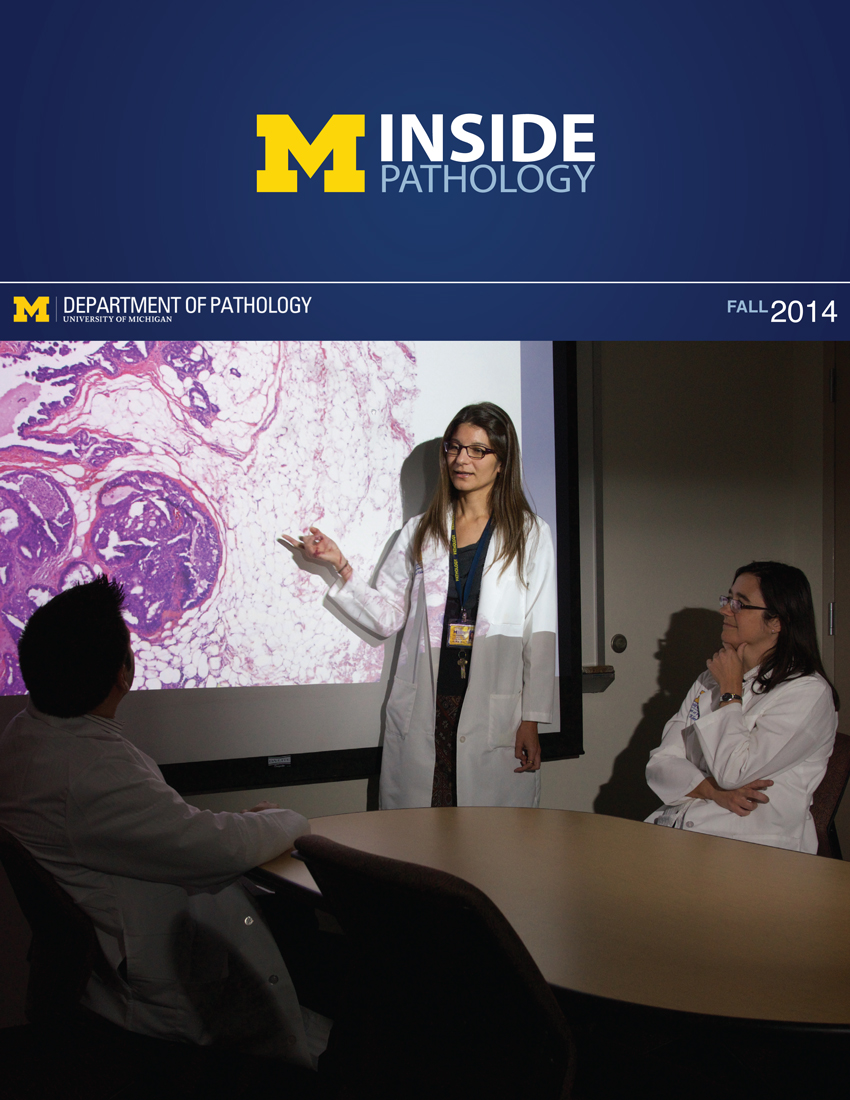 ON THE COVER
Breast team reviewing a patient's slide. (From left to right) Ghassan Allo, Fellow; Laura Walters, Clinical Lecturer; Celina Kleer, Professor. See Article |
newsletter
INSIDE PATHOLOGYAbout Our NewsletterInside Pathology is an newsletter published by the Chairman's Office to bring news and updates from inside the department's research and to become familiar with those leading it. It is our hope that those who read it will enjoy hearing about those new and familiar, and perhaps help in furthering our research. CONTENTS
|
 ON THE COVER
Autopsy Technician draws blood while working in the Wayne County morgue. See Article |
newsletter
INSIDE PATHOLOGYAbout Our NewsletterInside Pathology is an newsletter published by the Chairman's Office to bring news and updates from inside the department's research and to become familiar with those leading it. It is our hope that those who read it will enjoy hearing about those new and familiar, and perhaps help in furthering our research. CONTENTS
|
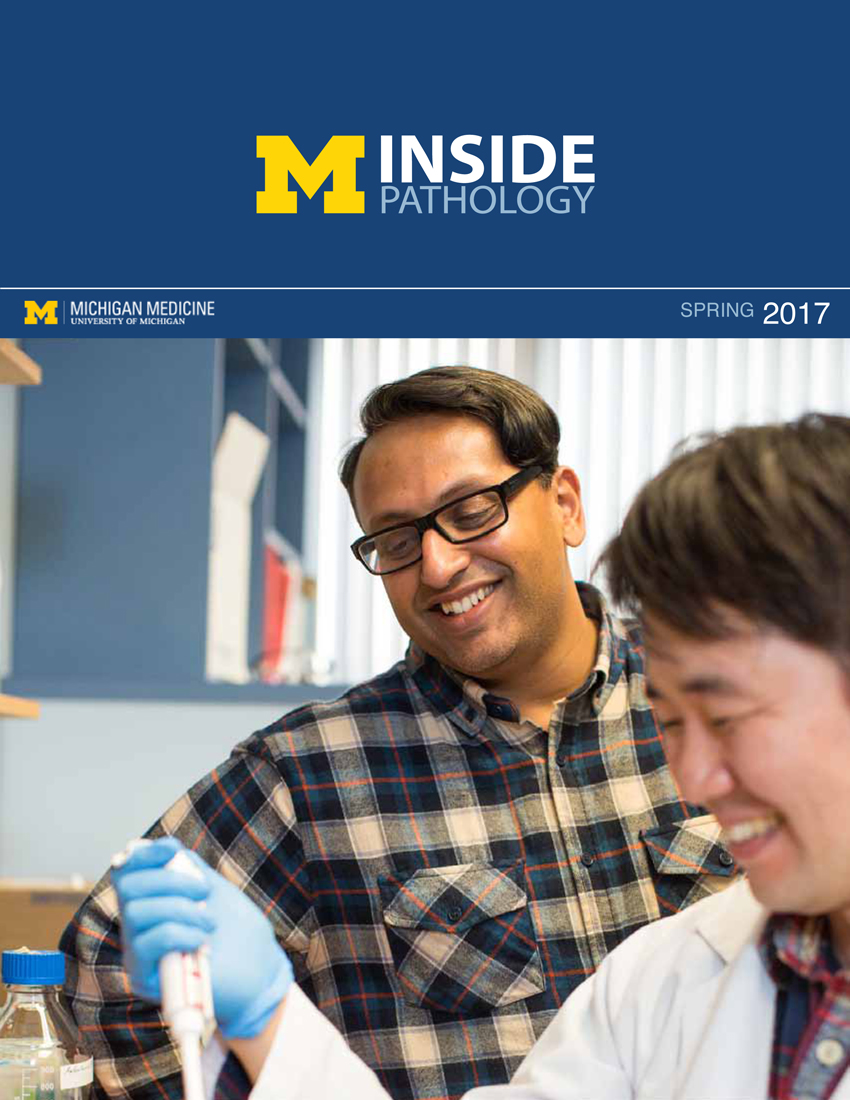 ON THE COVER
Dr. Sriram Venneti, MD, PhD and Postdoctoral Fellow, Chan Chung, PhD investigate pediatric brain cancer. See Article |
newsletter
INSIDE PATHOLOGYAbout Our NewsletterInside Pathology is an newsletter published by the Chairman's Office to bring news and updates from inside the department's research and to become familiar with those leading it. It is our hope that those who read it will enjoy hearing about those new and familiar, and perhaps help in furthering our research. CONTENTS
|
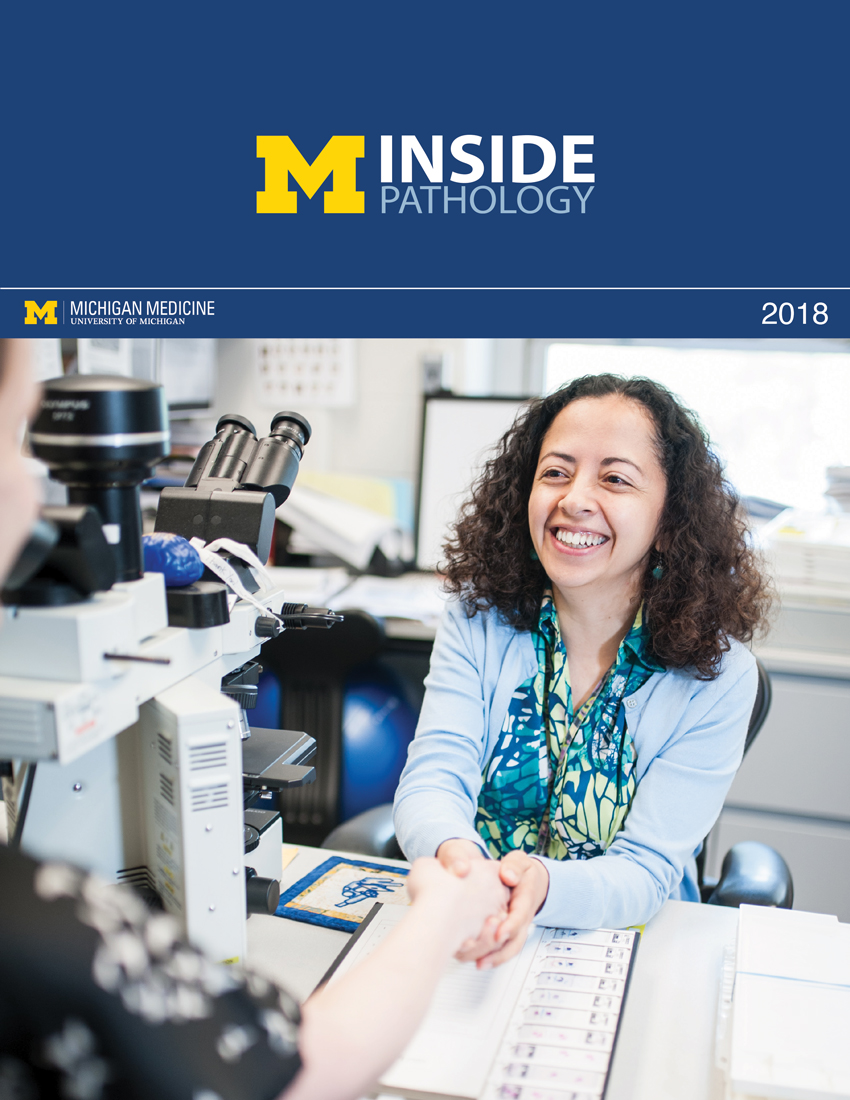 ON THE COVER
Director of the Neuropathology Fellowship, Dr. Sandra Camelo-Piragua serves on the Patient and Family Advisory Council. |
newsletter
INSIDE PATHOLOGYAbout Our NewsletterInside Pathology is an newsletter published by the Chairman's Office to bring news and updates from inside the department's research and to become familiar with those leading it. It is our hope that those who read it will enjoy hearing about those new and familiar, and perhaps help in furthering our research. CONTENTS
|
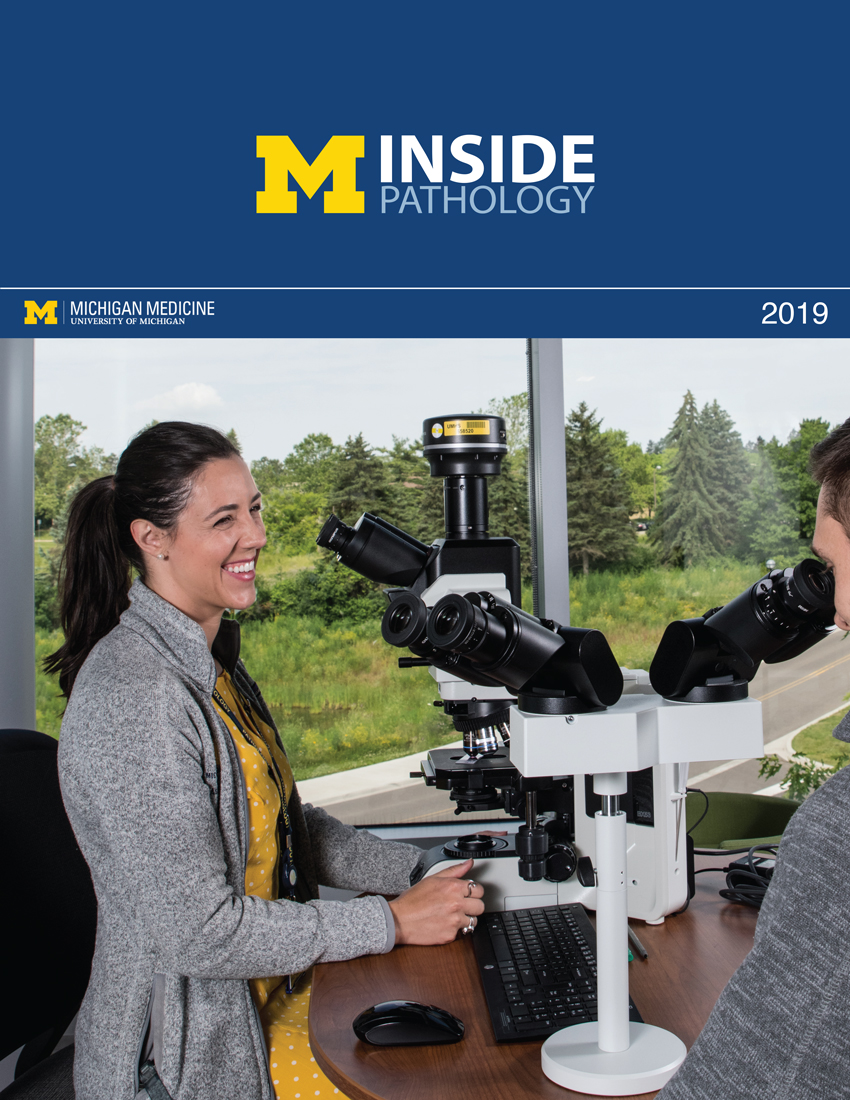 ON THE COVER
Residents Ashley Bradt (left) and William Perry work at a multi-headed scope in our new facility. |
newsletter
INSIDE PATHOLOGYAbout Our NewsletterInside Pathology is an newsletter published by the Chairman's Office to bring news and updates from inside the department's research and to become familiar with those leading it. It is our hope that those who read it will enjoy hearing about those new and familiar, and perhaps help in furthering our research. CONTENTS
|
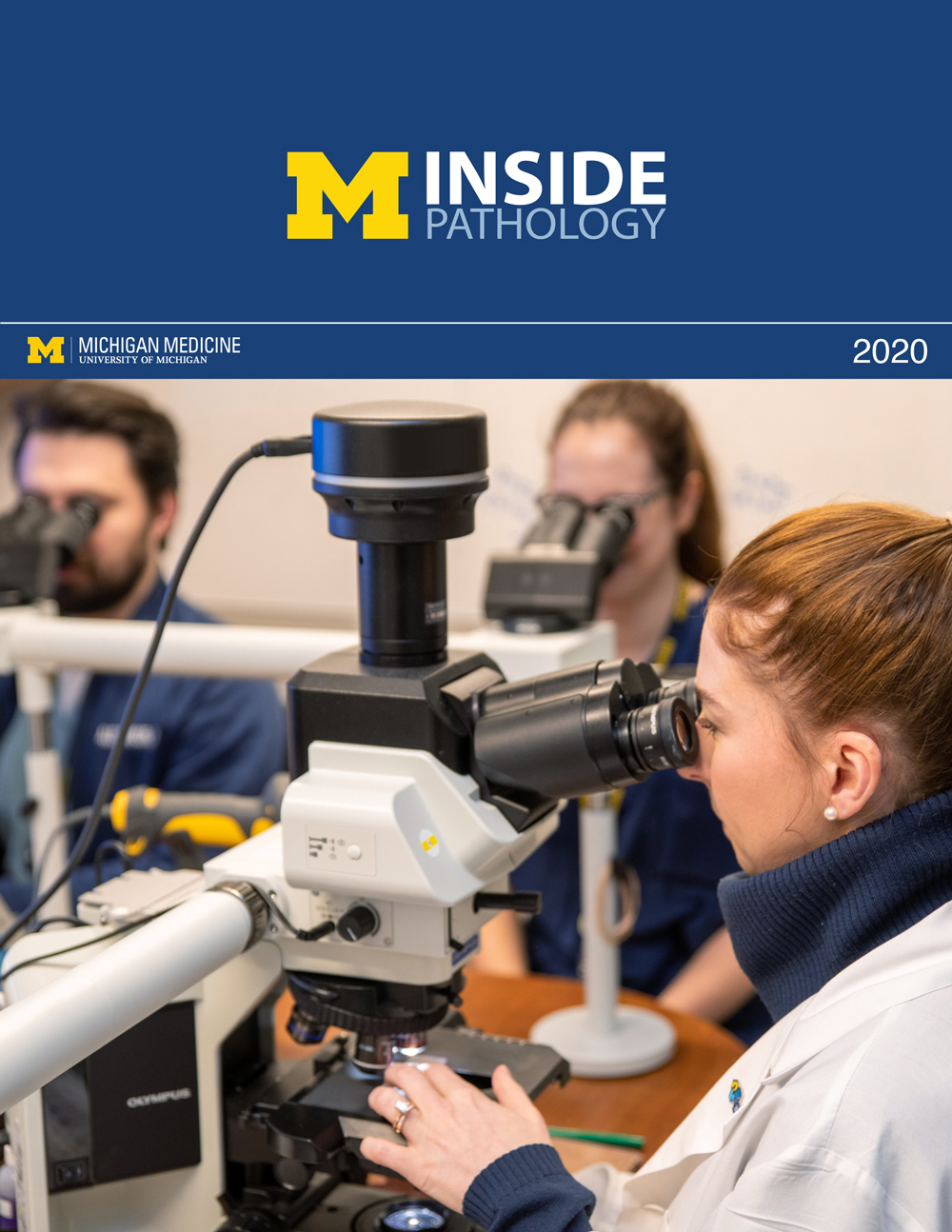 ON THE COVER
Dr. Kristine Konopka (right) instructing residents while using a multi-headed microscope. |
newsletter
INSIDE PATHOLOGYAbout Our NewsletterInside Pathology is an newsletter published by the Chairman's Office to bring news and updates from inside the department's research and to become familiar with those leading it. It is our hope that those who read it will enjoy hearing about those new and familiar, and perhaps help in furthering our research. CONTENTS
|
 ON THE COVER
Patient specimens poised for COVID-19 PCR testing. |
newsletter
INSIDE PATHOLOGYAbout Our NewsletterInside Pathology is an newsletter published by the Chairman's Office to bring news and updates from inside the department's research and to become familiar with those leading it. It is our hope that those who read it will enjoy hearing about those new and familiar, and perhaps help in furthering our research. CONTENTS
|
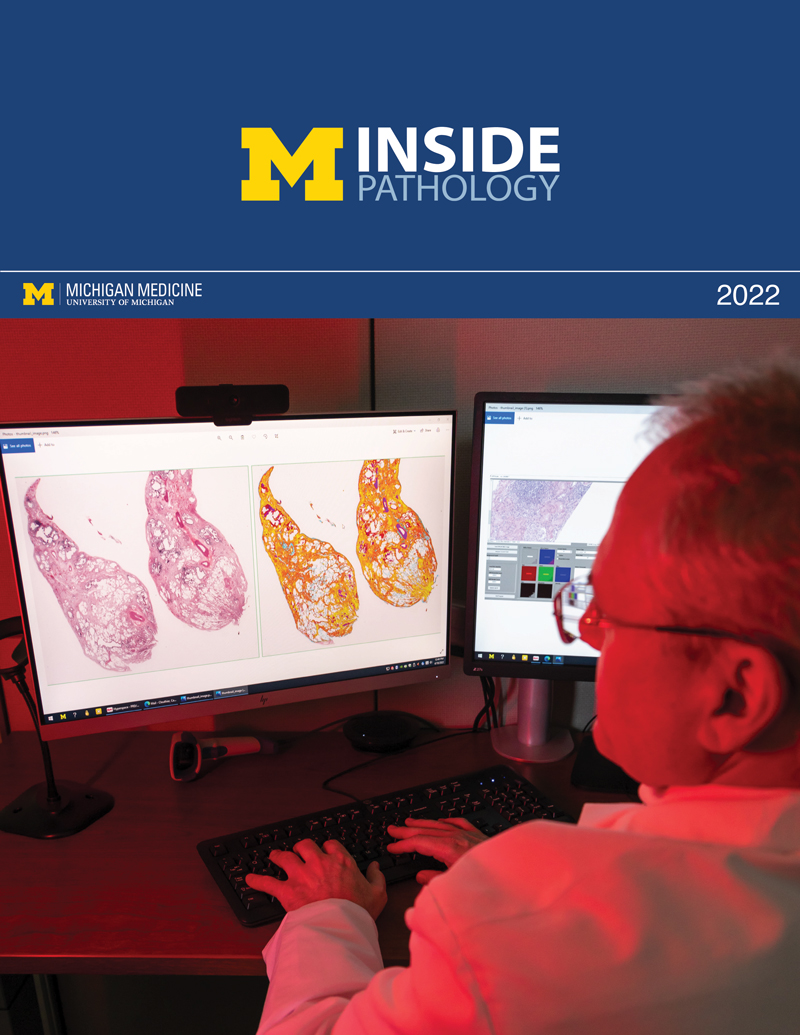 ON THE COVER
Dr. Pantanowitz demonstrates using machine learning in analyzing slides. |
newsletter
INSIDE PATHOLOGYAbout Our NewsletterInside Pathology is an newsletter published by the Chairman's Office to bring news and updates from inside the department's research and to become familiar with those leading it. It is our hope that those who read it will enjoy hearing about those new and familiar, and perhaps help in furthering our research. CONTENTS
|
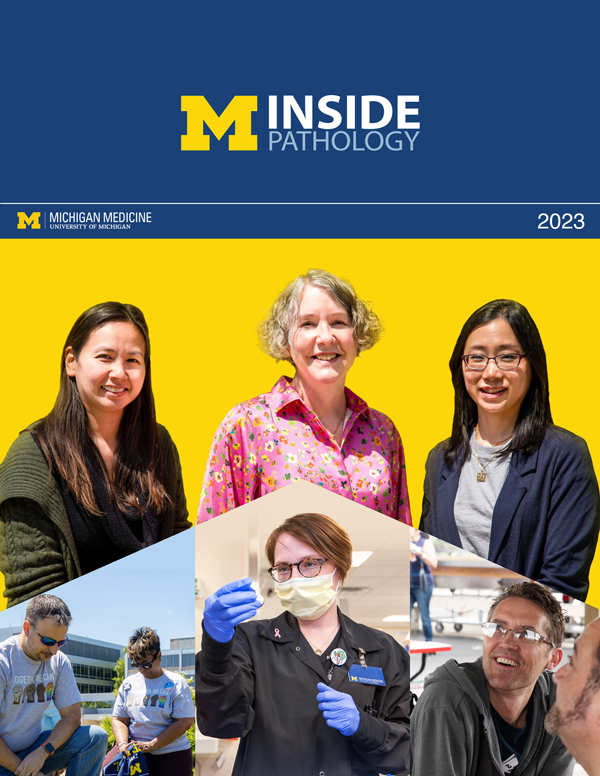 ON THE COVER
(Left to Right) Drs. Angela Wu, Laura Lamps, and Maria Westerhoff. |
newsletter
INSIDE PATHOLOGYAbout Our NewsletterInside Pathology is an newsletter published by the Chairman's Office to bring news and updates from inside the department's research and to become familiar with those leading it. It is our hope that those who read it will enjoy hearing about those new and familiar, and perhaps help in furthering our research. CONTENTS
|
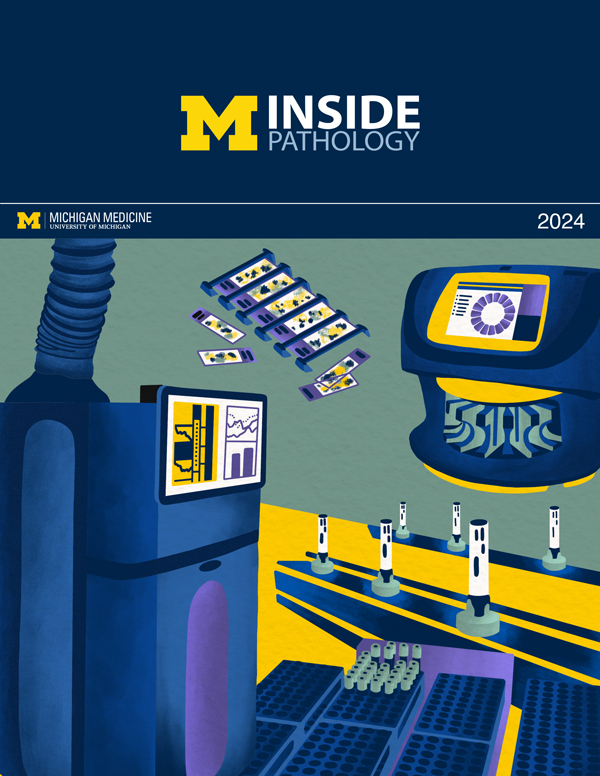 ON THE COVER
Illustration representing the various machines and processing used within our labs. |
newsletter
INSIDE PATHOLOGYAbout Our NewsletterInside Pathology is an newsletter published by the Chairman's Office to bring news and updates from inside the department's research and to become familiar with those leading it. It is our hope that those who read it will enjoy hearing about those new and familiar, and perhaps help in furthering our research. CONTENTS
|
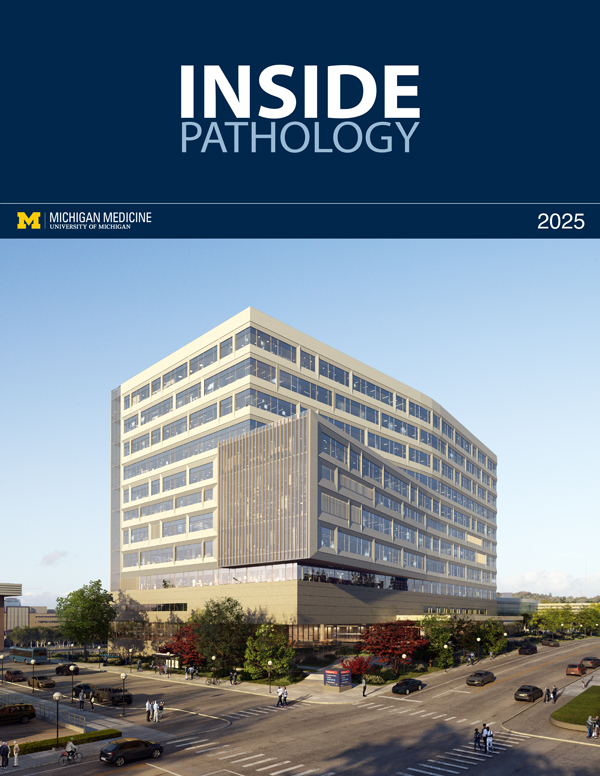 ON THE COVER
Rendering of the D. Dan and Betty Khn Health Care Pavilion. Credit: HOK |
newsletter
INSIDE PATHOLOGYAbout Our NewsletterInside Pathology is an newsletter published by the Chairman's Office to bring news and updates from inside the department's research and to become familiar with those leading it. It is our hope that those who read it will enjoy hearing about those new and familiar, and perhaps help in furthering our research. CONTENTS
|

MLabs, established in 1985, functions as a portal to provide pathologists, hospitals. and other reference laboratories access to the faculty, staff and laboratories of the University of Michigan Health System’s Department of Pathology. MLabs is a recognized leader for advanced molecular diagnostic testing, helpful consultants and exceptional customer service.